The agricultural campaign on the coast of Granada is showing an unusual shift this year, with watermelon harvest starting significantly earlier than usual, with picking already underway when the calendar would typically point to June. Behind this adjustment is the emergence of Thrips parvispinus, a pest that has shaped growers' decisions following its impact on previous crops.
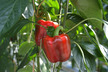
The insect, detected in the area at the end of last summer, hit greenhouse pepper crops particularly hard in areas such as Motril and Castell de Ferro. Its ability to damage plants directly and transmit viruses, combined with its rapid spread, has made it difficult to contain. Attacks concentrate on flowers and shoots, compromising fruit development.
On the Granada coast, pepper covers around 540 hectares, although the effective area drops to about 270 hectares due to the double cycle system. During the last campaign, roughly 70% of greenhouses recorded the presence of the pest at some point, with localized losses reaching around 12 hectares.
With the pepper harvest now practically finished, current incidence is limited, according to the regional administration. In this context, 12 aid applications have been processed in the province, a relatively contained figure compared to other production areas. At the same time, market performance has been favorable, with price levels considered positive for growers.
Against this backdrop, agricultural services are working to disseminate management guidelines to contain potential outbreaks. Recommended practices include control of plant material, removal of crop residues, use of protective nets, and monitoring through traps. There is also an emphasis on strengthening biological control with beneficial species such as Orius laevigatus and Amblyseius swirskii.
The Junta de Andalucía has also activated a support scheme for farms that have suffered severe damage and had to remove their crops. Aid can reach up to €20,000 per hectare, capped at €50,000 per grower, with payments scheduled over the course of the current year.
Source: ideal.es