Cucumber growers in the Netherlands who have switched to LED lighting for their lit cultivation have encountered recurring problems with Mycosphaerella, a fungal disease that causes so-called "Myco heads" on the fruit. Research carried out at the request of growers and presented at Zuidgeest Komkommers in Delfgauw points to microclimate management as the primary area where solutions should be sought.
The findings are relevant across the sector: virtually all cucumber growers working under LED lighting report problems with Mycosphaerella, regardless of their specific growing setup. The situation is comparable to the discolouration issues that many tomato growers face under supplemental lighting.
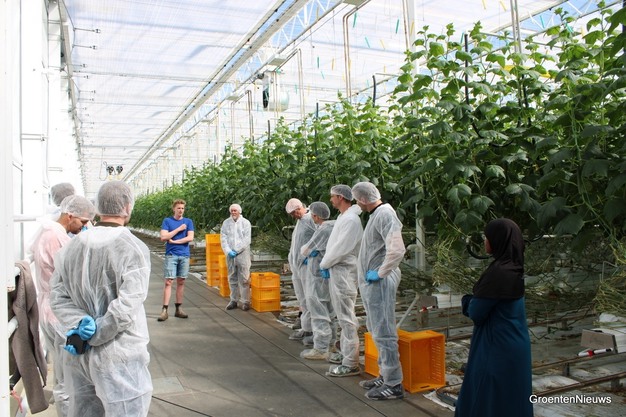 © Thijmen Tiersma | HortiDaily.comFirst a look inside the greenhouse, followed by a discussion in the canteen
Grown too cold when switching to LED
At the Zuidgeest Komkommers nursery in Delfgauw, growers had five years of experience with HPS lighting before making the switch to LED. Marco and Mike Zuidgeest now have three winter seasons of LED cultivation behind them, but feel they have not yet been able to fully unlock the potential of the technology. Mycosphaerella problems have been a major factor in that.
Problems with Myco heads appeared in the very first LED season. The growers moved from 85 µmol of HPS lighting to 200 µmol of LED in their modern high-wire greenhouse. At the time, the crop was already in progress and LED lamp delivery had been slightly delayed. In hindsight, Mike acknowledges that LED cultivation requires a different temperature management approach. "In our first winter under LED, we grew too cold. We didn't immediately adjust our 24-hour temperature targets when we switched. Shoot development appeared everywhere and the cucumbers had difficulty breaking through."
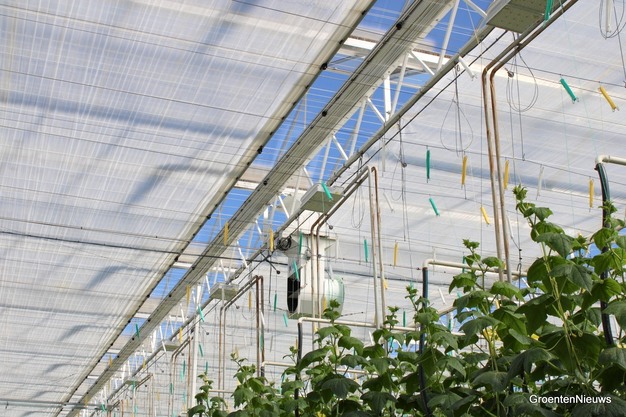 © Thijmen Tiersma | HortiDaily.comAirmix system, double screen cloth and LED, plenty of technologies to work with
Adjustments: removing leaves and raise the pipe
Going into the second season, one of the measures taken was to remove picked leaves from the greenhouse quickly, with the aim of also removing excess moisture and potentially fungal spores. The moveable heating pipe was also repositioned higher in the crop canopy. Despite a range of adjustments, Mycosphaerella problems persisted, and even worsened. "There is no clear pattern to where we should be looking for the cause of Myco heads," Marco observed.
The growers subsequently brought in Sigrow, which supplied sensors to help identify the causes of the Mycosphaerella problems. Measuring instruments deployed in the Delfgauw greenhouse included a thermal camera and a net radiation meter. With support from Glastuinbouw Nederland, a formal research project was set up, led by Peter van Weel of Weel.Invent.
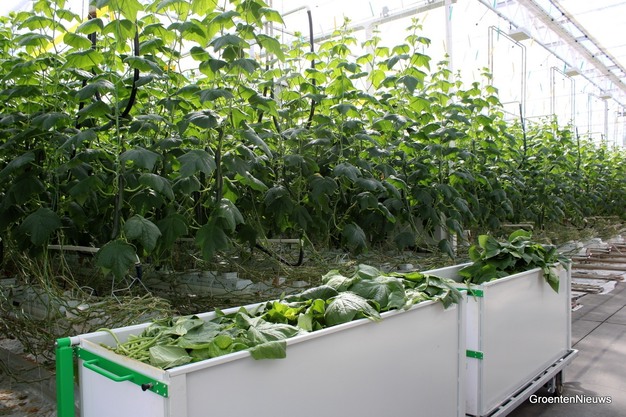 © Thijmen Tiersma | HortiDaily.comThe cucumber growers started removing more leaves because of the moisture challenges
Mycos rears its head in spring
The Delfgauw greenhouse uses the Airmix system from Van der Ende Group to create air movement and assist with dehumidification. In the third winter season, the use of the grow pipe above the plant head was further optimised. By running a higher pipe temperature, the growers aim to bring the plant up to temperature rather than heating the greenhouse as a whole, placing more focus on creating a good microclimate directly around the plant.
The transition from winter to spring is a particularly challenging period. On warm, sunny days the plant becomes active and transpires freely; when the weather then turns or night falls, moisture problems can develop quickly. At Zuidgeest Komkommers, Myco heads tend to appear precisely during this period.
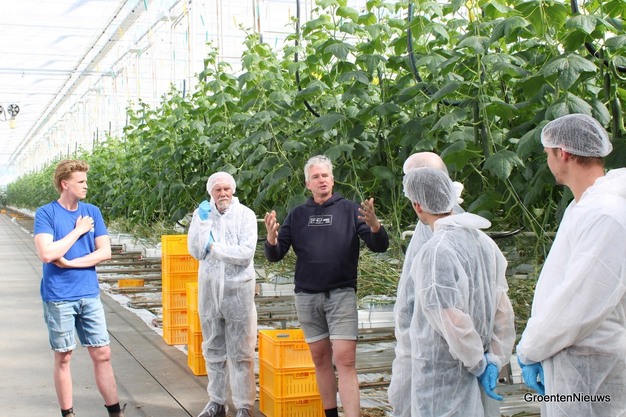 © Thijmen Tiersma | HortiDaily.comMike Zuidgeest, Peter van Weel and Marco Zuidgeest update the group
Call for measuring AH
Presenting his findings at Zuidgeest Komkommers, Peter van Weel outlined his starting hypothesis: an imbalance between root pressure and transpiration leads to guttation, which in turn creates conditions for Mycosphaerella. Improving transpiration at the plant head is therefore central to the solution.
Van Weel conducted smoke tests and manual microclimate measurements during the study. These showed that the Airmix system was performing well: air movement in the greenhouse was good and temperature distribution was uniform. He did note, however, that correct calibration of the Airmix is essential. Poorly adjusted settings can result in cold air being blown directly into the crop at too high a volume, causing excessive cooling, condensation, and reduced transpiration.
Van Weel advises growers to measure absolute humidity (AH) in addition to relative humidity (RH), both above the screen, inside the greenhouse, and outdoors. The difference in AH above the screen and outside can be used to set the Airmix vent position for optimal moisture removal. Climate computer suppliers can assist with an automated control system for this purpose; at least one supplier is already testing such a system in practice.
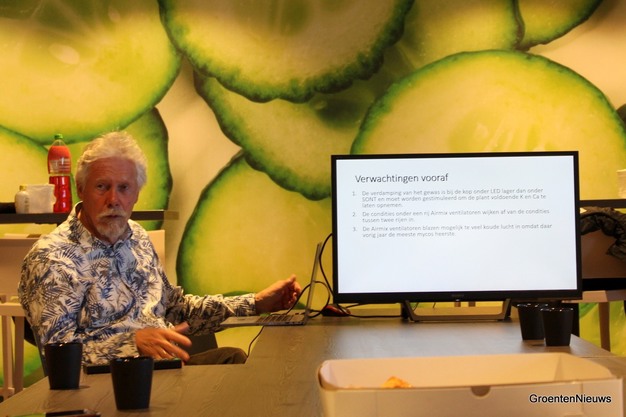 © Thijmen Tiersma | HortiDaily.comPeter van Weel shares his expectations ahead of the study
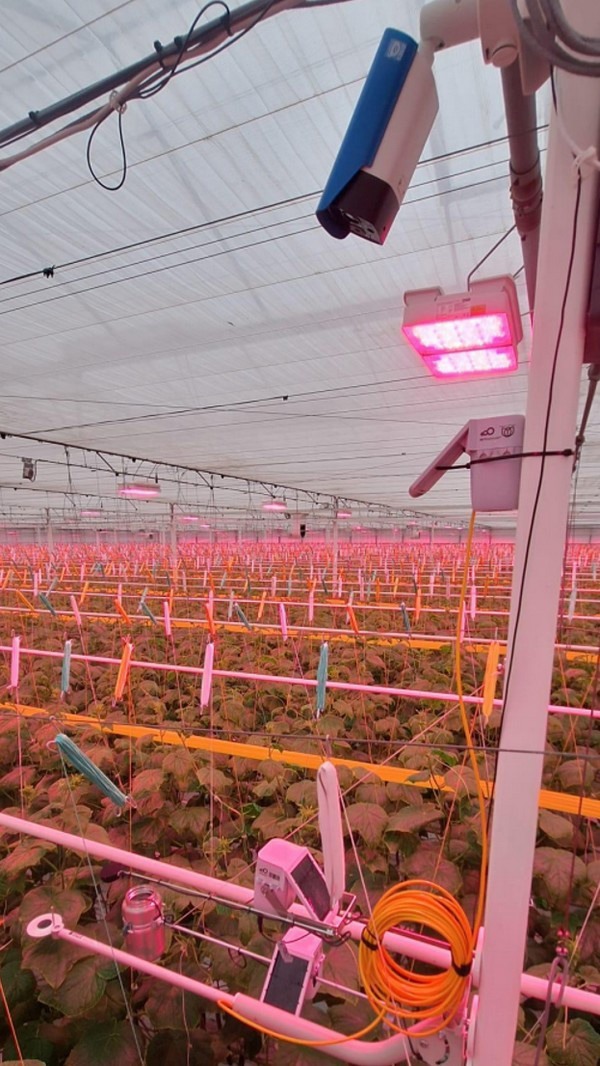 © SigrowStep-by-step plan for problem solving
No single solution to the Mycosphaerella problem in LED cucumber cultivation was presented. Instead, Van Weel offered a step-by-step framework. As is often the case with cultivation problems, multiple interacting factors are involved.
Growers should look for the solution in optimising the microclimate around the plant. This requires careful coordination of screen strategy, vent positions, dehumidification systems, and heating. Effective use of the screen can prevent unnecessary radiation losses. AH measurements help growers determine vent positions for moisture removal and calibrate their dehumidification equipment. According to Van Weel, the Mycosphaerella problem is primarily a control and calibration issue.
Photo right: the research setup at Zuidgeest Komkommers. Various sensors from Sigrow were used. In the greenhouse at Zuidgeest Komkommers, this involved a net radiation meter above the top of the crop, a thermal camera with automatic leaf recognition below and between rows with and without Airmix fans, an infrared sensor measuring the temperature of the lower cloth, and sensors to measure temperature, RH and PAR light.
To compensate for the lower radiant heat output of LED compared to HPS, and to reduce heat loss from the greenhouse, the pipe temperature at the top of the canopy was adjusted in the most recent LED season. The upper pipe was also repositioned 20 centimetres above the plant head so that radiant heat reaches the crop across a wider angle: another recommendation from Van Weel's step-by-step plan. These changes have resulted in a marked reduction in Mycosphaerella problems compared to previous seasons, attributed to a combination of reduced radiation losses, less cold air being directed into the crop via the Airmix, and improved moisture removal through adjusted screen gap and vent settings.
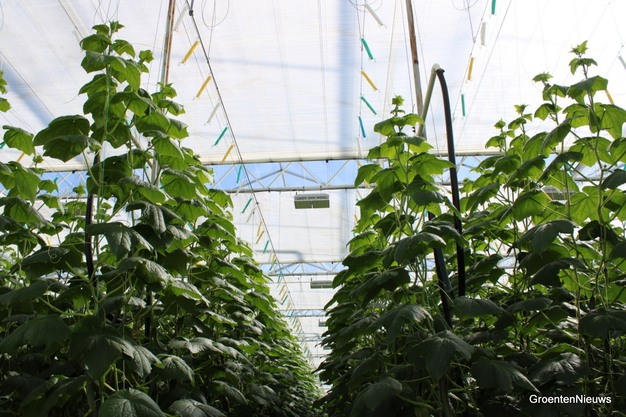 © Thijmen Tiersma | HortiDaily.com
LED lamps make year-round cucumber cultivation possible
From manual to automatic control
The growers and researchers reached these conclusions partly on the basis of insights from the Sigrow sensor data. Van Weel sees further possibilities ahead. "Now that we have measurement equipment in place and transpiration under LED is under control, should we also start optimising stomatal opening and VPD (vapour pressure deficit)?"
That prospect prompted a reaction from the growers. "The more sensors and cameras we have, the more questions arise," said Marco with a laugh. Rutger Vreezen, Data Driven Growing Specialist at Sigrow, is not deterred. "An 80% reduction in Mycosphaerella is already achievable with good manual control. Automation can take us to 100%. With manual control, we are sometimes just a little too late."
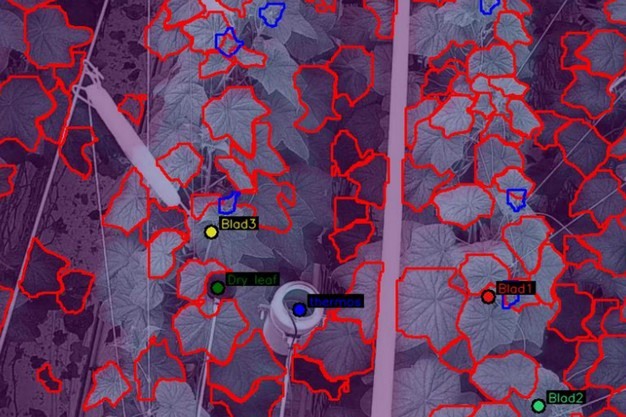 © SigrowDisplay of leaf temperature measurement with Sigrow camera
 © Thijmen Tiersma | HortiDaily.com
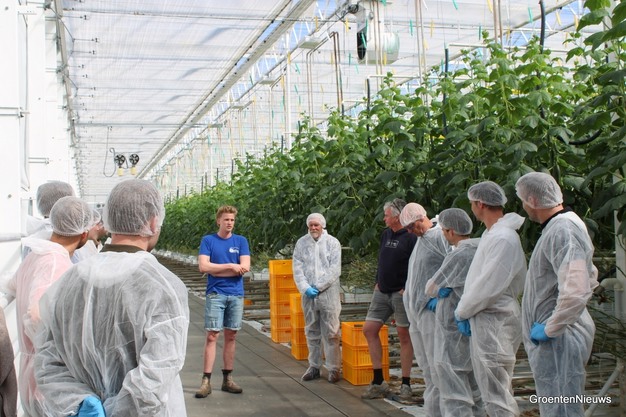
The meeting on April 7 was aimed at sharing knowledge with fellow growers and other parties in the sector.
For more information:
Sigrow
[email protected]
www.sigrow.com
Weel.Invent
[email protected]