The shift from conventional chemical crop protection to biological or hybrid systems is gaining momentum across greenhouse production. However, the transition is not without challenges. As Heidi Doering, National (US) Ornamental Crop Specialist at Koppert, explains, "the learning curve can appear to be a daunting task," particularly when growers are introduced to new biological control agents (BCAs) and unfamiliar strategies.
While some existing tools can be integrated into hybrid programs, the perceived complexity often delays adoption. "It can seem like too large a hill to climb until something like pesticide resistance develops," she says. In this context, technical expertise plays a decisive role. "A biological IPM consultant serves as a Sherpa, supporting growers and their staff, and providing the educational component needed to successfully make the transition without wasting resources."
Compatibility between chemical and biological inputs is another critical factor. "Understanding what pesticides are compatible with beneficial insects is essential," she notes, adding that real-time technical guidance can streamline decision-making for time-constrained operations.
 © Koppert
From reactive to proactive crop protection
A defining feature of biological IPM is the shift in mindset from reactive intervention to proactive management. "It's a different way of thinking. The goal is preventing pest and disease development rather than responding after damage is observed."
This requires consistent scouting, data collection, and targeted releases of BCAs based on pest pressure and location. Weekly monitoring becomes central to program success, enabling growers to identify hotspots and respond before populations escalate.
She also highlights the move away from broad-spectrum approaches. "There are no single 'broad spectrum' biological control," she says. "That's actually beneficial for the environment and native ecosystems," as it preserves beneficial organisms rather than eliminating them.
The shift from IPM to Integrated Plant Health
The evolution toward Integrated Plant Health (IPH) expands the focus beyond pest control to overall plant resilience. "We're no longer just looking at pests as something to eliminate. We're looking at how to make plants structurally tougher and less appealing to pests."
This includes improving tolerance to abiotic stresses such as temperature, light, and moisture, while enhancing resistance to pathogens. The approach reinforces a proactive philosophy: strengthening the plant to reduce vulnerability rather than relying solely on control measures after infestation.
Importantly, she emphasizes that transition does not have to be immediate or absolute. Growers can adopt hybrid systems and gradually increase biological inputs over time.
 © Koppert
Sustainability and long-term profitability
Biological control is increasingly central to sustainable greenhouse production. With fewer new active ingredients entering the market and pesticide resistance reducing the efficacy of existing chemistries, growers must diversify their strategies. "Biological and microbiological tools will need to do more of the heavy lifting," she states.
At the same time, innovations in resilient cultivation offer opportunities to reduce input costs. Strengthening plant health can reduce fertilizer use and chemical interventions while maintaining crop quality through production and retail.
 © Koppert
Addressing misconceptions and barriers
Cost and complexity remain common barriers to adoption. However, Heidi cautions against evaluating biological programs based solely on initial input costs. "It may seem more economical to go it alone when transitioning to biologicals," she says, "but trial-and-error can become very costly over crop cycles."
Instead, structured implementation supported by technical consultants can reduce risk and improve outcomes. "Knowledgeable advisors can generate recommendations that minimize failure, especially when unexpected challenges arise," she explains.
Another misconception is that biological solutions are inherently more expensive. In practice, total cost must be evaluated in the context of crop losses, resistance issues, and long-term system stability.
Managing spider mite resistance in garden mums
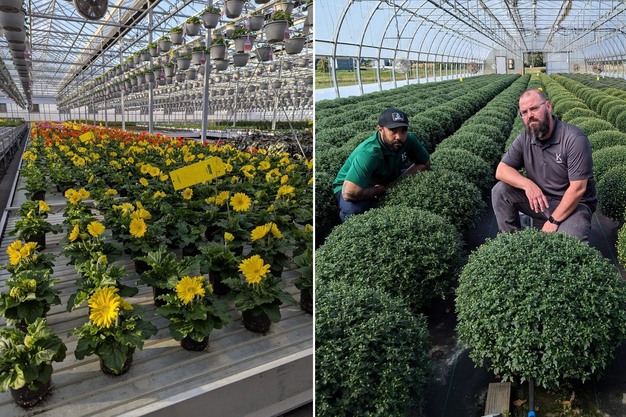
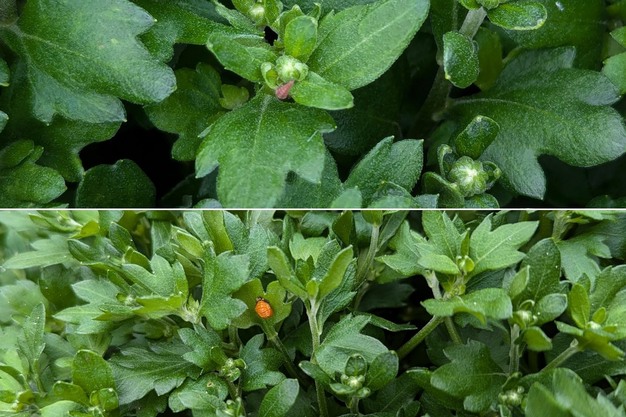
A practical example highlights the effectiveness of a proactive biological approach. A garden mum grower experiencing severe two-spotted spider mite infestations, and declining miticide efficacy, sought technical support after significant crop losses.
"Resistance had developed, and broad-spectrum insecticides were actually amplifying the problem," she explains. A biological program was introduced at the start of the next crop cycle, incorporating predatory mites to prevent pest establishment.
"Spider mites became a non-issue the following year." Costs were managed by using compatible chemical interventions only for localized aphid hotspots. During follow-up visits, an additional benefit became evident: "We observed native parasitoids and predators returning to the greenhouse once it was no longer toxic to them."
 © Koppert Microbial innovation and resilient cultivation
Heidi identifies Integrated Plant Health and microbial innovation as key drivers of industry development. "By creating synthetic microbial communities, we can achieve synergies where the combined effect exceeds individual inputs."
These interactions between microbes, nutrients, and organic components can enhance plant growth and resilience, even in soilless production systems. Replicating the complexity of natural soil ecosystems represents a significant opportunity for advancing greenhouse crop performance.
For more information:
Koppert
Heidi Doering
[email protected]
[email protected]
www.koppert.com