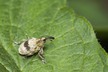
Through the Resolution of 10 April 2026 from the Directorate General for Agricultural and Livestock Production, published in BOJA on 17 April, the Ministry of Agriculture, Fisheries, Water and Rural Development of the Regional Government of Andalusia has formally declared the presence of the pest Thrips parvispinus and set out mandatory and recommended phytosanitary measures for its control across the autonomous community.
As stated in the resolution, the obligations and recommendations established "will apply to agricultural holdings located in the provinces of Almería and Granada dedicated to greenhouse production of pepper, cucumber, aubergine, courgette, melon and watermelon."
"In order to prevent high levels of T. parvispinus presence, growers with the crops indicated must adopt the mandatory phytosanitary measures established in the resolution, consisting of a crop removal protocol for crops that act as a reservoir of T. parvispinus."
Mandatory phytosanitary measures for the prevention and control of Thrips parvispinus: reservoir crop removal protocol
This measure applies to greenhouse crops of pepper, cucumber, aubergine, courgette, melon and watermelon.
- Mandatory closure of side vents and windows.
- Mandatory mass trapping with chromatic sticky traps, using a ratio of 2 blue traps for every yellow trap installed around the full perimeter of the greenhouse, with a minimum of 100 traps for every 100 linear metres of greenhouse perimeter.
- Mandatory phytosanitary treatment of the crop before removal. Additionally, where a high presence of the pest is confirmed in the biodiversity present inside the greenhouse, phytosanitary treatment must also be applied to that vegetation. Applications must use products registered in the Official Register of Plant Protection Products of the Ministry of Agriculture, Fisheries and Food, while complying with all label conditions of use.
- Mandatory prior notice to neighbouring growers so they may take whatever measures they consider appropriate. Evidence of that communication must be kept in order to demonstrate compliance to the Administration if required.
- Mandatory crop removal and removal of residues, or shredding residues for incorporation into the soil. Where residues are shredded, this should be done into small fractions to facilitate dehydration of the plant material, together with cultivation work to improve incorporation into the soil. It is also recommended to wait as long as possible before transplanting the next crop so dehydration of the plant material can occur, making pest survival more difficult.
- Where plant material is removed, the transporter must ensure it is carried in a sealed impermeable container or similar system, which must remain fully closed at all times, either with a lid, mesh with a minimum density of 20x10 threads/cm², or plastic covering.
- In all cases, plant residues must be unloaded at duly authorised recycling plants. They must never be dumped on wasteland for livestock feed or abandoned.
- Before transplanting or sowing the next crop, greenhouse structures must undergo disinfection and cleaning in any areas that may act as a pest reservoir. Additionally, in zones that have constituted infestation hotspots inside the greenhouse, targeted soil treatments must be carried out using plant protection products formulated with the active substance diatomaceous earth, registered in the Official Register of Plant Protection Products of the Ministry of Agriculture, Fisheries and Food, and used in line with all label conditions.
- Where possible, solarisation or biosolarisation must be carried out.
- Plastic mulch is recommended in order to affect pupae that may be present in the soil.
The resolution, which entered into force on the Saturday following publication, also includes recommended biological control protocols aimed respectively at pepper nurseries, greenhouse pepper crops and spring greenhouse crops.