The evolution of biological control in Almería cannot be understood without the trajectory of companies such as Saniveg VIP Control, whose development is closely linked to a transition from chemical dependence toward increasingly integrated, resilient and sustainable models.
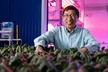
The company dates back to 1989, when it was founded as a distributor of crop protection products, working with major multinationals such as Bayer, BASF and DuPont, at a time when crop protection was still largely dominated by chemical solutions, with little indication of the role beneficial organisms would later come to play within the production system, explains José Manuel Doña Góngora, manager of the company.
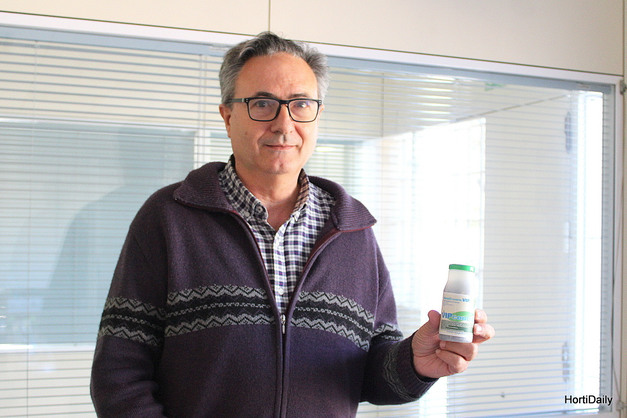
The turning point began to emerge long before the market was ready, driven by a technical curiosity that led José Manuel to take an interest in insect related developments being carried out by IFAPA and private companies in the late 1990s, an experience that, as he acknowledges, "left me completely fascinated" and would shape the decisions that followed.
"That early interest in applied entomology coincided with a structural problem that was not fully understood at the time, but which seriously affected the effectiveness of the first biological control trials: the high persistence of crop protection products in the crop and in the soil, which meant the released insects failed to develop satisfactorily after being introduced into the crops, creating the false perception that biological strategies were not viable or were too cumbersome under commercial conditions," he recalls. "In reality, as would later be demonstrated, the problem was not the beneficial organisms, but the residual toxicity accumulated in production systems, a factor that made it necessary to completely rethink the model."
"The real breaking point came between 2006 and 2008, when European regulations suddenly removed a large number of active substances that were key to intensive horticulture, forcing the sector to react quickly in the face of the real risk of a phytosanitary alert that would have brought Almería's exports to a standstill. In that context of urgency, the shift toward integrated control was not gradual, but abrupt, moving within a matter of months from almost symbolic adoption to very high levels in crops such as peppers, consolidating a model that today is an international benchmark."
At the same time as this market transformation, VIP Control committed to bringing the use and commercialization of beneficial insects closer to the production area itself, overcoming one of the sector's main logistical constraints, since reliance on external suppliers involved transport times poorly suited to living organisms whose viability and quality depend on highly controlled conditions. "This approach led to the creation of a technology based company in collaboration with the University of Almería, focused on developing production protocols, rearing systems and industrial scale up, laying the foundations for what would later become the company's own production activity."
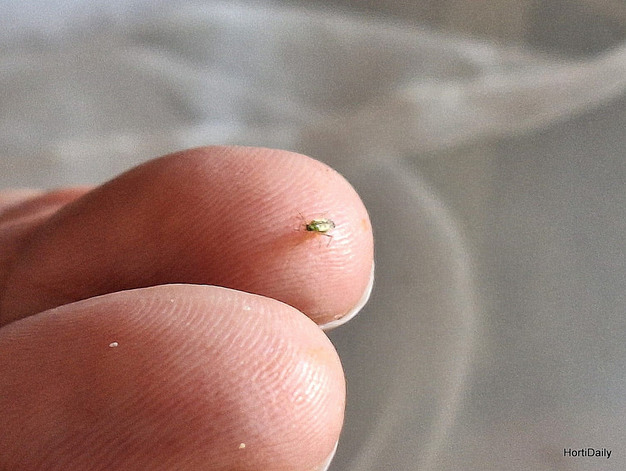 Adult lacewing
Lacewing: the insect that goes from "crocodile" to arthropod
"Within this ecosystem, the lacewing, Chrysoperla carnea, has established itself as one of the most versatile and strategic organisms, together with other beneficials such as Orius or Nesidiocoris, thanks to its predatory capacity and its adaptability to different production systems, from intensive horticulture to fruit crops and citrus," José Manuel continues.
"The voracious and generalist behaviour of its larvae, popularly known as 'crocodiles,' allows it to feed on a wide range of pests, making it an especially valuable tool in integrated control programmes, although it also introduces complex dynamics such as cannibalism, which makes it necessary to carefully manage rearing and release conditions."
The population balance between pest and predator is decisive to its behaviour, since the lacewing does not act in a linear way, but responds to food availability and population density, regulating reproduction according to environmental conditions, which allows a certain balance to be maintained without constant intervention. "These kinds of biological dynamics, difficult to reproduce through chemical solutions, illustrate the potential of natural systems when they are properly integrated into agronomic management," he explains while showing lacewings at different growth stages, reared at VIP Control's facilities in Almería.
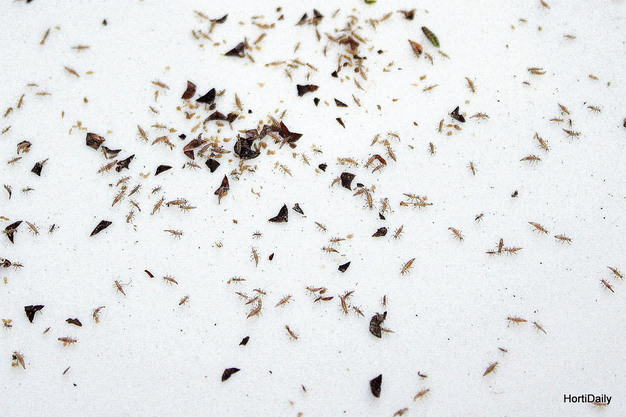 Because of their characteristic shape, lacewing larvae are commonly called 'crocodiles'.
New solutions focused on soil health
VIP Control's vision extends beyond classical biological control toward an area that the company's manager considers even more decisive: soil. After more than a decade of research into microorganisms, the company is working on the development of solutions based on bacteria and microbial consortia capable of improving nutrient use efficiency, reducing dependence on chemical fertilizers and contributing to the regeneration of production systems, while addressing problems such as nitrate accumulation and phosphorus fixation in calcareous soils.
"These advances are based on the ability of certain microorganisms to transform nutrients into forms the plant can assimilate, as well as on their interaction with the root system, where they establish symbiotic relationships that favour both nutrition and protection against pathogens. The strategy is not only to identify individual strains, but to design combinations that enhance their effects synergistically, opening new lines of development in the field of biosolutions."
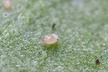
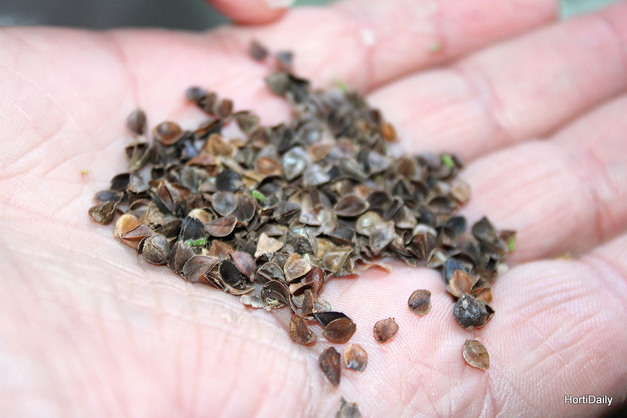
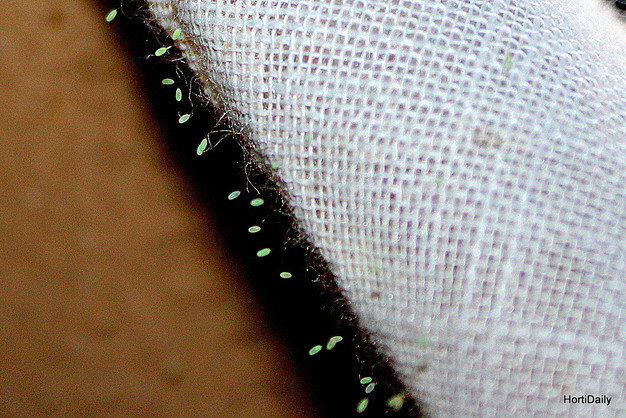 Chrysopa eggs
"This evolution responds to a philosophy that seeks to restore the natural balance of agricultural systems, a transition from agriculture based on chemical intervention toward one closer to the principles that traditionally guided production, where knowledge of the ecosystem was the main tool," José Manuel says. "And just as VIP Control accompanied the sector's major transition in recent years, moving from a chemical intensive model to one increasingly supported by biology, we are anticipating the next step: the integration of solutions in which soil will be a key element in guaranteeing both productivity and sustainability."
 © Saniveg VIP ControlFor more information:
Saniveg-VIP Control
T. +34 950 291 373
[email protected]
www.vipcontrol.es