When looking at resource efficiency and environmental compliance, substrate optimization has become increasingly important. Mineral additives such as Bara Clay are being integrated into growing media to address challenges related to water management, nutrient retention, and the transition to peat-reduced systems.
Bara Clay, sourced from southern Sweden, has been used in professional horticulture for more than 30 years. While initially adopted to enhance general substrate stability, its function has evolved alongside industry demands. "Bara Clay now helps growers manage buffering fluctuations in water and nutrient availability. Due to the focus on peat-less and peat-free substrates, improving the efficiency of water and fertilizer use has become more important compared to the challenges growers had 30 years ago," Andrea Held, Product Manager of Bara Clay, explains.
 © Bara Mineraler
Nutrient buffering and reduced leaching
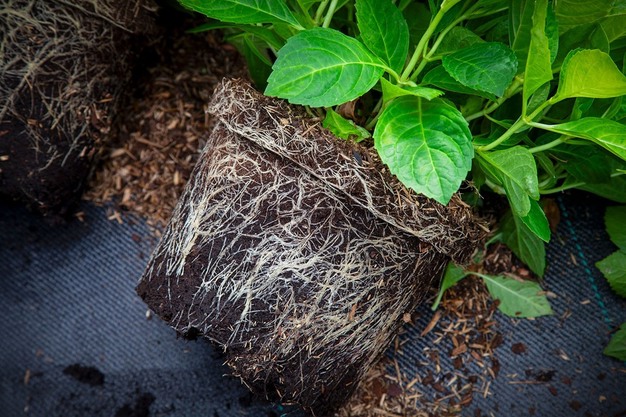
A key technical characteristic of Bara Clay is its high cation and anion exchange capacity, allowing it to bind both positively and negatively charged nutrients within the substrate. This buffering mechanism supports more stable nutrient availability while reducing losses through leaching.
"Bara Clay improves nutrient retention by binding essential nutrients on the complex," Andrea says. "It reduces fertilizer runoff by preventing nutrients from being washed out during irrigation and releases nutrients gradually, when the plants need them."
This function is particularly relevant in greenhouse systems where nutrient discharge is tightly regulated, enabling growers to maintain balanced electrical conductivity levels while improving fertilizer efficiency.
Water management and irrigation efficiency
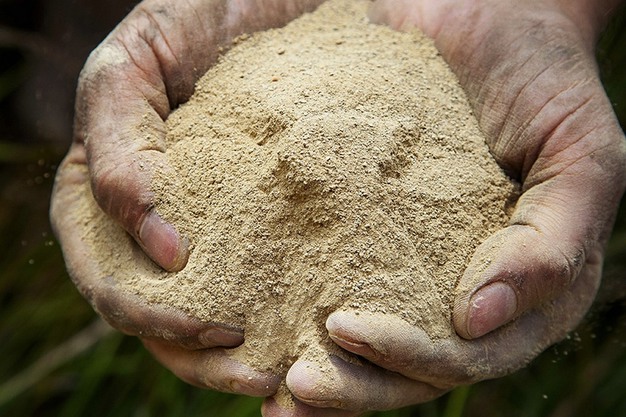
Water distribution and retention are critical to uniform crop development. Bara Clay enhances substrate hydrophilicity due to its high content of illite and smectite clay minerals, which improve wetting characteristics by coating hydrophobic organic particles such as peat.
"Bara Clay increases water-holding capacity, which allows growers to reduce irrigation frequency. It ensures more uniform moisture distribution, reducing the risk of plant stress between watering cycles." Improved water retention also supports operational consistency by enabling more predictable irrigation strategies and reducing overall water consumption.
 © Bara Mineraler
Bara Clay
Supporting the shift to peat-reduced substrates
The transition toward peat-reduced and peat-free substrates presents challenges, particularly in maintaining water-holding capacity and nutrient buffering. Alternative raw materials often lack these properties, requiring more precise management.
"When peat is reduced or replaced, the alternative materials normally have weaker performance," Andrea explains. "Bara Clay can enhance these factors by stabilizing water and nutrient availability and making growing conditions more consistent."
Although growers may still need to adjust irrigation and fertilization regimes, the inclusion of clay reduces the extent of these changes.
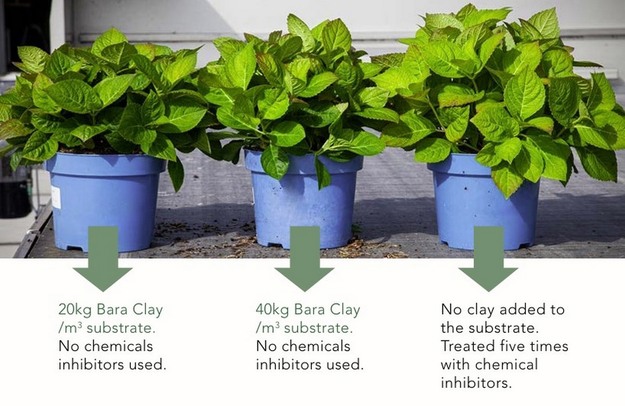
Compact growth without chemical regulators
Bara Clay also influences plant morphology by altering water availability dynamics in the substrate. By reducing the fraction of easily available water, plants must expend more energy on water uptake.
"Plants need more energy to absorb the water, which leaves less energy for growth and therefore plants remain compact." This effect enables growers to achieve compact, marketable plants without relying on chemical growth regulators, reducing both input costs and labour associated with application.
Application in propagation and substrate structure
Fine fractions such as Bara Clay 0–1 mm are specifically developed for propagation, where precision in water and nutrient delivery is essential. These fractions are used in peat-, coco-, and wood fibre-based mixes for seedlings and cuttings, ensuring uniform distribution and consistent early-stage development.
 © Bara Mineraler
In addition, Bara Clay contributes to substrate structure by improving cohesion. Fine clay particles and powder forms can be used to bind growing media components, supporting the formation of stable plugs and press pots. This enhances handling efficiency and transplant success in commercial operations.
Beyond physical and chemical properties, Bara Clay contributes to biological processes in the root zone. It introduces naturally occurring microorganisms, including nitrogen-fixing and phosphate-releasing bacteria, which can help establish microbial activity in otherwise inert substrates.
"The clay also provides trace elements such as iron, manganese, zinc, and boron, which are essential for plant development in small quantities but are often limited in conventional fertilization programs."
Andrea says that Bara Clay is characterized by a high proportion of true clay minerals with a balanced composition of key cations such as calcium, magnesium, and potassium. This balance supports effective nutrient exchange while minimizing the presence of undesirable ions.
The product is RHP- and FiBL-certified, confirming its suitability for regulated and organic production systems. Its low moisture content and consistent quality also contribute to ease of handling and uniform application.
Bara Mineraler continues to position Bara Clay as part of the solution for sustainable greenhouse production. "We focus on improving resource efficiency by optimizing water and fertilizer use in cooperation with research stations and well-known growers."
For more information:
Bara Mineraler
Andrea Held
[email protected]
www.baramineraler.se/en