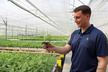
Protected horticulture in Mexico is advancing towards more technologically advanced production methods that rely on specialized inputs and are deeply embedded in global supply chains. However, taxes on substrates such as coconut fiber and peat have begun to affect both the daily operations and medium- to long-term planning of companies. Emmanuel Mena, the legal director of Mexico's customs agency, STACOMEX, explains this perspective.
After participating in a GreenTech roundtable, Emmanuel notes that discussions about coconut fiber have grown more prominent recently. Various stakeholders, including importers and diplomatic officials, are now collaborating to tackle a problem he describes as both fiscal and operational. "This issue directly affects the sustainability of companies that rely on these materials for production," he added.
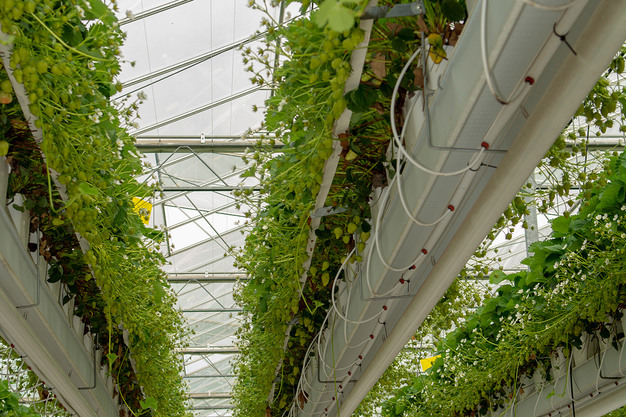 © Barmalini | Dreamstime
Evolution in regulatory criteria
The core problem stems from the evolving regulatory criteria that affect how these substrates are taxed. Notably, in 2021, Mexican authorities made significant changes to the classification of coconut fiber. Additionally, they removed the tariff fraction for peat moss from Annex 27, an instrument used since 2017 to allow the importation of this input without VAT, as it was considered part of hydroponic greenhouse equipment.
"For many years, we demonstrated that both coconut fiber and peat moss could be considered integral components within hydroponic greenhouses, because they act as an interface between the plant and the soil, protecting the crop from the natural element that is the soil," Mena stated. Technical and laboratory validations were even carried out by SAT to justify this approach to the authorities, a process that allowed time to consolidate a relatively stable framework for the importation of these materials.
"This balance was disrupted in July 2023 when criterion 17/IVA/N was amended and, simultaneously, the peat moss tariff section was removed from Annex 27. This change mandated VAT payment upon import and required a complete review of its tax status. It triggered a domino effect, affecting other inputs for hydroponic greenhouses and creating uncertainty for operators. They could either request a consultation and seek authorization to import VAT-free or face denial by authorities following the reform to criterion 17/IVA/N, which now prohibits VAT exemptions for items designated as integrated hydroponic greenhouse equipment," he stated.
The financial burden of paying taxes—specifically for coconut fiber, including retroactive payments prior to the 2021 tariff change—is worsened by the VAT refund process. This issue is particularly acute in a sector where most products are traded at zero rate, requiring companies to pay import taxes upfront and wait several months for refunds. This process is often accompanied by audits, which increase administrative costs. Emmanuel notes that this situation "ends up affecting not only liquidity, but also the ability of companies to operate normally and having to, on many occasions, hire staff to attend to these reviews."
Adding to this complexity is a sensitive factor: the inconsistent application of regulations. "Although the legal framework is federal, there are notable regional differences in practice. This has led to situations in which some importers in Jalisco and Sinaloa have received official approval to import peat moss without VAT, as local authorities interpret it under a different provision of Article 2 a) of the VAT Law. Conversely, when this interpretation is applied in other federal states, such as Mexico City or Querétaro, it results in outright rejection. These market distortions should not exist in a system that is supposed to be uniform nationwide," Mena stated.
Collective efforts coordinated via AMHPAC and the Dutch embassy.
In response to this situation, the sector is exploring collective action methods to create a more organized dialogue with authorities. "This includes potentially forming groups of importers via associations like AMHPAC and communicating their needs with support from institutional entities such as the Dutch embassy. The goal is to suggest solutions that, while meeting tax requirements, also incorporate clearer criteria aligned with the practical realities of modern horticulture."
"As production systems become more complex, the lines between products, inputs, and integrated components are increasingly blurred. Instead of making specific claims, the sector should reflect on the importance of regulatory coherence. This is especially critical given that agronomic innovation is outpacing regulatory adaptations, creating a gap. If left unaddressed, this gap could hinder the development of a vital sector essential for ensuring food safety," Mena emphasized.
For more information:
Stacomex
Tel: +52 55 5574 9014
www.stacomex.com