"Most alternative substrates force growers to make compromises: performance versus sustainability, consistency versus availability", says Tomislaw Krężelewski of FibriTech. He explains that this dilemma was exactly what FibriAgri® set out to eliminate. "From the start, our goal was to create a substrate that behaves like an engineered system, not a loose fill. Something growers can fully rely on in high-tech environments."
FibriAgri substrates are manufactured through a proprietary and patented process using natural cellulose fibers. "We create a fixed, three-dimensional pore structure that remains stable throughout the entire crop cycle." The virgin cellulose fibers are enriched with decomposed organic matter like green compost and blended with small addition of coir for physical reinforcement.
That pore structure is hierarchical by design. Macropores ensure continuous oxygen availability to the roots, while micro- and nanopores drive capillary action and even water distribution. "Unlike peat or coir, which can compact over time, our structure is locked in. The air–water balance you start with is the balance you keep," he says.
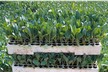
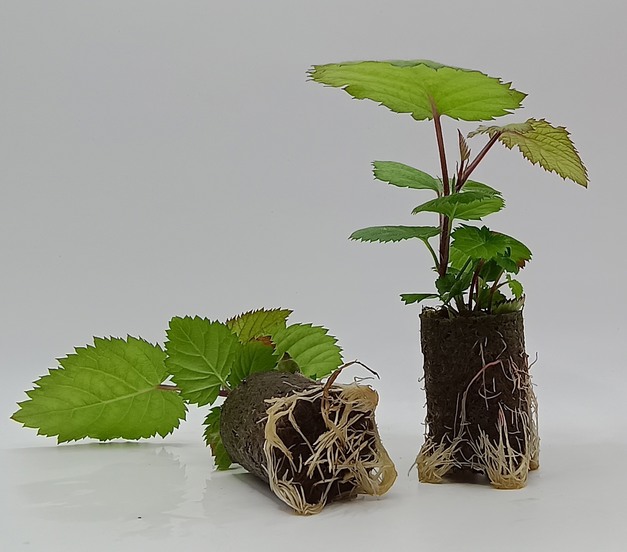
For growers, this translates directly into more predictable root development. "Roots have immediate access to both air and water, which accelerates acclimatization and reduces stress, especially in young plants," Tomislaw notes. "That consistency is critical in automated, high-density greenhouse systems."
 © Fibritech
 © Fibritech
Precision water management without re-wetting issues
Water behavior is another area where the solid structure makes a measurable difference. FibriAgri® achieves a water-holding capacity of around 86% v/v, comparable to or exceeding peat, while maintaining excellent drainage. "But it's not just about how much water it holds," Tomislaw emphasizes. "It's about how that water is buffered and distributed."
The substrate absorbs water within seconds, even when completely dry. "Re-wetting problems, which are common with dried peat, simply don't exist," he says. "At the same time, the material retains moisture longer than mineral wool, allowing growers to reduce irrigation frequency without risking stress."
This built-in water buffer also provides security beyond the greenhouse. "During transport, handling, or temporary irrigation failures, the substrate protects the crop," Tomislaw explains. "That forgiveness is extremely valuable in large-scale operations."
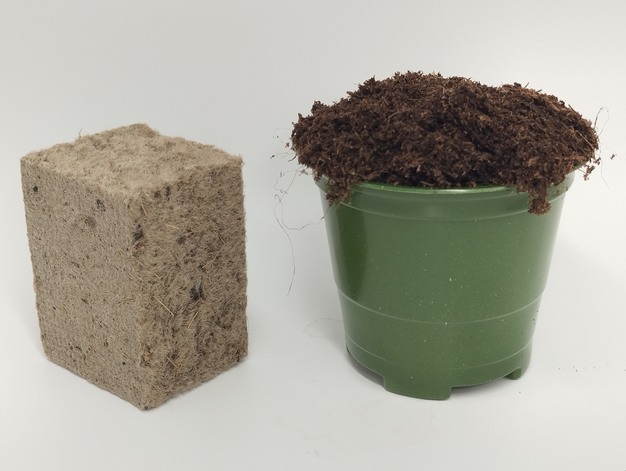 © Fibritech
Clean from day one – by design
Because the substrate is formed under controlled, high-temperature conditions, it is delivered free from soil-borne pathogens and pests. "Pythium, Sciarids, fungus gnats — these are problems growers spend a lot of time and money managing," Tomislaw says. "By starting with a clean, solid substrate that doesn't crumble, you remove many of those risks at the source."
Equally important is material purity. The cellulose fibers used are fully refined and free from phytotoxic compounds such as resins or tannins. "There's a long-standing concern in the industry about softwood-based materials," he adds. "Our process removes that risk entirely, which allows us to safely use renewable softwood sources without growth inhibition."
Lighter logistics, longer shelf life
From a logistics perspective, FibriAgri also challenges conventional thinking. "Peat must be transported wet, otherwise it loses its functional properties," Tomislaw explains. "Our substrate is transported completely dry, which makes it significantly lighter and safer to ship."
Once hydrated, performance is fully restored — without leakage. "Even without a pot, the substrate holds water extremely well," he says. "Plants can be watered along the supply chain, in distribution centers or even in retail, keeping them fresh for weeks if necessary."
This directly impacts shelf life, particularly for leafy greens sold with the root system intact. "After removal from the cultivation system, the plant remains viable and fresh during transport, in-store, and at the final destination — whether that's a consumer's home or the HoReCa channel," Tomislaw notes.
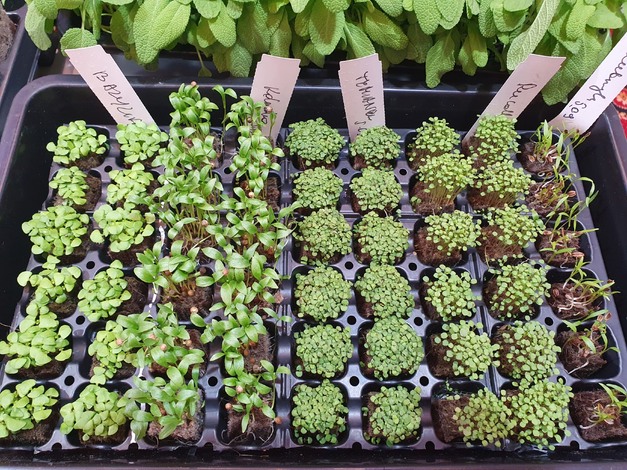 © Fibritech
Enabling the next step in automation
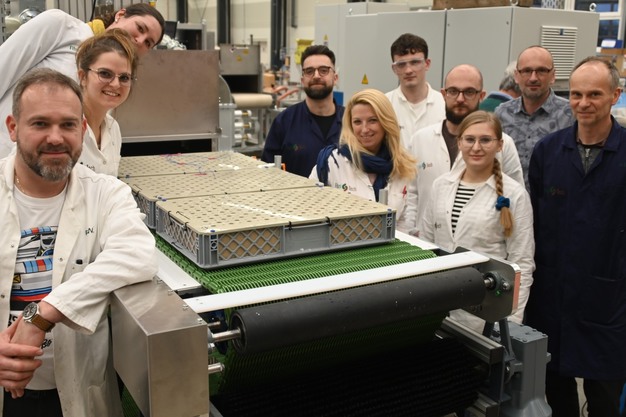
The dimensional stability of the substrate opens doors for further automation. "Because our plugs, cubes and boards keep their shape and don't shed particles, they integrate seamlessly into automated handling systems," Tomislaw explains. "No clogged filters, no dirty lines, no inconsistent dimensions."
This is especially relevant for pot-less cultivation concepts. "Growing finished plants without plastic containers simplifies the entire system — from transplanting to logistics to waste handling," he says. "It's a cleaner, more efficient way to scale production."
A new category: advanced programmable biomaterials
Ultimately, Tomislaw sees FibriAgri® as more than just another substrate alternative. "We are introducing a completely new category: advanced programmable biomaterials," he says. "We can tune density, porosity and mechanical strength for specific crops or growth stages — softer zones for rooting, denser zones for structural stability."
Tomislaw says this marks a turning point for the industry. "For years, growers were told they had to choose between sustainability and performance. That era is over," Tomislaw concludes. "In high-tech horticulture, you shouldn't accept compromises. You should demand solutions that deliver both — reliably, at scale. That's exactly what FibriAgri® was built to do."