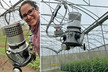
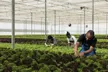
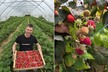
In Cartago, one of Costa Rica's most productive agricultural regions and also one of the most exposed to the pressures of intensive farming, Joana da Silva's operation shows how each decision in the field carries through the entire food chain.
"We are originally from Venezuela, and we have been in Costa Rica for almost 12 years," Joana says. "Our father was already a farmer in Venezuela, and he decided to start a family project with the goal of introducing greenhouse technology into our production to bring consumers vegetables of the highest quality."
That transition involved more than technical adaptation. The farm has obtained certification from the state phytosanitary service, a guarantee that requires постоян audits and strict control over both chemical and microbiological loads in the product.
Working with retail chains such as Automercado, which target a mid to high income consumer and operate under particularly strict control protocols, raises that bar further. "Traceability and food safety are non negotiable, and that has pushed us to progressively move toward a more biological type of agriculture, reducing dependence on conventional chemical inputs as much as possible."
"We know that chemical load and residues in food are harmful to the body, and daily consumption should not become a silent vector of exposure to non natural substances. That thinking led us to constantly look for solutions that allow us to maintain productivity without compromising the health of consumers or our workers. That is where Biocaptur technology came in as a key part of our strategy to reduce chemical pressure on crops," Joana says.
Pest pressure drives both agronomic and economic decisions
The farm works with several crops, from bell pepper to mini cucumber, green beans, and cherry tomato, all highly exposed to pest pressure in what Joana describes as a tropical climate "perfect for massive reproduction."
Tuta absoluta stands out as one of the clearest examples. According to Joana, it causes significant losses through discarded product. "The number of kilos that have to be thrown away because of Tuta is very high," she says, pointing to the direct economic impact on intensive operations, especially when conventional solutions require increasing use of increasingly expensive crop protection products. In that context, adopting Biocaptur responded to both agronomic and economic logic.
"We control the pest from day one"
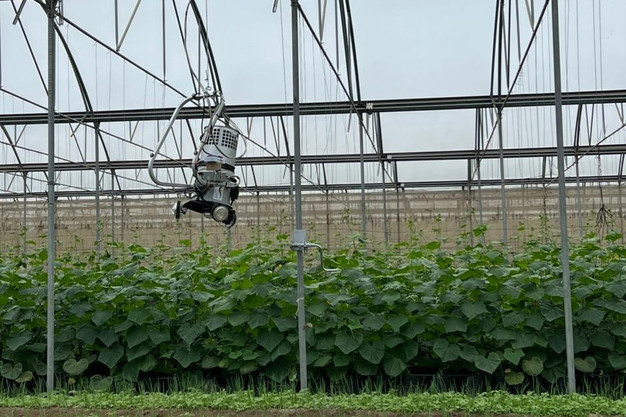
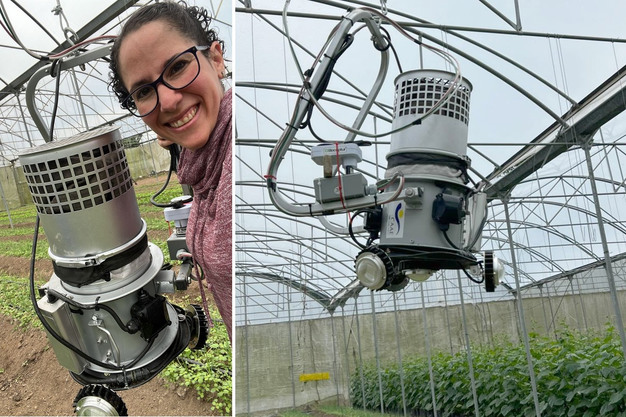
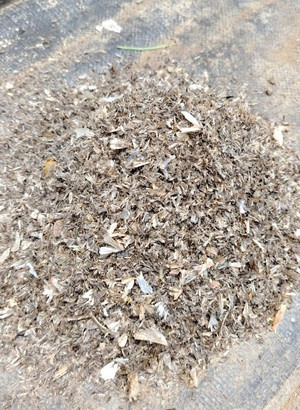
"We have two devices installed, and the pest is controlled across the entire greenhouse from the very beginning," Joana says. "In the first weeks of use, we saw a significant accumulation of captured insects, which showed the real level of infestation we had. But little by little it has decreased, and by controlling populations we have stopped having production losses."
Because the greenhouses are not completely sealed, the effect extends beyond the farm itself. "Biocaptur controls not only the population on our farm, it also progressively reduces pest pressure in the surrounding area, helping clean the whole zone and preventing nearby fields from becoming sources of reinfestation."
The reduction is not limited to Tuta absoluta. "It affects all flying insects, and that is why we have expanded the use of Biocaptur to our cucumber crop and other vegetables as well."
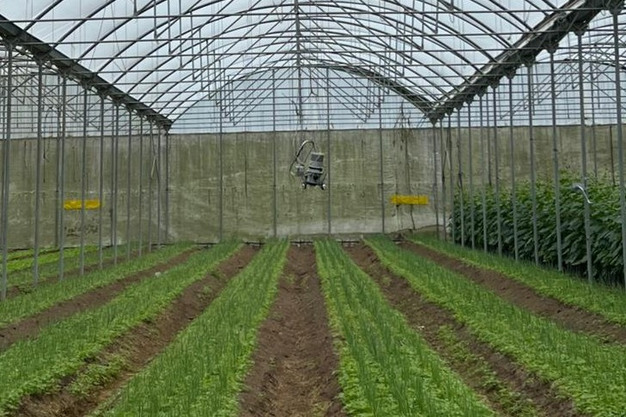
Joana says she is highly satisfied with the results of Biocaptur, designed and patented by ATG Ingeniería. "It is true that there is an initial investment, but the reduction in agrochemical use, especially stronger products applied repeatedly, translates into cumulative economic benefit that offsets the cost, while also improving final product quality."
Quality remains central to the farm's commercial position. "That is what keeps us as suppliers to the top retail chains in the country," she says. "And knowing that I am bringing products without residues to Costa Rican tables is a source of pride." She also points to a broader public health context. Cartago has the highest incidence rate of gastric cancer in Costa Rica, a fact she believes should push a more decisive shift toward production models less dependent on chemical inputs and toward tools like Biocaptur.
"Sometimes it is difficult to take the step toward adopting new technologies, but it brings many benefits. We have to remember that all producers are challenged to produce better, not just more."
 For more information:
Biocaptur
Tel: +34 641 517 153
[email protected]
https://biocaptur.com/