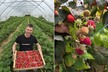
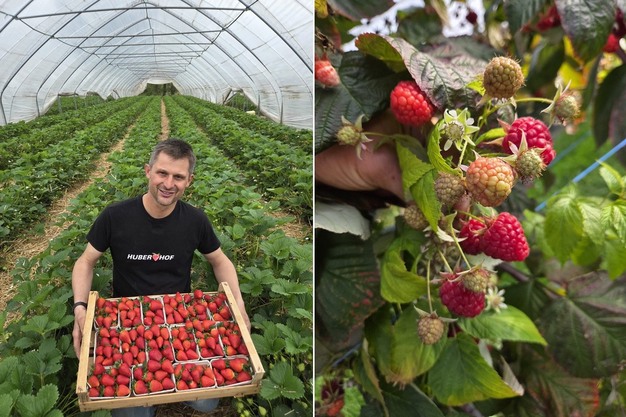
The strawberry harvest in the Ortenau district is now gradually picking up speed. The first local strawberries were harvested as early as April 10 in heated tunnels, followed just under a week later by crops from unheated tunnels. Jörg Huber (pictured below), strawberry grower and owner of the fruit farm of the same name in Achern, expects that the first open-field strawberries will likely be ready for delivery by early May at the latest. The slightly colder weather conditions of the past few days have slowed the growth of the strawberries slightly.
 © J. Huber
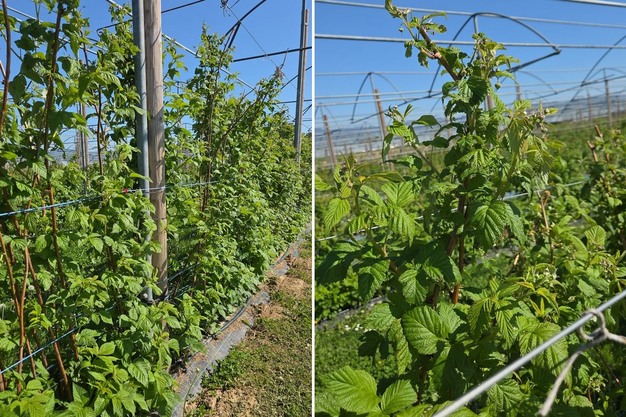
Jörg Huber in the strawberry tunnel: Starting in mid-May, he will also offer raspberries from his own farm (right).
Huber considers the demand for regional strawberries to be encouraging. "So far, we have primarily been supplying farm stands and direct sellers in the neighborhood; starting in week 18, the first deliveries to food retailers in southern Germany will also begin. We've noticed that the quality of imported goods from Italy and Spain is now declining due to the weather, and Greece is also less represented at the moment. We're therefore only competing with greenhouse-grown produce from the Netherlands and Belgium. In that respect, I'd rate the starting position for local strawberries as positive. Given the high costs we have to bear, however, we also need this high demand."
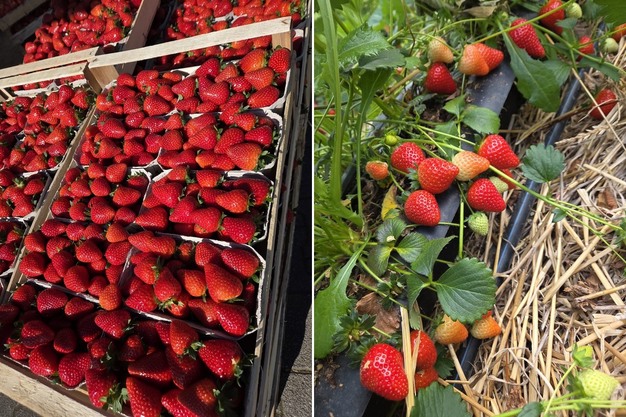
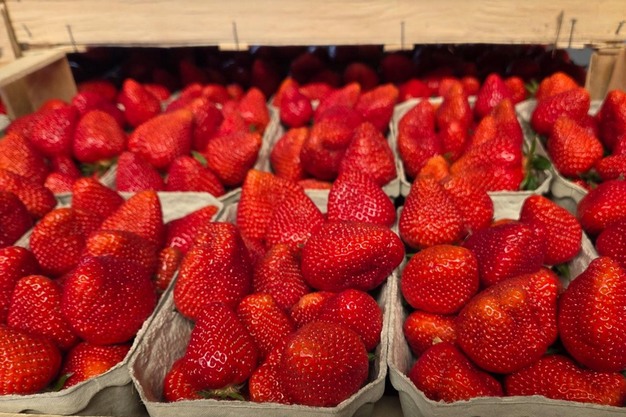 © J. HuberIn protected cultivation, the primary focus is on the Clery (pictured) and Malling Centenary varieties. Huber also produces selected test varieties both in tunnels and in open fields, including on behalf of Fresh Forward.
Sales boost for Mother's Day
According to Huber, in addition to greenhouse-grown produce, open-field strawberries also continue to have their purpose. "Especially in the mid- and late seasons, open-field strawberries remain necessary to supply the markets as needed. Due to the reluctance to spend that we continue to feel, shopping baskets are becoming somewhat emptier. Here, we can only counteract this with affordable fruit. After all, we must not forget that open-field cultivation remains the most cost-effective method, provided we are spared from severe weather extremes. Open-field cultivation still predominates here as well, although we plan to expand our tunnel facilities gradually in the future."
Prices at the start of the season are roughly on par with last year's levels and are satisfactory from the producer's perspective. "We are starting the new marketing season with confidence and expect certain sales boosts, particularly leading up to Mother's Day, which will in turn be further driven by promotional campaigns from food retailers. Another factor working in our favor is the growing domestic tourism in our region, from which we are also benefiting accordingly," explains Huber.
 © J. Huber
Malling Centenary
Seasonal workers and packaging
Another factor is seasonal workers, without whom the berries could not be harvested at all. "Our harvest workers come mainly from Romania. We are seeing fewer problems here this year, as the cost of living has also risen sharply in Eastern Europe, which in turn creates incentives to work abroad." The issue of packaging, however, is more difficult: "Last year, we lost two major crate manufacturers who retired, and unfortunately, it's difficult to find replacements since most are already operating at full capacity. Packing our produce in plastic or cardboard crates would unfortunately not be an option for us, as wholesale markets in particular have been in high demand for wooden crates for years," he concludes.
 © J. Huber
Insight into raspberry cultivation
For more information:
Jörg Huber
Huberhof - Önsbach
Gewerbestrasse 45
77855 Achern
Tel: +49 (0) 7841 67 30 128
Tel: +49 (0) 7841 60 15 707
Mail: [email protected]
www.huberhof-baden.de