At Purdue, the Institute for Plant Sciences has built a collaborative network of plant science researchers and constructed facilities with technology to bring them to the forefront of their fields.
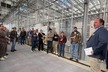
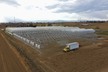
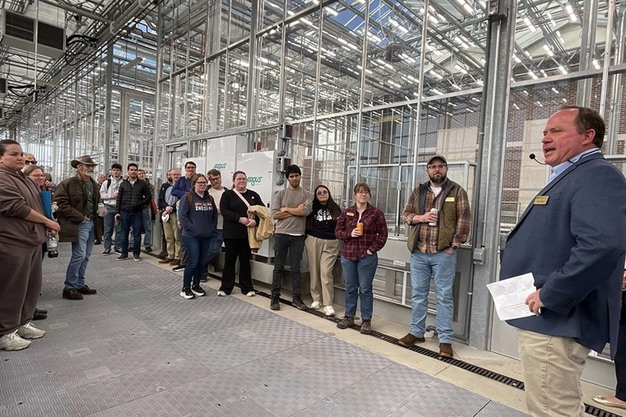
One of the final projects funded by Plant Sciences 2.0, one of Purdue's Next Moves strategic initiatives, were the new set of high-tech greenhouses in the Lilly Life Science Ranges, which was completed in the fall of 2025. The newest 18,654 square feet of greenhouses continue Purdue's long legacy of putting cutting-edge technology into Boilermakers' hands.
 © Purdue University
New features and technologies
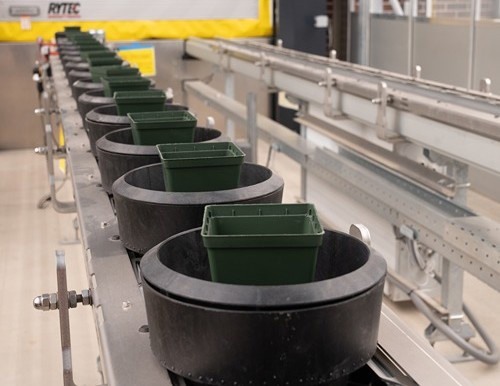
Deep plant phenotyping through connection to the phenotyping facility: A conveyor belt loop in the new greenhouse range enables researchers to send their plants into the Ag Alumni Seed Phenotyping Facility (AAPF) to use its high-throughput RGB and hyperspectral cameras and X-ray root scanner.
 © Purdue University
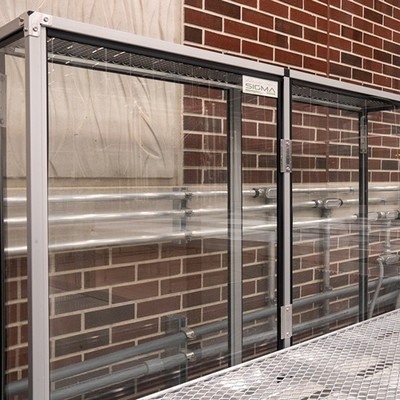
Controlled temperatures: The new greenhouses are naturally ventilated with automatic shade coverings to block excessive sunlight. They also have air conditioners to efficiently regulate energy balance in each room, allowing plants to be grown in any and all seasons.
 © Purdue University
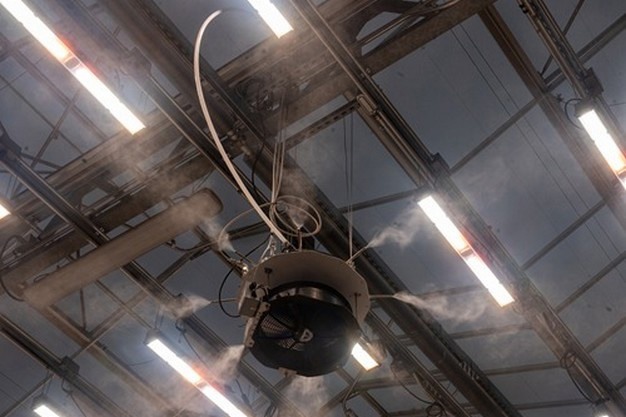
LED lights and humidification: State-of-the art LED lights make this greenhouse shine much brighter than its predecessors and allow researchers to change the intensity of light provided to plants. Researchers can also control the humidity using a fog system.
 © Purdue University
Isolation greenhouses: Two isolation greenhouses allow diseased plants and pests to be kept and researched separately from other plants, reducing the risk of pathogens and insects spreading.
Teaching greenhouse: A new teaching greenhouse is available for faculty, lab coordinators and teaching assistants. This room has flexible benching to allow for remote and proximal sensing, changing stations or highlighting plants of interest.
Source: Purdue University