Supply disruptions to the Senegalese tomato market in 2023, caused by production issues in its main sourcing origin, Morocco, planted the seed for an ambition to reach self-sufficiency. A project was swiftly put in place by Gade Gui, of its founder, Mabouba Diagne. Eighteen months later, Gade Gui announces it has reached enough volumes to cover the needs of the Senegalese market for this product.
 © Gade Gui
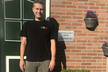
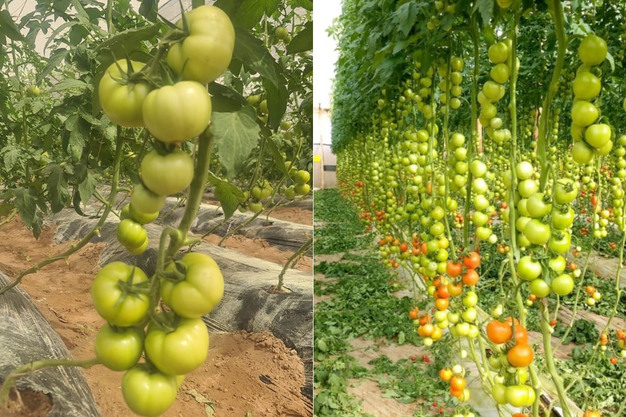
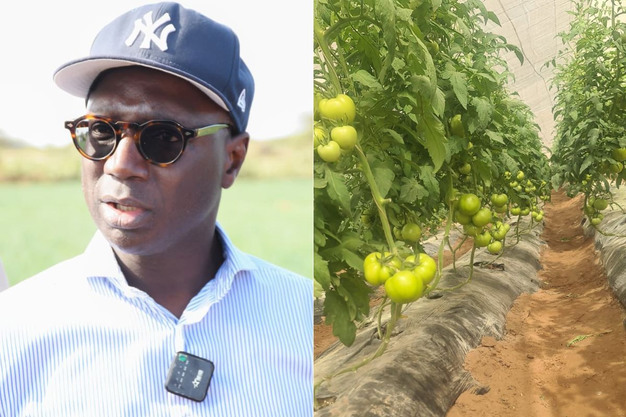
Diagne, a former expat with a background in international business and agri-food expertise gained through an earlier experience in poultry farming in Senegal, says he entered horticulture to respond to an urgent market need. "We only needed 3,000 tonnes of tomatoes per year to free ourselves from imports. The cultivation of local tomato varieties in open fields is already widely present in the country. What was needed was to complement it with off-season production under greenhouses, aimed particularly at the retail segment. That represents a surface area of 30 hectares under greenhouses."
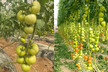
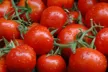
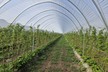
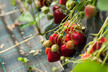
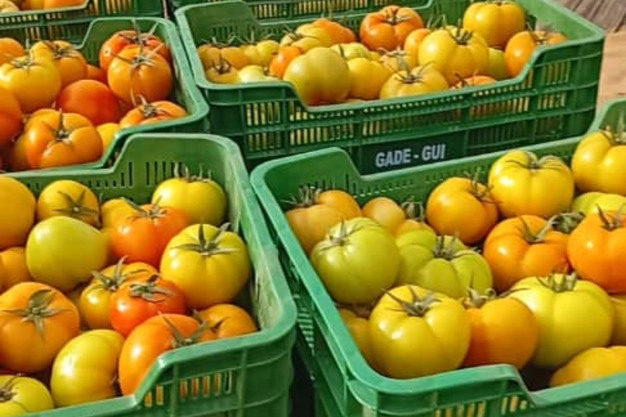
"We got to work with an initial surface of 4 hectares, which has grown to 16 hectares today, with 30 hectares planned by the end of 2026. Current production consists of 90% round tomatoes and 10% segmentation tomatoes, particularly on-vine and cherry tomatoes," Diagne continues.
 © Gade Gui
The project has so far reached a production volume of 28 tonnes of tomatoes per week, with projections of 57 tonnes per week by the end of 2026, which the grower says is more than sufficient to offset imports. "On the commercial front, the initiative has been well received, with contracts signed with 51 retail outlets," he adds.
The project has been carried out with 100% Moroccan expertise, from installation through to technical follow-up, drawing on the success of horticultural production in the Souss Massa region, with the support of Elmokhtar Mahdaoui from the company Destin Ecologique.
Even at the scale of 30 hectares, the project is economically viable thanks to the availability of sufficient freshwater supply and low labour costs. Diagne places the cost of production at 25% below that of the Souss Massa region in Morocco.
 © Gade Gui
Production conditions are also favourable according to the grower. "On the phytosanitary front, the situation is advantageous, with an absence of mildew and ToBRFV. Pests are aggressive, particularly thrips and mites, but these remain under control with the appropriate treatment solutions."
Peak periods of local tomato demand, which coincide with religious festivals, align with open-field production cycles for the next ten years, reducing the need for imports ahead of the project's full capacity, according to Diagne.
The project also involves a knowledge transfer to other players in Senegal's horticultural ecosystem, Diagne notes, through the hosting and training of young students from horticultural training institutes as well as technicians from other companies.
For more information:
Mabouba Diagne
Gade Gui
Email: [email protected]
Elmokhtar Mahadoui
Destin Écologique
Email: [email protected]