New strawberry varieties and warm weather conditions contributed to an early start for California's strawberry season in 2026, while research continues into soil-borne disease resistance.
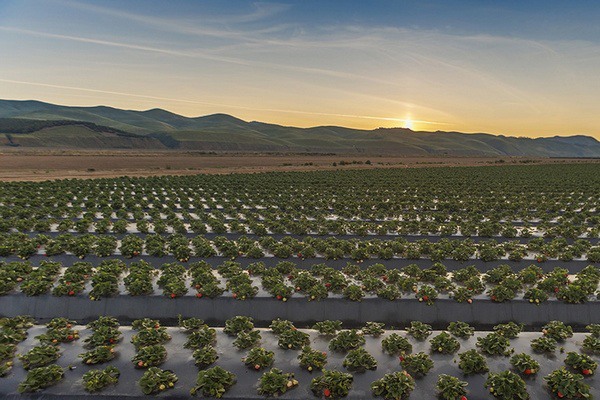
The California Strawberry Commission projected earlier spring production and higher marketable volumes due to increased planting of new commercial varieties from the University of California and private breeding companies. Growers have also expanded the acreage of day-neutral strawberry varieties that produce fruit from spring into fall.
However, University of California Cooperative Extension strawberry adviser Mark Bolda said the early harvest was mainly driven by record heat in February.
 © California Strawberry Commission
"It's been all about unseasonably warm temperatures early on. It bumped the season up by two or three weeks," Bolda said.
In Monterey County, temperatures reached the 80s°F during February, leading the Watsonville-Salinas district to harvest at the same time as the Oxnard district in Southern California.
By April 4, growers in Watsonville-Salinas had harvested 2.9 million crates of strawberries, compared with 230,000 crates during the same period in 2024. Oxnard growers were running 3.5 million crates ahead of last year, while Santa Maria production was 7.1 million trays ahead of 2025 levels for the same period.
Bolda said warm conditions also increased insect and mite pressure in Monterey County. Rainfall beginning April 21 was expected to interrupt harvest activity in Watsonville-Salinas for about a week.
The commission's Chris Christian said warmer conditions in February and March, combined with the adoption of newer cultivars, supported early production.
"We're seeing some shifts," she said. "There's more publicly available varieties now from the university programs and from breeding companies that are making their varieties more available to the industry at large."
California is projected to produce 90% of U.S. strawberries in 2026, with 17,694 hectares planted. Of this, 13,114 hectares were planted for winter, spring, and summer production, while another 4,580 hectares are expected to be planted for fall production.
Research into soil-borne diseases remains a focus for the industry following the loss of methyl bromide exemptions in 2016. Studies have targeted verticillium wilt, phytophthora crown rot, charcoal rot, and fusarium strains.
Gerald Holmes of Cal Poly said surveys found all four pathogens present in 20% to 30% of strawberry fields sampled in Watsonville. In Oxnard, charcoal rot was identified in two-thirds of sampled sites.
UC Davis is breeding strawberry varieties with resistance to soil-borne diseases. According to Mitchell Feldmann, university releases since 2023 show 90% resistance to fusarium race 1.
"It isn't perfect, but it's a strong improvement over where we were a couple of short years ago," Feldmann said.
For more information:
California Farm Bureau
Tel: +1 916 561 5500
Email: [email protected]
www.agalert.com