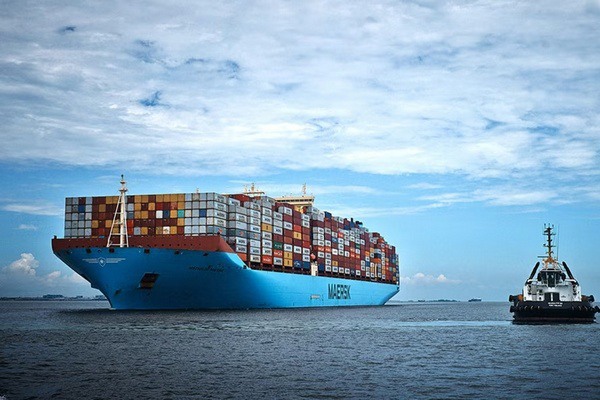
Global transport company AP Moller - Maersk has increased some freight charges by 27 per cent in response to rising energy costs linked to the Middle East conflict. The company stated that developments affecting the Strait of Hormuz, through which around 20 per cent of global fuel supply passes, are impacting Landside and Intermodal operations.
"To ensure service continuity, safeguard cargo integrity, and secure sufficient vendor capacity across our network, AP Moller - Maersk will implement temporary, cost-reflective energy/fuel price adjustments on Landside transportation. Given the volatility of the current energy market, further adjustments may be required as conditions evolve."
 © Maersk
Sherelle Kennelly of the Customs Brokers and Freight Forwarders Federation of New Zealand said costs are being passed through the supply chain. "All charges in the supply chain do get passed on to the end user, so that's where you see your pricing increases, in particular with fuel at the pump, but also grocery stores and things like that. What we're seeing at the moment is a continuation of the fuel-related surcharge that has been introduced across the global shipping industry. The New Zealand intermodal fuel fee is part of that wider trend, rather than an isolated change."
Intermodal transport refers to container movement across rail, sea, and road networks.
Kelly Eckhold said cost pressures are likely to persist as the conflict continues. He noted that while surcharges could be removed, oil prices are expected to remain elevated. He added that New Zealand, as a smaller market at the end of supply chains, faces higher exposure to these cost increases.
Associate Transport Minister James Meager said the government is focused on limiting the impact on households, noting that global oil markets and international developments are outside domestic control.
Government data shows fuel supply levels remain stable, with about 52 days of petrol, nearly 53 days of diesel, and nearly 59 days of jet fuel available. Three vessels are expected within two days, with a further nine due within three weeks.
Source: RNZ News