Tomato breeding is moving toward a tighter balance between resistance, productivity, and organoleptic quality, according to Axia Semillas, which is building its programs around integrating those three factors in response to shifting market demand.
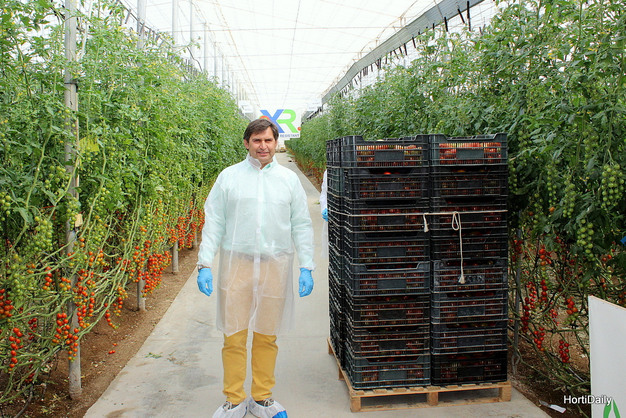
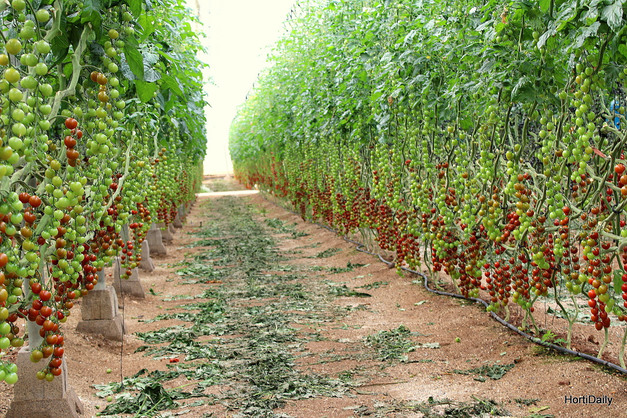
At its experimental farm in Almería, the company is currently working with a wide range of materials. "We have 218 varieties in trials, from early selections to commercial lines, covering around 15 different tomato types," says Pedro Pesquera, product development at Axia in Spain.
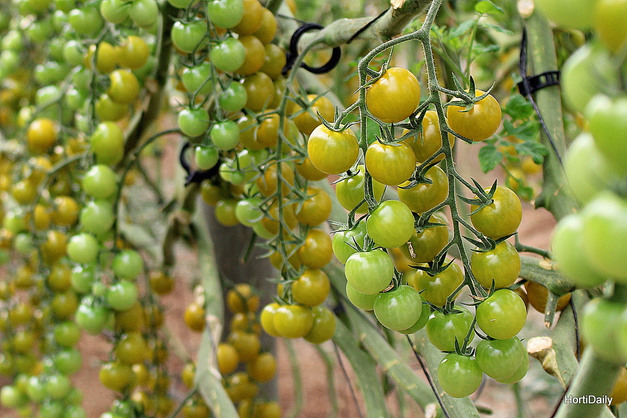
That diversity allows the company to evaluate performance under real conditions and align varietal development with market needs. "We work across cherry, cluster, and round types, as well as more specific segments such as black, green, blue, ribbed, or long shelf life tomatoes. The goal is to cover all commercial segments with varieties developed for Almería and the Mediterranean arc as a whole."
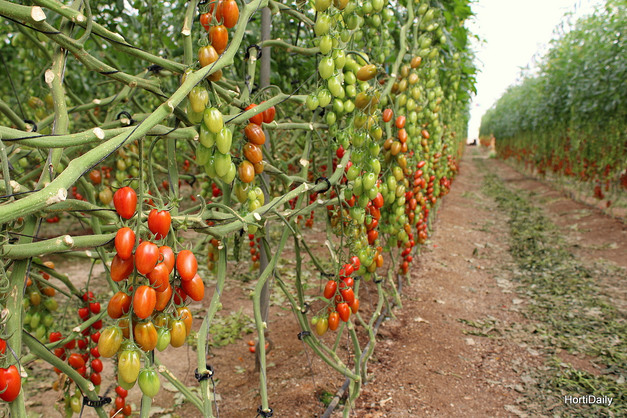
"One of the main pillars of current breeding is disease resistance, especially to the rugose virus. Right now, that is the major challenge," Pedro says. "Of the 218 varieties we have, 46 already show high resistance, and everything in the pipeline incorporates genetic improvements in that direction."
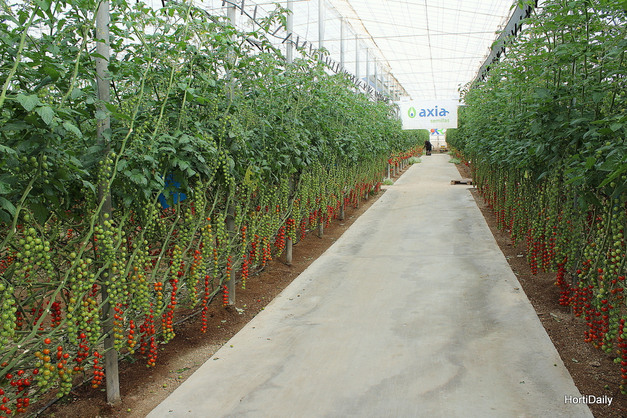
That resistance is paired with increasingly comprehensive health packages. "We are also working on resistance to Fusarium, Cladosporium, and other diseases, with the aim of offering as complete a package as possible to growers, to maximize the success of their commercial production. At the same time, we are not losing sight of one of the most important factors the market demands: flavor."
Developing resistant material alongside improvements in taste and fruit consistency responds to a dual requirement. Growers need stability and yield, while the market demands differentiated quality.
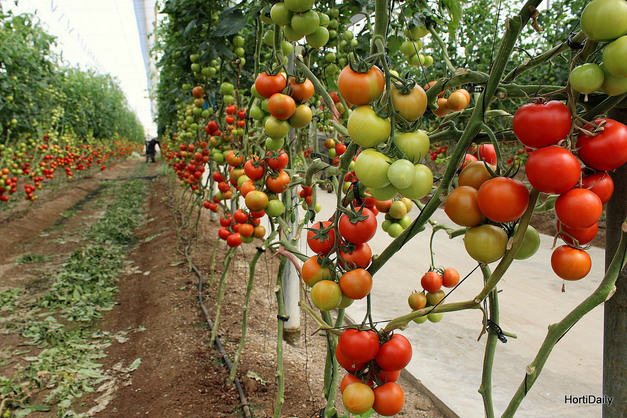
In terms of consumption trends, the cherry segment remains central, "but with nuances," Pedro says. "Cherry plum types are growing strongly, while round cherry is holding but losing some share." In the larger commodity segment, similar shifts are shaping breeding decisions. "Cluster tomatoes are also seeing some decline compared to pear types, which continue to grow." Niche segments, including colored and specialty tomatoes, remain stable and are largely export oriented.
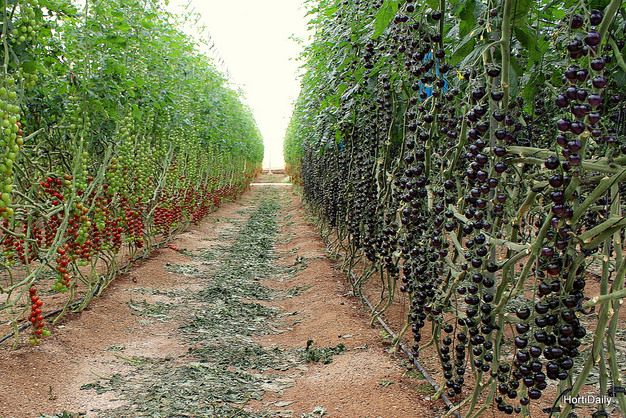
These niches also show clear seasonality. "Colored, blue, or specialty tomatoes are concentrated between October and February, while cherry is produced almost year round, combining coastal and mountain areas."
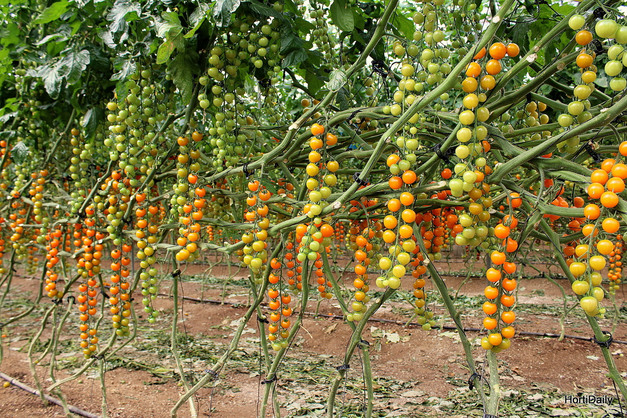
Almería as a testing ground for the Mediterranean
Axia's presence in Almería follows a strategic logic. The province is one of Europe's main greenhouse production hubs, making it an ideal environment for developing and testing new varieties, not only for southeast Spain.
Axia Semillas is part of an international group with roots in the Netherlands, allowing it to combine global research capabilities with strong local presence. That structure supports knowledge exchange across markets and the adaptation of genetic solutions to different production contexts.
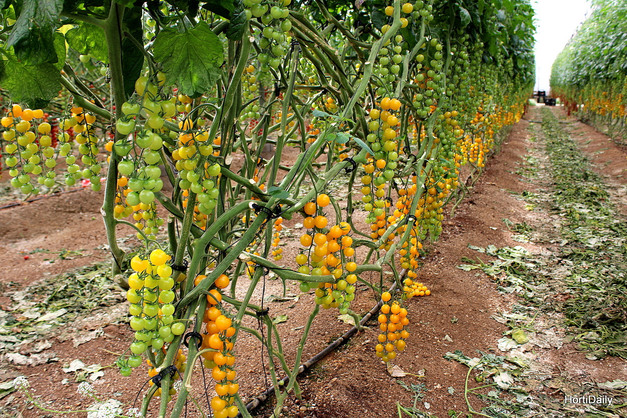
"This approach allows us to adapt varieties to different environments. Conditions in Almería are a reference, but we work with the entire Mediterranean arc in mind," Pedro says.
"All our trial centers share a clear objective: to deliver varieties that are resistant, productive, and flavorful, adapted to a market that is increasingly demanding more quality and greater security."
 For more information:
Axia Seeds
[email protected]
www.axiasemillas.com