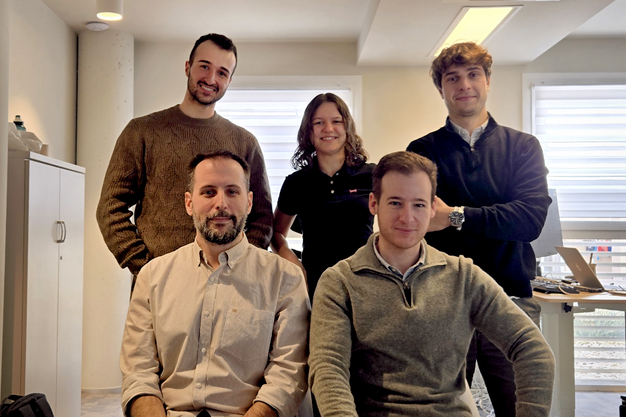
Bioinformatics has become, paradoxically, both a driver of innovation in plant breeding and one of the system's main bottlenecks, especially in environments where biological knowledge is well developed but the technical capacity to process data remains limited, "creating a structural dependence on highly specialised profiles that are not always available," explain the team at Ploid AI, the startup founded by Adolfo Gastalver and Federico Jurado.
"And for that, we created Ploid AI, an artificial intelligence powered platform that aims to bring bioinformatics directly to the researcher or breeder, allowing data analysis to stop being an outsourced process or one dependent on third parties, and instead become an accessible tool within the scientific workflow itself."
 © Ploid AI
Bioinformatics analysis without worrying about code
Much of the bioinformatics work carried out in research and breeding environments is not necessarily innovative, but repetitive, based on established pipelines that require time, technical knowledge and computing resources, yet ultimately follow patterns that can now be replicated through artificial intelligence models, the company explains.
"In that sense, the platform's goal is not to replace the scientist or propose scenarios of total automation, but to redefine the division of tasks within the process, freeing technical profiles from repetitive execution and allowing researchers to access analyses directly without needing to master languages such as R or Python."
"We are not looking for an AI that replaces the scientist, but a tool that allows them to do their job without depending on third parties," they say, "and that can carry out bioinformatics analyses without worrying about code, managing large datasets, or configuring computing clusters."
One area where this approach becomes particularly relevant is plant breeding, where the management and analysis of phenotypic and genetic data is critical to decision making, yet where in many cases information accumulated over years is not used to its full potential because of technical or methodological limitations.
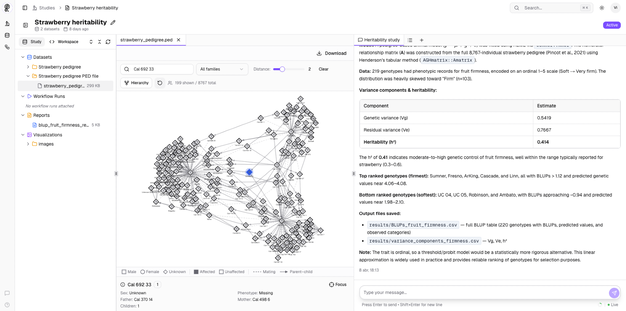
"There are companies that have been collecting data for years and still do not know whether it is robust or how to analyse it correctly. In response to that, Ploid AI allows users to work directly with existing data, integrating pedigree and phenotype information to build statistical models that make it possible, for example, to assess the heritability of certain traits without initially resorting to genetic markers, offering a first layer of accessible, high value analysis for finding new varieties."
 © Ploid AI
"The process, which would traditionally require advanced knowledge in statistical modelling, can be carried out through the direct upload of files and the automatic generation of models, significantly reducing the barrier to entry for teams that do not have in house bioinformatics resources."
That capability marks the natural transition from phenotypic selection to genetic selection, and it lands directly on one of the sector's most critical variables: time.
Direct impact on competitiveness
"Variety development, which usually stretches across a decade, is shaped by the quality of the decisions taken at each stage, many of which depend on the correct interpretation of complex data, so any tool that allows hypotheses to be validated faster and more reliably has a direct impact on competitiveness."
"In this way, the ability to analyse inheritance patterns, validate historical data or identify inconsistencies before making the leap to molecular genetics makes it possible to optimise resources and reduce the risk of moving forward in unproductive directions."
Unlike other systems based on generative artificial intelligence, where results can vary depending on the interaction, the platform allows users to build structured pipelines that guarantee scientific rigour and ensure the same analysis can be repeated across different datasets without altering its logic or its outcome.
However, introducing tools of this kind is not only about technology. It also requires a support process that helps teams integrate these new approaches into their daily operations, especially in organisations where digitalisation is not yet fully established.
"For that reason, in addition to the platform, Ploid AI offers a consulting component aimed at helping clients structure their data, define their analytical objectives and establish a base on which to build predictive models or informed decisions, allowing teams to work autonomously once this initial phase has been completed."
"Ploid AI has already attracted the interest of major plant breeding companies, such as Berryum Varieties, which are already optimizing breeding and genomic selection with complete autonomy and reliability."
 © Ploid AIFor more information:
Ploid AI
Adolfo and Federico
[email protected]
https://ploid.ai