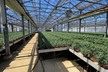
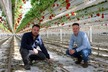
A greenhouse installation in Saitama, Japan, shows how cultivation systems can remain in operation over extended periods, with Staal & Plast A/S trays and Danvan A/S equipment still in use after more than 25 years. The project reflects the combined impact of material selection, installation quality, and consistent maintenance on system lifespan.
The design and material selection
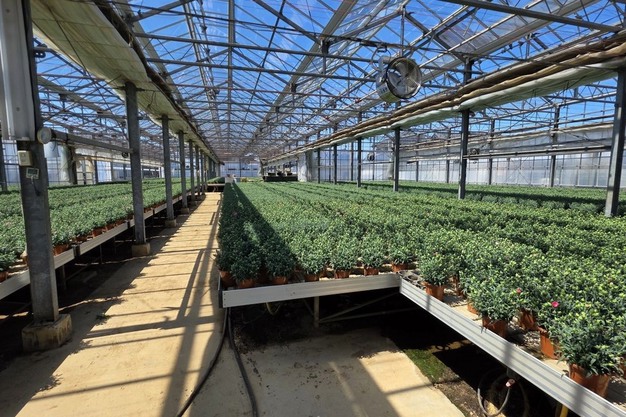
According to Flemming Jørgensen of Staal & Plast, the longevity achieved in Saitama is a result of a long-standing commitment to engineering quality. "We have always been producing top quality and will keep doing so," he explains. Central to this approach is the use of High Impact Polystyrene (HIPS), selected for its ability to withstand greenhouse-specific stresses. "HIPS is a proven perfect mix which will last due to the extreme circumstances in the greenhouse," he adds, highlighting its resistance to humidity, temperature variation, and chemical exposure.
 © Staal & Plast
The initial installation, carried out with Japanese partners Kaneko and Tomita Technologies, ensured precise alignment between aluminum benching systems and tray infrastructure. Accurate installation reduces uneven loading and mechanical stress, both of which are critical factors in long-term structural performance. The Saitama project illustrates how adherence to technical specifications during installation can significantly influence system lifespan.
Maintenance as a performance driver
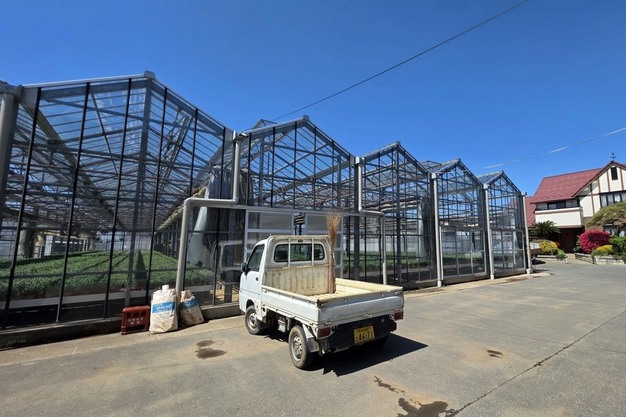
Consistent maintenance practices have played a decisive role in extending the operational life of the system. Flemming emphasizes the importance of routine care: "Keep it clean and maintain. Then our trays will last over 20 years." In Saitama, this includes regular cleaning, lubrication of moving components, and minimizing direct sunlight exposure on empty trays. These measures reduce wear, limit UV degradation, and maintain functional integrity over time.
 © Staal & Plast
Market perspective and investment strategy
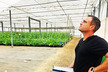
The Japanese greenhouse sector's focus on long-term infrastructure aligns closely with the outcomes seen in this project. "Longevity is very well appreciated in Japan," Xander van der Zande of Dan Dutch, representative for Staal & Plast in Japan, says. "The greenhouse should stand for 25 years plus, and so does the equipment." While some markets prioritize short-term cost savings, the Saitama example shows that durable systems can still achieve competitive returns. "The cost is still low, and the ROI remains short," he notes, pointing to reduced replacement frequency and maintenance efficiency.
Material consistency and controlled production processes have been essential in achieving reliable long-term performance. Uniform HIPS composition ensures stable mechanical properties across production batches, reducing variability and risk of premature failure. In contrast, lower-cost alternatives and copied designs often lack this consistency, resulting in shorter service life and increased replacement requirements.
Flemming emphasizes that long-term planning, combined with preventive maintenance, remains central to maximizing asset lifespan. "Invest in equipment for the long term, maintain it, and only purchase original top quality."
For more information:
DanDutch
Xander van der Zande, Co-Shareholder
T +31(0)6 50277510
[email protected]
www.dandutch.com
 For more information:
Staal Plast
Flemming Jørgensen, Sales Manager
[email protected]
https://staal-plast.dk