Ridder and RED Horticulture have joined forces to strengthen the integration between greenhouse lighting control and energy management. Through the Horticultural Lighting Protocol (HLP), MyRED lighting software and Ridder's Hortimax Pro climate computer are directly connected, allowing data to flow seamlessly between both systems.
The introduction of HLP marks an important step forward for the horticultural industry. As an open standard, HLP simplifies the integration of lighting systems with climate computers, replacing complex, tailor-made connections with a scalable and future-proof solution. By adopting this protocol, Ridder and RED Horticulture make it easier for growers to align lighting strategies with their overall growing and energy strategies.
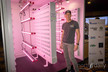
 © Ridder Climate ScreensLeft to right: Pim Joeloemsingh (RED Horticulture), Francis van Peer (Ridder), Timo Spruijt (RED Horticulture), Jorge Gonzalez (Ridder), Nicolas Thibaut and Adrien Lespinasse (RED Horticulture).
Combining expertise through HLP
By adopting HLP as a shared framework, RED Horticulture and Ridder make it possible to combine the strengths of both solutions in a more efficient and scalable way. Through the HLP integration, both companies retain their individual strengths while working together as one connected system. RED Horticulture, through MyRED, delivers dynamic lighting control, ensuring the right light spectrum and intensity based on crop type, zone and time of day. Ridder, through its Hortimax Pro climate computer, enables growers to execute their growing strategy in a robust and efficient way, including the management of energy in the greenhouse and its alignment with energy market conditions.
Better insights into lighting and energy use
By connecting lighting and climate systems via HLP, calculations and planning that were previously handled manually can now be automated. Growers gain clearer insight into lighting-related energy consumption and can better anticipate energy demand.
Energy consumption of LED fixtures becomes directly available within the climate computer, creating a clear link between lighting strategy and overall energy management. By making actual lighting consumption visible, energy planning can be more effectively aligned with the overall energy strategy, including the optimal use of the CHP installation (WKK) in response to energy market conditions.
For more information:
Ridder
[email protected]
www.ridder.com