When a new lighting project goes in, control is usually the last conversation. The fixture gets specified, the layout gets approved, the energy calculation gets signed off, and then, almost as an afterthought, someone asks how the grower is actually going to run it.
For most of the industry's history, that wasn't an unreasonable approach. Lighting was largely fixed-output. You switched it on, you switched it off, and if you were doing something more sophisticated, you wired it into the climate computer and hoped the integration worked cleanly.
That model is breaking down. Not because fixtures have changed, though they have, but because what growers are being asked to do with their lighting has changed considerably. Energy prices shift hourly. Outdoor light levels demand a faster response than a manual dial can provide. Crop strategies need to be applied by zone, not by house. And the growers who are doing this well are doing it through control software, not through better hardware alone.
 © Nlight
From dimmer to platform
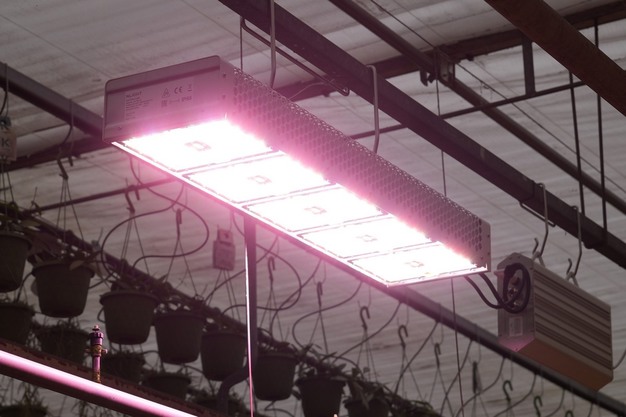
NLight's Yieldr system started as a wireless lighting control solution built around Bluetooth communication. The core appeal was straightforward: quick, reliable, low-cost wireless control without the infrastructure burden of wired dimming. Installation was fast, the communication was robust, and it worked well as a hardware-integrated alternative to traditional control approaches.
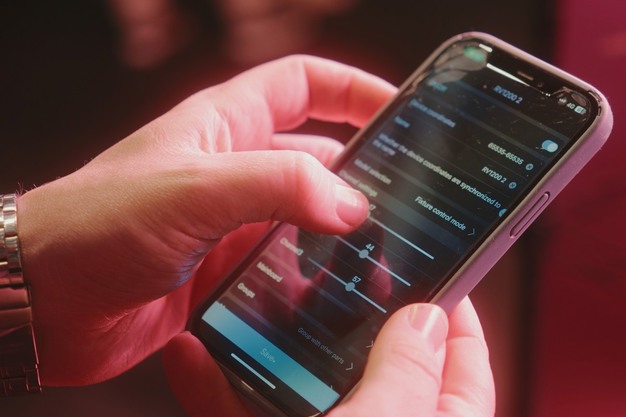
Over the past year, the system has developed into something with a broader scope. Yieldr now operates as the management layer across a full lighting installation, allowing growers to set up unlimited greenhouse sections and groups, manage zones with individual dimming and spectral settings, run crop strategies that combine group logic with scheduling, and simulate sunrise and sunset across the growing period. Four-channel control is supported where fixtures allow it, and the whole system is accessible from a browser — any device, any location, no dedicated hardware required at the grower's end.
The change matters because control capability is increasingly where growers make or lose money on a lighting investment. A fixture that can respond in seconds to an energy signal is only useful if the control layer can actually issue that instruction. A spectral strategy for different crop stages is only executable if the system can translate it into zone-by-zone scheduling without manual intervention at each change.
Irrigation without dependency
One of the questions growers consistently raise about wireless lighting control is what it connects to, and what happens if it doesn't connect cleanly.
 © Nlight
Yieldr operates as a standalone system where that's what the grower needs. It doesn't require a climate computer to function. For sites where full integration is the goal, it connects to existing greenhouse management systems and is compatible with a growing list of sensors and camera platforms, including Aranet and Sigrow. PAR sensor data can be fed into the control layer, and the system has been used in projects where it links directly to DNO Energie and Enova, allowing the lighting to respond automatically to real-time energy price signals and imbalance instructions without manual intervention by the grower.
That last capability is where the economic case becomes particularly tangible. EP Flora and Inca Orchids have both implemented the energy-responsive version of the platform. In those installations, the grower sets the crop strategy and the parameters, the system handles the execution when energy conditions change, maintaining the crop target while responding to the signal. The grower stays in control of the strategy; the software handles the reaction speed that a human simply can't match.
A hardware decision that doesn't date the control layer
One of the less obvious arguments for investing in a capable control platform is what happens when the hardware changes. Fixture lifecycles are long, but they're not permanent. When sites update or expand their luminaires, the typical outcome is that the control infrastructure needs to be partially or fully replaced alongside them.
 © Nlight
Yieldr's architecture is designed so that the wireless control hardware, the bridges and communication nodes that sit within the installation, can be reused when fixtures are updated. The control layer retains its value and its configuration even as the luminaires themselves change. For growers who are thinking about how to protect a technology investment over ten or fifteen years, that's a meaningful consideration.
The system also provides live online insight into the installation's status and uses two-way communication, which means that rather than simply issuing commands, the platform can support remote diagnostics, flag issues, and help technical teams identify problems without requiring a site visit. For support relationships and aftersales service, that changes the nature of what a supplier can offer.
Where control fits in the wider conversation
The trend in horticultural lighting is toward more dynamic operation, more response to natural light, more responsiveness to energy markets, more spectral precision over the crop cycle. The fixture manufacturers and the climate computer suppliers are both moving in this direction. What's often less visible is where the lighting-specific control intelligence sits in that stack.
 © Nlight
Yieldr positions itself as that layer: not a replacement for the climate computer, but a more capable, faster, and more lighting-specific control and optimisation platform than most fixtures come with as standard. It handles the things that matter most to how a grower actually uses their lighting day to day, grouping, scheduling, spectral strategy, energy response, sensor integration, and long-term system visibility.
Whether that's enough to shift the conversation and get control specified earlier in the project is a sales question. What's clear is that the capability is there, and that the growers who have put it to use are finding that it changes what they can do with the same fixtures they'd already decided to buy.
For more information:
NLight
[email protected]