In Norway, where only three percent of the land is arable and the country imports nearly all its fruit and over half of its vegetables, local food production is a matter of resilience. At the Norwegian Institute of Bioeconomy Research (NIBIO), a small team of horticultural researchers is taking an unconventional path toward greater self-sufficiency: growing avocados in greenhouses.
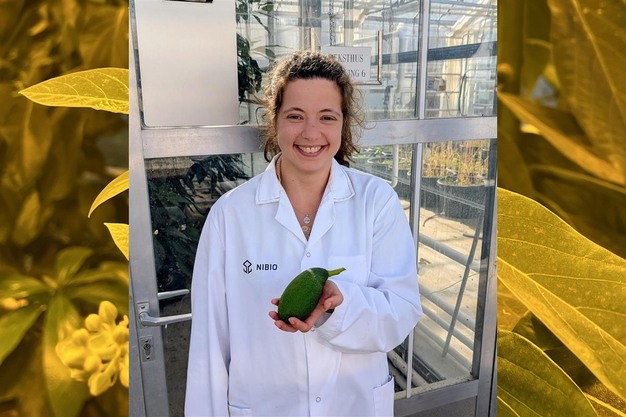
"If we closed the borders tomorrow, it would be salmon, potatoes and tomatoes for us all," says Carolina Palma, Researcher at NIBIO. "So it's really important that we look for ways to produce more food locally."
 © NIBIO
From tomatoes to tropical fruit
NIBIO operates under Norway's Ministry of Agriculture and Food, with research sites across the country. Carolina's team is based in Særheim, Rogaland, which is considered the epicentre of Norwegian greenhouse horticulture. Despite its modest scale compared to the Netherlands, the region is home to most of Norway's protected cultivation.
"Norway produces mainly tomatoes and cucumbers under glass," she elaborates. "But our markets are small and quite controlled, which makes it difficult to introduce new crops. Because we're outside the EU, we're very dependent on imports and the decisions of the supermarkets."
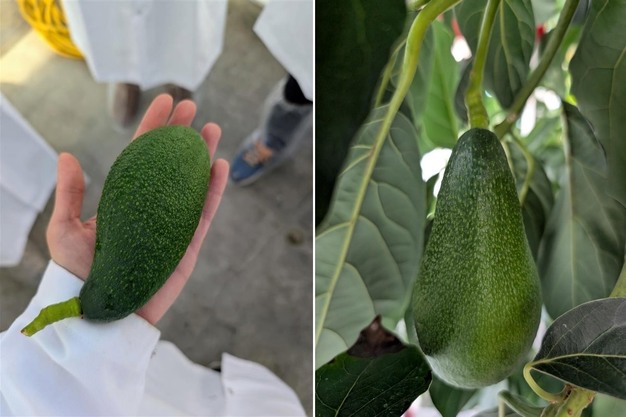
That dependency led NIBIO researchers to explore tropical crops - products Norway already consumes in large quantities but does not produce domestically. "We chose avocados because the potential is clear. Each person in Norway eats around 2.3 kilograms a year, and about 15,000 tonnes are consumed nationally. Avocados have become an essential part of Norwegian 'taco Fridays', a beloved weekly tradition, so the demand isn't going away anytime soon."
 © NIBIO
Turning waste heat into growth
Avocado trees, native to warm and humid regions, may seem an unlikely candidate for Norwegian greenhouses. But Carolina sees opportunity in the country's strong industrial base.
"Our focus is to develop these projects in collaboration with industry through what we call industrial symbiosis," she explains. "We can use waste heat from data centres or metallurgical industries to heat greenhouses. Norway has a lot of heat available, so why not use it for crops that love warmth?"
Heating accounts for roughly 40% of greenhouse operating costs in Norway. By reusing industrial heat, growers could drastically reduce costs and emissions, opening new doors for crops previously deemed unviable in northern climates.
"If you take heat out of the equation it becomes extremely interesting to go into new crops."
Adapting avocados to the greenhouse
Avocado trees are typically grown outdoors and can reach heights of eight to nine metres, well above the typical greenhouse ceiling. "One of the biggest challenges was managing the canopy so the trees could fit without affecting flowering," she recalls.
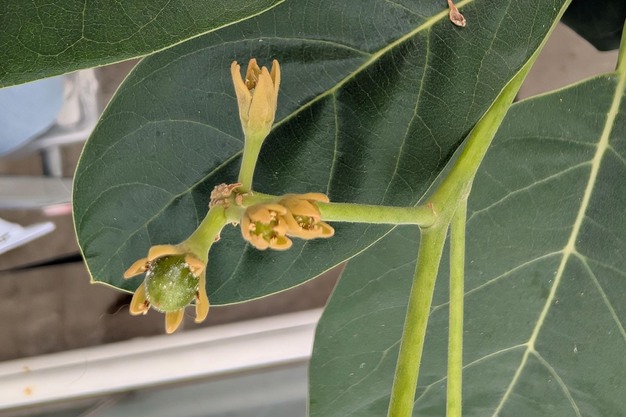
Another challenge was time. "When you grow avocados from seed, it can take five to ten years before you see the first flowers," she explains. "But in a controlled environment, we can accelerate that process. We managed to induce flowering in just a year and a half."
The success came from precise climate control. "By adjusting temperature, light, and humidity, we could encourage earlier flowering. It shows how much potential controlled environment agriculture has, even for complex perennial crops."
Pollination proved another hurdle. "There's almost no literature on protected avocado cultivation," she notes. "We tried using our Norwegian bumblebees even though they were said to be too heavy. Fortunately, they worked."
The first fruits appeared only weeks after pruning, something Carolina calls a "happy accident." "It has been a lot of trial and error, mostly error," she laughs. "But we always said: we make the mistakes so growers won't have to later."
 © NIBIO
A taste of success
Early harvests have been promising. Despite using basic lighting and leftover nutrient solutions, the team reported surprisingly good fruit quality.
"The taste was really good. We tested it with 26 colleagues, and all 26 said it was better than imported avocados: more buttery and flavourful, no salt or pepper needed."
The team attributes this to reduced transport and ripening stress. Imported avocados often lose flavour due to long shipping and artificial ripening. Locally produced fruit can be harvested mature and sold fresh within a week, dramatically improving eating quality and reducing food miles.
Scaling up for the future
Encouraged by the results, NIBIO plans to expand the research into a larger facility. "We're moving from a small three-metre-high compartment to a six-metre greenhouse. The new setup will use in vitro plants, LED lighting, proper irrigation and pH control."
The project remains small and publicly funded, but Carolina believes it represents an important proof of concept. "We're showing that tropical fruits can be part of Norway's self-sufficiency strategy," she says.
She acknowledges the long road ahead: "Tomatoes took almost 40 years to develop into a stable, high-yielding greenhouse crop. We don't expect avocados to be commercial next year. But the knowledge we gain now will make it much faster for the next generation."
For more information: 
NIBIO
Carolina Falcato Fialho Palma, Research Scientist
[email protected]
www.nibio.no