"I have been farming since I was a child; a generational craft I learned from my father," says grower Essam. But in a region where water is increasingly scarce and the climate is unpredictable, Essam, from Al Mawaset district in Taiz, knew that tradition alone was no longer enough to sustain his family.
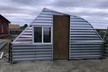
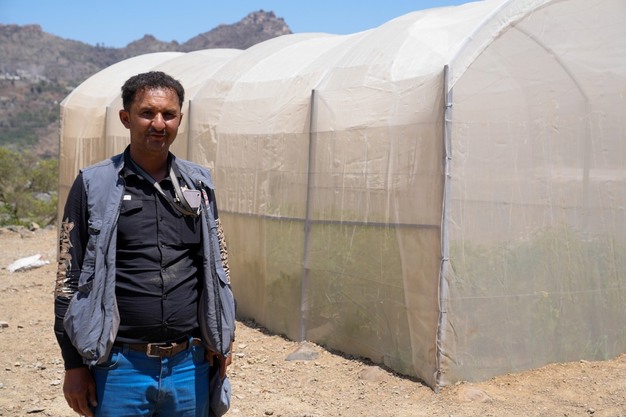 © UNDP YemenEssam stands in front of his greenhouse.
Today, that heritage is being revitalised. Through the Integrated Water Resources Management to Enhance Resilience of Agriculture and Food Security (ERA) Project—implemented by the United Nations Development Programme (UNDP) with generous funding from the German Federal Ministry for Economic Cooperation and Development (BMZ) through KfW, the German Development Bank—Essam and 895 other households are turning small, barren plots into thriving lifelines.
Home greenhouses allow for higher yields at lower costs
For years, Essam was at the mercy of the elements. "In the fields, farming is tied to seasons and weather conditions," he explains. "In a home garden greenhouse, there is better control over water resources—which we often lack. This allows for the production of higher-quality crops at a lower cost throughout the year." Beyond improving food security, home gardens provide households with a reliable source of livelihood by reducing food expenditure and creating opportunities to generate income through the sale of surplus produce.
The transition was made possible by the provision of a comprehensive home garden kit greenhouse, engineered specifically for resilience in arid conditions:
- Climate-shielded infrastructure: A steel frame structure covered with polyethylene mesh screens protects Essam's crops from the blistering sun, pests, and animals, allowing for year-round growth.
- Precision irrigation: With a 1,000-litre water tank and a modern drip irrigation system, water is delivered directly to the roots. This reduces waste and significantly lowers the physical labour Essam previously endured.
- Immediate nutrition: The kit provided Essam with essential tools and seeds for fast-growing vegetables and herbs, offering his family immediate access to a diverse and healthy diet.
"The support I received was comprehensive," Essam shares. "It included the garden setup and tomato seeds as a pilot model, as well as training on garden management and crop care."
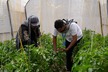
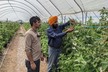
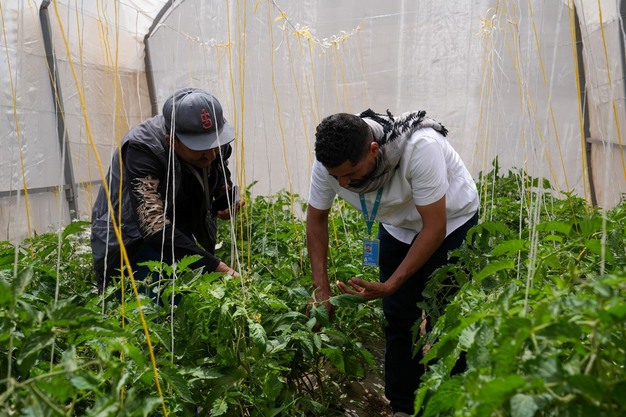 © UNDP YemenA UNDP staff member during a monitoring and evaluation visit.
Enhanced water and food security
The impact of this Germany-funded initiative reaches far beyond Essam's backyard. To ensure the entire region can withstand economic and environmental shocks, the ERA Project implements a wide range of infrastructure and institutional interventions.
The project actively strengthens local resilience through flood protection and soil conservation measures, the rehabilitation of ancient agricultural terraces, and the restoration of ponds and reservoirs. By upgrading irrigation systems and rehabilitating rural roads that connect farmers like Essam to local markets, the project ensures the entire agricultural value chain is optimised. Furthermore, institutional support and training for Water User Associations (WUAs) and local water offices ensure that these resources are managed sustainably for future generations.
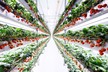
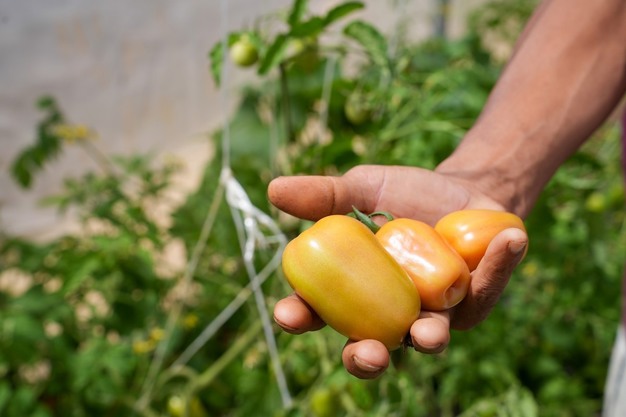 © UNDP YemenTomato crops produced in a home garden.
More than a harvest
For Essam, the garden represents a sense of security. "For me, agriculture is not just a source of income; it is a way of life," he says. "It helps us provide healthy food and reduces our daily expenses, while also granting us a sense of stability and self-reliance."
Looking toward the future, Essam plans to expand his garden and add more greenhouses to his land. His advice to his community is simple: "I encourage anyone who has the opportunity to benefit from such initiatives not to hesitate; agriculture is a gateway to prosperity and livelihood, offering both hope and productivity."
Source: UNDP