The Inagro's project on Entomoponics investigates the practical feasibility of mealworm culture under cultivation gutters. In the spring of 2022, the pilot programs started at five Belgium growers, namely Agrokom, Neegro, Tomco, Husagro and Gemapa. The mealworms were placed between the cucumbers, tomatoes, and peppers.
In the autumn of 2021, the free space under the gutter was measured at these five companies and, in consultation with the grower, knocked down to the size of the installation. This was followed by a manufacturing phase in the Inagro blacksmith's shop in which customized boxes were made from aluminum and hardboard, which makes them sufficiently sturdy and resistant to thorough cleaning. The insects themselves are placed in plastic Euro boxes that can be slid in and out of the boxes.
Residual streams
At the end of January, the first pilots were placed on their location and started up. In addition to the spawn, a starting amount of wheat bran was placed in the breeding trays. This served as dry feed for the worms. The growers were assisted in this by a researcher from Inagro, who also provided them with a feeding schedule for the supplementary wet feed that has to be given regularly during the cultivation. This source of moisture can, as previous trials have shown, be almost any vegetable residue released on the farm, except raw tomato leaf, which is toxic to the worms.
Cucumber
At Agrokom in Oostnieuwkerke, an arrangement of 10 cultivation trays was installed under the cucumber gutters. Growers Nico and Michiel Perneel have been feeding the insects with pruning waste and rejected fruit ever since and have noticed a successful development. According to Nico, cultivation requires less labor than initially thought, which offers prospects for the future.
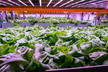
Mealworm culture with residual flows in tomato cultivation. View more photos at Inagro
Tomatoes
At Geert Neerinck of Neegro in Ingelmunster, a pilot of 60 cultivation boxes was placed under the tomato gutters. This should be able to yield 120 kg of mealworms per cycle of roughly 10 weeks. Monitoring is done together with Kristof Debal who manages Geert's strawberry business. An interim measurement shows that the worms are growing faster than initially planned. It may therefore be possible to harvest after just nine weeks.
Along the ring road in Roeselare, Tomco has also recently introduced mealworms. Company managers Zeger Coghe and Jesse Biesbrouck, who are responsible for biology, monitor the 50 breeding tanks together and make sure that the mealworms regularly get new tomatoes to devour. For this installation, it was necessary to reposition the LT-heat grid somewhat sideways. The integration of that network in the insect culture and its possible added value can be part of future research.
The last two pilots were delivered at the beginning of March. Wim Saelens of Husagro has committed to maintaining an arrangement of 50 containers under his tomato crop in Langemark. At Wim's, half of the trays slide lengthwise into their cabinets, the other half in the width. The first option allows to harvest more mealworms per meter, but it also implies a risk for smooth supplementary feeding, as some trays have to pass the heat pipes each time. It's nice that Wim wants to make the comparison for us.
Peppers
Finally, Marc Lambrecht also set up a setup at his pepper farm Gemapa in Nevele. Together with the cultivation manager Mathias Willemijns an atypical system of only one tray high was installed, as the gutters did not leave enough room to stack trays. The investment in boxes was spared and instead, the boxes were sealed with fly screens. In this way, unwanted visitors such as rodents or falling prunings can still be kept out. Here too, the little mealworms were able to start feasting on tasty treats immediately after installation, namely rejected green peppers.
Source: Inagro