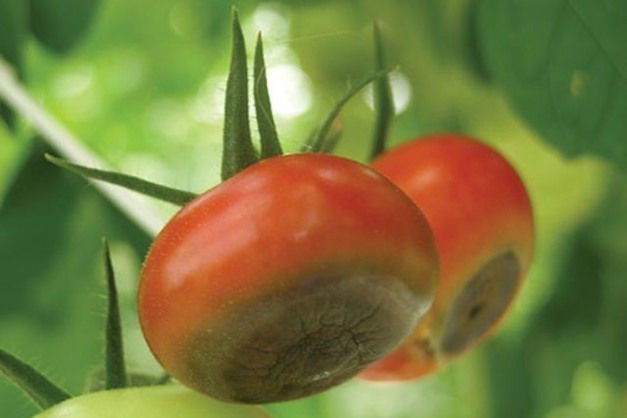
When a tomato grower contacted Timon van Lemmen of Sigrow reporting blossom end rot with no obvious stress, steady irrigation, and good calcium levels, the answer didn't lie in the feed schedule. It lay in what happened on a cold, clear spring night several days earlier.
The sequence is straightforward once understood. A warm, sunny day brings the substrate up to temperature, roots are active, and the plant is growing vigorously. Then the sun sets. Outside temperatures fall quickly, the greenhouse roof cools rapidly through radiation to the cold night sky, and the crop canopy cools with it. Transpiration stops, and when transpiration stops, calcium transport stops with it.
Calcium moves almost exclusively through the transpiration stream. Without that flow, developing fruit cells at the blossom end are cut off from supply. Cell walls weaken. The damage is done quickly, days before it becomes visible.
Timon is direct on the diagnosis: "Blossom end rot is not a nutrition problem. It is a transpiration problem."
 © Sigrow
The underlying mechanism is outgoing radiation, driven by the temperature difference between the crop and the surface it perceives overhead. On a clear spring night without adequate screening, that surface is the greenhouse roof, and it is cold. Canopy temperature drops, VPD drops, and transpiration drops. Roots stay warm, the plant continues to grow, but calcium movement stalls.
The failure modes he commonly observes are predictable. Screens left only partially closed, keeping the cold roof visible to the crop. Venting stopped entirely to conserve energy, allowing humidity to build and VPD to fall further. The climate computer may show relative humidity within acceptable range, while the developing truss tells a different story.
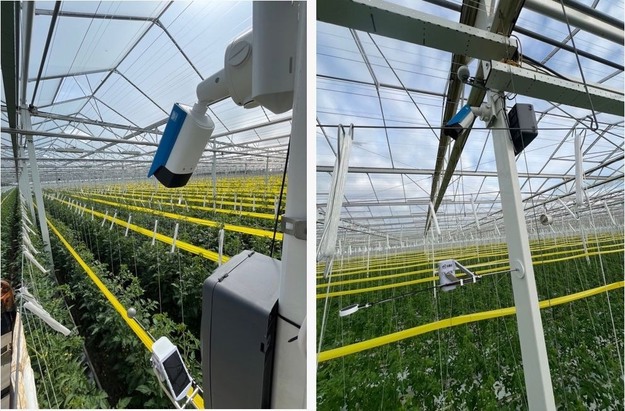
"Growers managing this well in a double-screen setup," he explains, "take a specific approach. They vent on both the wind and lee side, not to cool the greenhouse, but to remove humid air and maintain a VPD that sustains gentle transpiration through the night. The upper screen is closed fully; the lower screen is closed to around 80–95%."
 © Sigrow
Warm greenhouse air rises through the gap in the lower screen and collects between the two layers, heating both screens from within. The crop then perceives the underside of the lower screen rather than the cold roof above. Outgoing radiation falls, and calcium keeps moving.
"My takeaway: blossom end rot in spring is not always a fertilisation problem. It can be a climate management problem, one that started on a clear night, days before the damage became visible," said Timon.
Source: www.linkedin.timon-van-lemmen