Pressure on profitability, climate, and markets is forcing intensive agriculture in Almería to reinvent itself without losing sight of what already works. In that process, varietal development has become one of the main drivers of change, with companies such as Takii Semillas expanding their focus beyond traditional crops.
While tomato and melon remain pillars in the province, the current landscape is pushing growers to look for alternatives that allow them to diversify risk and adapt to increasingly variable conditions.
In this context, some established varieties, such as Zenete F1 in tomato or Bulería F1 and Jaleo F1 in melon, continue to deliver consistent results in the field. However, the focus is gradually shifting toward other crops with room for growth, especially those capable of performing in more complex production windows.
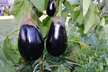
One of the clearest examples is eggplant, which is beginning to gain ground in late cycles. Its appeal lies in its performance during periods when other crops reduce output, opening commercial opportunities at key points in the calendar.
Within this strategy, the variety Patagonia F1 has been developed for transplanting at the end of August, with the aim of sustaining production and quality through the winter months. According to Antonio Almodóvar, sales manager at Takii Semillas in Almería, "it is a very rustic variety that performs well in difficult areas and poor soils," a trait that positions it as a viable option under adverse conditions. He also points out that "it does not turn purple in winter, it stays black throughout the cycle," reinforcing its commercial appeal.
At a technical level, the use of the Java F1 rootstock allows performance to be optimized in grafted crops. Comparative trials also point to a significant reduction in inputs, with savings of up to 60% in water and 50% in fertilization compared to other alternatives under similar conditions.
This type of development reflects a broader shift in strategy across the sector. The focus is no longer only on maximizing output, but on securing stability and efficiency in uncertain contexts. In that sense, the ability to hold performance in critical moments is becoming a decisive factor for growers.
It is no coincidence that some of the main commercial operators in the southeast, such as Vicasol, CASI, or Mabe, are beginning to recommend these types of materials to their growers. The search for new options that balance risk, costs, and performance is shaping the direction of an industry that is not so much changing its model as learning to adapt it.
Source: lavozdealmeria.com