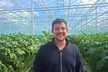
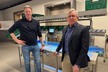
Chaim Tovia's experience in agriculture began early. "I grew up in an environment of agriculture to begin with," he explains, referencing his upbringing on a kibbutz in Israel. Over the years, he worked in diverse climates, including desert conditions near the Red Sea and large-scale hydroponic farms in the United States. This range of experience shaped his expectations for greenhouse technologies. "I was pretty much aware of what my needs were," he says, particularly after working with systems that required continuous manual adjustment.
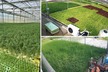
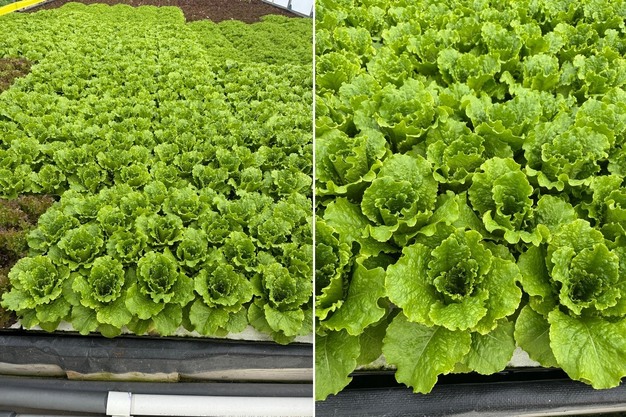
At Kosher Taste Farm in Salem, New Jersey, the baseline operation lacked automation. "They did everything manually with probes, checking nutrition levels, checking pH, and that's about it," he notes. The farm produces hydroponic herbs and lettuce for a salad manufacturer supplying multiple states. Production requirements are strict, including consistent quality and insect-free output, making precision control essential.
 © Grow Director
System selection: Requirement for integrated control
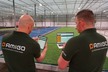
The need for a unified solution drove the decision to implement GrowDirector 4 Pro. "I needed climate control, UV control, temperature, and everything needs to fall into place," he explains. He emphasizes that simplicity was a key differentiator. "I got really surprised to see what a very simple device can do. They can tailor it to your needs in a very easy way."
Cost also played a role. "For a new system, it can easily be $30,000 to $40,000. With this, it was half of the price for what I needed. It was a no-brainer."
Compared to conventional greenhouse control systems, installation was notably fast. "The whole thing took us maybe two days to complete," he says. This reduced infrastructure requirement contrasts with more complex legacy systems that often involve significant setup time and cost.
 © Grow Director
Monitoring and remote access
Once implemented, the system consolidated multiple control functions into a single platform. "It just combines everything. You set your parameters, and it adapts based on climate and location," Chaim explains.
Remote accessibility has been a major advantage. "You can control everything from your phone or computer, from anywhere in the world." Additionally, real-time alerts improve responsiveness: "It notifies you on every little thing; if something is not functioning, if water temperature is too high, if fertilizer levels are off."
Flexibility across varieties in crop management
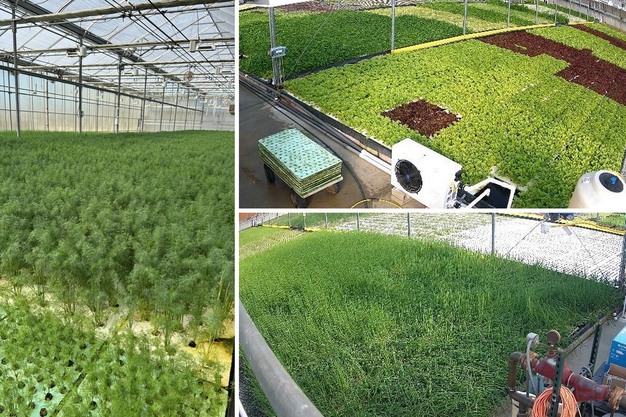
The farm grows multiple herb varieties, including cilantro, dill, parsley, and green onion, alongside lettuce. The ability to manage zones independently is critical. "You can also control different sections of the farm," Chaim says, allowing for crop-specific adjustments within the same greenhouse.
The system has enabled changes in harvesting strategy. "I was able to do a few harvests on specific herbs. Normally, people just do one harvest. I'm harvesting two, three, or four times on the same plant," he explains. While subsequent harvests may produce lower yields, overall efficiency improves through reduced seed and labor inputs.
Input management has also improved. "You also save a lot of money on fertilizer because you don't have to guess what's going on."
For Chaim, ease of use remains central. "If you know how to use an iPhone, you can use this system too," he says. In an industry where growers may hesitate to adopt complex systems, intuitive interfaces and rapid deployment can significantly lower barriers.
His experience suggests that cost-effective, integrated control platforms can offer a practical pathway for smaller or transitioning greenhouse operations seeking greater precision without the burden of large-scale infrastructure investments.
For more information:
GrowDirector Ltd.
[email protected]
www.growdirector.com