As Crop Health Vision (CHV) expands the availability of Croptimum into new markets, including North America, through its partnership with Green Search Inc., the company is positioning its technology as a differentiated approach within greenhouse crop management. The product has already been evaluated across multiple regions, with consistent results reported under varying growing conditions.
Central to Croptimum is its thiol-based redox mode of action, which CHV distinguishes from conventional biostimulants. "Most conventional biostimulants work by supplying nutrients or broadly supporting plant metabolism during stress," the team explains. "Croptimum is fundamentally different because it is based on a single, well-characterized molecule that targets a specific biochemical reaction."
The active molecule, QQ2, interacts with glutathione, a key antioxidant responsible for maintaining cellular redox balance. Rather than acting as an external input, the product activates the plant's internal stress-response system. "This doesn't just assist the plant during stress; it primes the plant's own defense system before stress occurs."
 © CHV
© CHV
Consistent crop responses under greenhouse conditions
Although trials in Canada are still limited, CHV refers to results from 75 trials across eight countries, including greenhouse systems comparable to North America. The most consistent responses have been observed in cucumbers, peppers and lettuce.
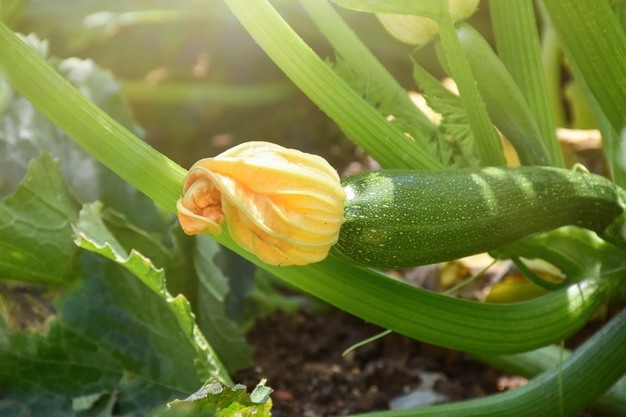
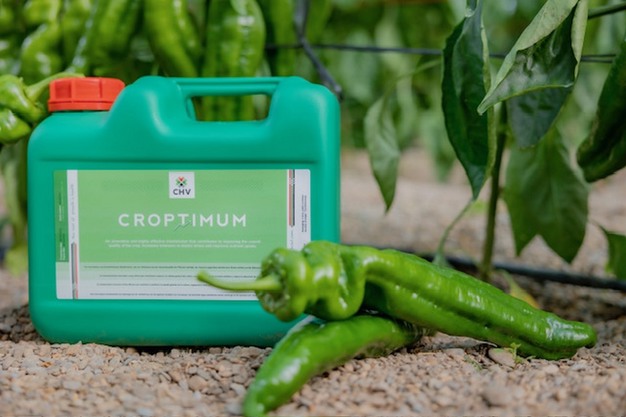
"Cucumbers showed yield increases of +5% to +15% across multiple varieties, with improvements in fruit quality such as lower nitrate content and reduced salt accumulation." Similar yield gains were recorded in peppers, alongside increases in marketable production. Lettuce trials demonstrated improvements in head weight, uniformity and firmness within the same performance range.
These outcomes are linked to the ability of Croptimum to support plant function under continuous, often underestimated stress conditions in controlled environments. "Even in controlled environments, plants experience more stress than growers typically realize," CHV explains, pointing to temperature fluctuations, light transitions and root zone salinity as contributing factors.
 © CHV
© CHV
Linking physiology to yield and quality
By activating the glutathione system, Croptimum enhances the plant's capacity to manage oxidative stress. This has measurable effects on productivity. "Plants that spend more time in their optimal metabolic state simply produce more," CHV states, reporting yield increases of up to 10% in high-tech greenhouse systems and higher gains in less optimised environments.
Uniformity and quality improvements are also consistently reported. Reduced oxidative stress allows for more stable energy distribution within the plant, resulting in more even fruit sizing and ripening. At the same time, improvements in metabolic efficiency contribute to lower nitrate and salt accumulation, as well as increased firmness and post-harvest resilience.
"The key insight is that Croptimum does not add something the plant lacks; it helps the plant use what it already has more effectively."
 © CHV
© CHV
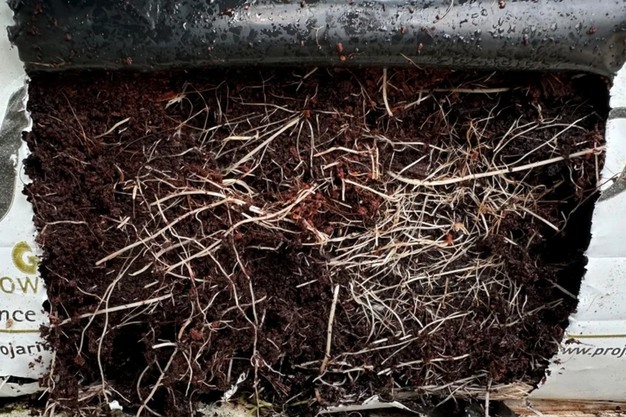
Healthy roots with Croptimum use
Integration and operational compatibility
From an operational perspective, Croptimum is designed to integrate into existing greenhouse systems without disruption. It is applied through standard drip irrigation systems and does not require changes to fertigation infrastructure.
CHV advises a simple management consideration regarding tank-mixing. "We advise against direct tank-mixing with microbial biostimulants, amino acids, or humic and fulvic acids… a 24-hour separation between applications is sufficient to avoid any interference."
In terms of crop protection, the product is compatible with existing Integrated Pest Management (IPM) strategies. "Across all of our trials we have not encountered any negative interactions with pesticides, fungicides, or biological control agents." The team notes that improved plant resilience may support reduced intervention over time.
Improving resource efficiency
Water and nutrient efficiency remain key priorities in greenhouse production. CHV cites both research and commercial data supporting Croptimum's role in optimising input use. In a certified trial in Spain, reducing fertigation by 25% while applying Croptimum maintained or exceeded yields compared to full-input controls.
"The underlying mechanism is straightforward: a plant with a well-functioning glutathione system maintains better stomatal regulation and root activity. Croptimum does not replace fertigation; it makes every liter and every gram of fertilizer work harder."
The team sees thiol-based redox biology as an important development in sustainable horticulture. By enhancing intrinsic plant processes, the approach aligns with industry objectives to reduce inputs while maintaining productivity.
For more information:
CHV International
www.chvint.com

Green Search Inc.
www.greensearchinc.com
[email protected]