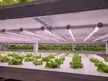
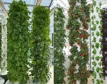
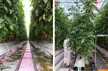
Vertical farming is hot at the moment. Many indoor growers promise to feed the world efficiently. There are still some question marks though, most notably regarding energy use, according to Andrew Jenkins, Research Fellow, School of Natural and Built Environment, Queen's University Belfast. In an opinion piece at The Conversation, he writes:
"Urban farming presents a unique opportunity to grow food on already developed land, increase domestic food production and minimise the distance food travels. Since the publication of Dickson Despommier’s 2010 book The Vertical Farm: Feeding the World in the 21st Century, vertical farming has become synonymous with urban farming. Although the agricultural skyscrapers illustrated in Despommier’s book are yet to be realised, the idea of growing food vertically has captured the minds of designers and engineers alike.
"The energy demand associated with vertical farming, however, is much higher than other methods of food production. For example, lettuces grown in traditionally heated greenhouses in the UK need an estimated 250kWh of energy a year for every square metre of growing area. In comparison, lettuces grown in a purpose built vertical farm need an estimated 3,500kWh a year for each square metre of growing area. Notably, 98% of this energy use is due to artificial lighting and climate control.
"Even with the reductions promised by Intelligent Growth Solutions, the energy demand associated with most vertical farms would still be very high, which positions vertical farming in a grey area. On the one hand, the world needs to produce more food, and on the other hand, it needs to reduce energy use and the production of greenhouse gases."
"The energy demand associated with vertical farming, however, is much higher than other methods of food production. For example, lettuces grown in traditionally heated greenhouses in the UK need an estimated 250kWh of energy a year for every square metre of growing area. In comparison, lettuces grown in a purpose built vertical farm need an estimated 3,500kWh a year for each square metre of growing area. Notably, 98% of this energy use is due to artificial lighting and climate control.
"Even with the reductions promised by Intelligent Growth Solutions, the energy demand associated with most vertical farms would still be very high, which positions vertical farming in a grey area. On the one hand, the world needs to produce more food, and on the other hand, it needs to reduce energy use and the production of greenhouse gases."