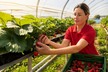
Israel helping Senegalese women grow lettuce
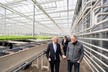
The plot was an initiative of the Israeli Embassy in Dakar, following a request by the First Lady of Senegal, Marième Faye Sall. It is part of the TIPA program, which began in 2006 as an initiative of the Embassy of Israel in Dakar and MASHAV (Israel’s Agency for International Development Cooperation) to alleviate poverty through agricultural innovation. A trilateral partnership between the governments of Israel, Italy and Senegal addresses the issue of food security and income growth through the TIPA program and has directly benefited thousands of people in rural Senegal.
For the drought-prone sub-Saharan state, where 75 percent of the working population is engaged in farming, the innovative Israeli program has been vital for fighting poverty.
According to the Senegalese newspaper EnQuete Plus, cited by the Ynet web site, the farming project, which was established together with Fondation Servir le Senegal, involves 20 farm plots of 500 square meters.
MASHAV’s long-term agricultural expert will also conduct capacity building activities for the farms in later phases of the project. Between 70-80 percent of small-holder farmers are women in sub-Saharan Africa. According to the Israeli Ambassador to Senegal, Eli Ben Tura, the TIPA program is adapted to the needs of Senegalese agriculture.
He also noted that under MASHAV, 20 Senegalese go to Israel for training in various fields. “As part of the trilateral agreement (Senegal-Israel-Italy), which works to achieve food self-sufficiency, we have 70 sites in Thies, Diourbel and Fatick,” Ben Tura told EnQuete Plus.
Source: i24news.tv