Lowering the pH of the nutrient solution can be an effective method to suppress root rot diseases in liquid-based hydroponic systems such as NFT and DWC. Based on recent experiences implementing this approach, this short article provides practical guidance for introducing this low-cost strategy to manage root rot diseases in hydroponically grown leafy greens.
Plant growth, as well as that of other living organisms, is generally affected by the pH of the nutrient solution. The optimum pH for plant growth typically ranges from 5.5 to 6.5. Outside of this range, plant growth is compromised, not due to the direct effect of pH (hydrogen ion concentration), but because of altered nutrient availability for plants to take up. In addition, low pH is known to affect the motility of oomycete zoospores, thereby reducing the spread of pathogens in plant production systems. A series of studies at The Ohio State University (Gillespie et al., 2019, 2020; Bates, 2022) demonstrated the efficacy of low pH nutrient solutions (pH 4.0–4.5) in controlling Pythium root rot.
The procedure is straightforward: increase the amount of acid (e.g., sulfuric or nitric acid) in the nutrient solution. In some cases, it may also be necessary to increase overall nutrient concentrations (or specific cations) to compensate for reduced nutrient uptake by plants. Figure 1 shows basil roots grown in nutrient solutions with or without Pythium zoospore inoculation. Roots grown at pH 4.0 remained healthy, whereas those at pH 5.5 showed typical disease symptoms and the presence of oospores, indicating establishment of the Pythium life cycle.
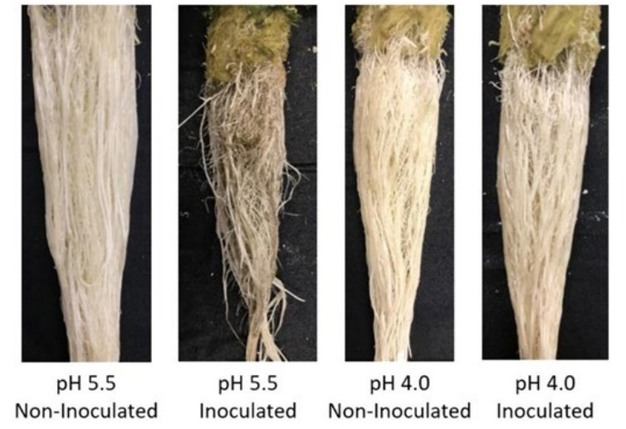 © ASHSFig. 1. Basil plant roots inoculated with Pythium zoospores at two different pH (5.5 or 4.0). Plant roots grown at low pH 4.0 with Pythium inoculation did not develop the typical symptomology of Pythium root rot
Some considerations to use low-pH approach
Not for eradication but suppression of pathogens. The low-pH approach can be used both as a preventive and a mitigation strategy. However, it suppresses pathogen proliferation rather than eradicating the pathogen. A recent outbreak of lettuce root rot diseases in commercial scale deep water culture (DWC) ponds in an OSU greenhouse was successfully mitigated by lowering the pH to 4.0 immediately after Pythium and Phytophthora were identified in lettuce roots. However, when the pH was re-adjusted back to a normal 5.5, disease symptoms reappeared (Fig. 2).
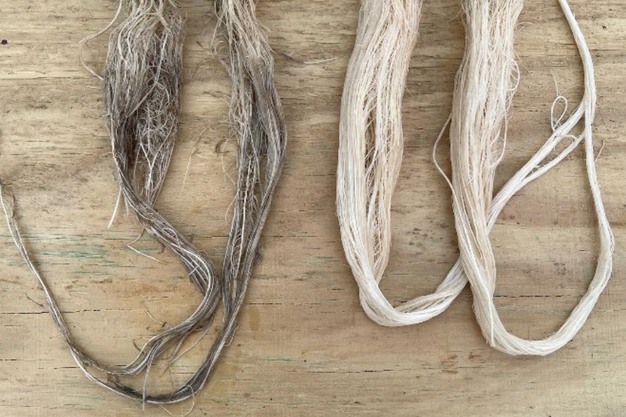 © ASHSFig. 2. Following the first identification of Pythium and Phytophthora, pH of nutrient solution was lowered to 4.0 in two identical DWC ponds at OSU. After nine days, pH of one pond was changed back to standard pH (5.4). Lettuce plant roots (left) grown for nine days in low pH 4.0 followed by standard pH 5.4 for five days showed mild discoloration of roots, while plant roots of the same lettuce cultivar (right) kept at low pH for the entire 14 days did not show symptoms. Phytophthora was identified in the symptomatic roots (left) but not in the other healthy looking plants roots (right). Diagnostics were done by Dr. Anna Testen's lab at USDA ARS (Wooster, OH).
System and substrate compatibilities. For any disease control tactics, compatibility with existing growing systems is a critical factor in grower's decision making. Therefore, selection of this approach should be done by taking systems approach. The low-pH approach is most applicable to liquid-based systems such as deep-water culture (DWC) and nutrient-film technique (NFT). It is not suitable for substrate-based soilless production systems where large volume of substrates are used relative to the volume of nutrient solution applied. Minimum amounts of substrates (such as stone wool, synthetic foams, and peat-based products) are used in DWC and NFT. Still, some substrates may release toxic metals into acidic nutrient solutions, potentially causing rapid toxicity symptoms (Fig. 3). All materials in direct contact with the low-pH nutrient solution should be evaluated if they can be potential sources of toxic elements under acidic solution (pH ~4.0). Growers should check with suppliers for their information. In addition, small-scale trials are strongly recommended before full-scale implementation. In our recent trial at OSU facility, toxicity symptoms appeared in Batavia-type lettuce as early as six days after lowering the pH to 4.0 (Fig. 3), while other types of lettuce (butter-head and romaine types) did not show such symptoms. Tissue analysis revealed iron (Fe) and aluminum (Al) concentrations several times higher than in healthy plants. When compatible substrates were used, no such symptoms occurred, and roots remained healthy throughout the production cycle (final 14 days at low pH) (Fig. 2).
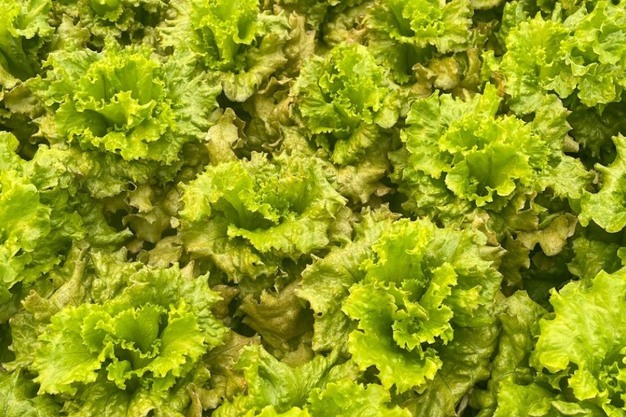 © ASHSFig. 3. Batavia-type lettuce plants showing unknown nutrient disorder in lower leaves when grown in a system that contains substrates not compatible to the low-pH approach. The photo was taken 14 days after lowering pH (4.0). These plants showed high Fe and Al concentrations in tissue, suggesting potential toxicity of these elements.
Pathogen-specific efficacy. The low-pH approach is not a universal solution. While Pythium can be effectively suppressed, responses of Phytophthora to low pH are variable. A commercial hydroponic leafy green producer tested this approach at two greenhouse sites. Based on their experience, Pythium in one site (basil) has been successfully managed at low pH (4.0). For Phytophthora in the other site (lettuce), the result was inconclusive to no benefit as zoospore counts initially decreased but later increased again. Previous research also showed that some Phytophthora species are tolerant to acidic conditions (Kong et al., 2009, 2012). Compatibilities with different oomycete species need to be further investigated. Additionally, oomycetes such as Pythium and Phytophthora produce oospores, survival structures that can persist under unfavorable growth environments. Therefore, oospores are likely to survive in low pH solutions, while zoospore motility and sporangia formation may be suppressed (Rabinowitz, unpublished). This is another reason why the low-pH tactic cannot be used as a standalone control method.
Effects on flavor and yields. The low-pH approach may affect crop yield and flavor. In our previous research, the flavor of brassica species and culinary herbs was slightly altered under low pH conditions. For example, arugula and tatsuoi exhibited reduced pungency at low pH 4.0–4.5, and basil flavor was slightly softened at pH 4.0. Bates (2022) evaluated crop-specific sensitivity to low pH and classified species accordingly. Basil, bok choy, and lettuce were relatively tolerant, whereas kale, arugula, and spinach were moderately to highly sensitive, often showing reduced yields. The extent of yield reduction is system-specific, reinforcing the need for small-scale trials. Increasing electrical conductivity (EC) (Gillespie et al., 2021) or supplementing specific cations (Ca, Mg, Fe, Mn, Cu, and Zn; Bates, 2022) improved yields of sensitive crops under low pH conditions (pH 4.0).
Source: e-Gro
For more information:
Chieri Kubota
Email: [email protected]