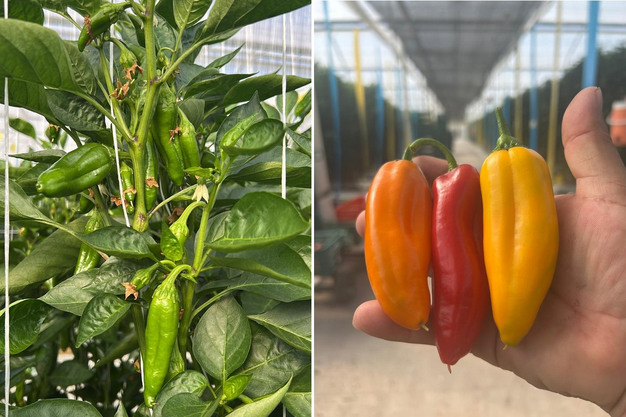
Mexican company Argaman, which has been producing vegetables in Jalisco for close to two decades, has undergone a significant shift, moving from a strong focus on tomatoes to becoming a reference producer of seedless mini sweet peppers.
 © Argaman
As Eduardo Becerra explains, the transition was gradual, shaped by a combination of external and internal factors. Tomato brown rugose fruit virus was the initial trigger, forcing the company to rethink its production structure and opening the door to mini sweet pepper as an alternative crop with greater agronomic stability and market potential.
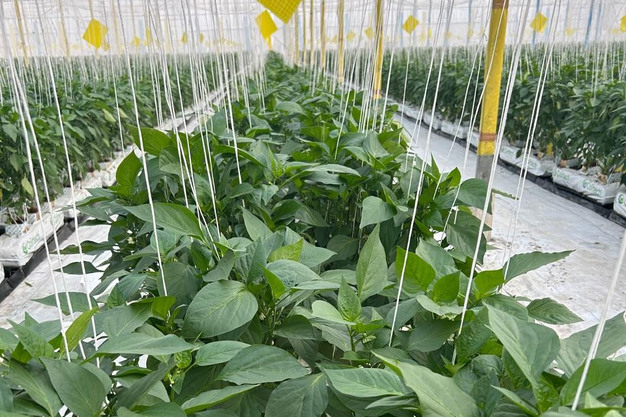
"We were dealing with a serious virus problem and started shifting area toward peppers. We began working with bell pepper and decided to plant around 2-3 hectares of mini sweet, which was a big success. So much so that today we are already at 24 hectares."
 © Argaman
From rustic varieties to high-performing materials
One of the defining factors in this evolution has been plant breeding, Eduardo notes, which in just three years has radically transformed how the crop performs, "both in terms of productivity and agronomic stability."
"We moved from early materials with clear limitations to varieties capable of sustaining much longer cycles and significantly higher yields," he continues. "At the start, they were very rustic, very generative, had seeds, and were poorly adapted to high temperatures or intensive management, but over this time both the genetics and our own knowledge evolved in parallel" he explains, underlining that the progress has not been one-sided, but the result of a constant back-and-forth between plant and grower.
This is most visible in crop cycle length. Where production windows once ran 25 to 29 weeks, cycles now extend to 40 to 42 weeks of effective production, approaching a full annual cycle that optimizes infrastructure use and improves returns per square meter.
"The real leap, though, has been in adapting the agronomic management, because seedless mini sweet pepper has physiological characteristics that require a complete rethink of how you work, especially when it comes to flowering and fruit set.
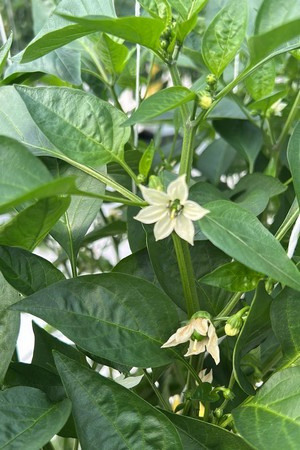 © Argaman"Without pollen, the flower does not behave like other peppers, so you have to work much harder on balance to prevent drop," Eduardo explains, "with much more precise control of climate, fertilization, and the energy available to the plant."
"In that context, the concept of energy balance becomes central, especially under low-radiation conditions, where the plant needs to compensate for the lack of light through nutritional adjustments that keep flowering viable and reduce abortions."
The location of Argaman's medium-to-high technology greenhouses in Jalisco adds another layer of complexity, as the area has marked seasonality in terms of light and temperature, which requires management to adapt throughout the year.
"During summer, thermal availability supports development, but can be limited by a lack of radiation during rainy periods, while in winter the opposite occurs: more light but lower temperatures that slow plant activity, creating a scenario where the crop has to be pushed through technical adjustments to maintain performance."
The market validates Argaman's bet
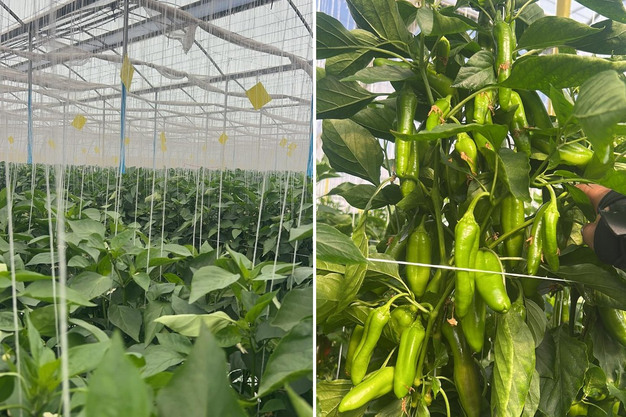
The pivot may have started out of necessity, but its consolidation has been driven by the market, where demand for seedless mini sweets continues to grow.
 © Argaman
"The market wants seedless; so much so that we are seeing more and more companies entering this crop," Eduardo notes, confirming that this is not an isolated phenomenon but a trend spreading across different growing regions in Mexico. That momentum has been reinforced by additional factors, including the regulatory environment around tomatoes and the antidumping quota, which have incentivized growers to diversify toward higher-value crops, with pepper occupying a prominent place among them.
"At Argaman, we are in fact planning to keep investing in mini sweet seedless, growing our area and refining our management to achieve higher yields," he says. "Export market demand is a good reason to grow, but above all, it is the technical knowledge we have built up in this crop that gives us a real advantage in delivering high-quality production year-round."
 © ArgamanFor more information:
Argaman
KM. 31.5 Santa Rosa - La Barca Highway
Poncitlán Jalisco Mexico.
T. 391-92-11-700 Ext. 127
[email protected]
https://www.argaman.com.mx/