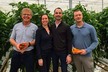
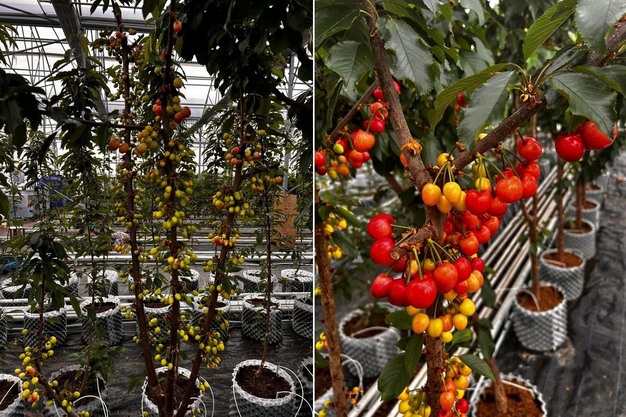
The expansion of greenhouse fruit production into non-traditional regions is increasingly shaped by resource efficiency and climatic opportunity. A trial conducted in Turkey's Afyon/Sandıklı region demonstrates how high-altitude locations can be used for early-season cherry production.
Hasan Burak Macit, Sales and Marketing Manager at Turkish propagator İrgeler, explains the rationale: "Although the region is situated at an altitude of 900 metres and is one of Turkey's colder areas, we chose it because the amount of sunshine is virtually the same as in Turkey's southern regions, and it has an alternative energy source (geothermal water)."
This combination of high solar radiation and geothermal energy creates a viable environment for greenhouse cultivation, balancing natural light with controllable heating inputs.
 © İrgeler
Climate utilisation and crop physiology
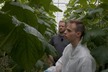
Rather than presenting a limitation, the region's cold winters play a critical role in meeting crop requirements. Cherries require a defined chill period to break dormancy effectively.
"As it is cold in winter, this naturally means that the chill requirement for cherries is met earlier in the greenhouse; we can then use the advantage of having hot water to get the greenhouse up to the desired temperature," he notes.
This integration of natural chilling and controlled heating allows producers to manipulate phenological development and advance harvest timing.
Rootstock–variety compatibility trials
The project remains in a developmental stage, with a strong emphasis on testing genetic combinations under greenhouse conditions.
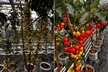
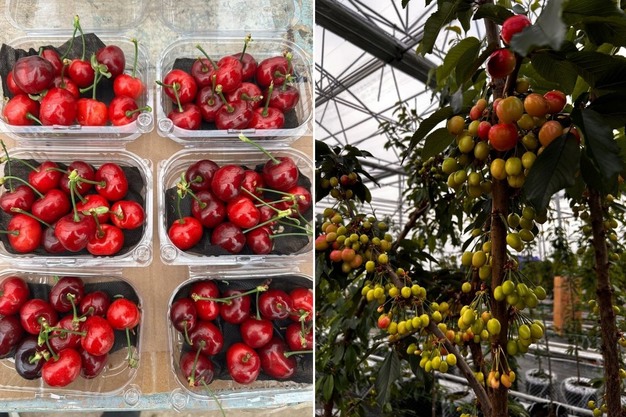
"We are testing different rootstocks and varieties, and we have found that some are incompatible. Generally, however, 90% of all combinations show compatibility, and the yield is at the required level."
These findings highlight the importance of compatibility screening in controlled environments, where deviations from field conditions may influence graft performance and productivity.
 © İrgeler
Greenhouse automation and operational considerations
From a technical standpoint, the trial has encountered minimal operational barriers. The primary challenges have been associated with system integration.
"Actually, we didn't encounter many difficulties; we just had a few issues with the process of adapting the automation system used in the greenhouse and with its control," Hasan explains.
Automation remains essential for precise climate management, particularly in systems aiming to optimise temperature, humidity, and irrigation in line with crop requirements.
Market timing and off-season value
The strategic objective of the project is closely aligned with market dynamics, particularly the premium associated with off-season production.
"People believe that by monitoring the off-season periods in the current market, the produce that can be grown during those times will be more valuable on the market. And that is indeed the case."
The early harvest achieved in this trial, potentially among the first in the Northern Hemisphere, has already attracted interest from investors seeking to evaluate the scalability of such systems.
Sustainability and production strategy
Despite promising early results, the long-term success of greenhouse cherry production depends on maintaining agronomic and economic sustainability.
"At this stage, it is crucial to ensure sustainability by producing crops in the right location, with the right infrastructure and conditions, while also taking into account the physiology of the plant," he emphasizes.
The next phase of the project aims to further refine production scheduling and increase output.
"Our aim for the next phase of our project is to bring the harvest forward by 10–15 days and to achieve two harvests per year," he reveals.
If achieved, these targets would represent a significant advancement in greenhouse cherry production systems, offering new opportunities for supply chain optimisation. "As a company, why not combine our 70 years of experience with the future?"
For more information
İrgeler
Hasan Burak Macit
[email protected]