The past 24 months have reshaped global agriculture in ways that are hard to overstate. Growers are contending with more resistant pests, unexpected root diseases, logistical disruptions, accelerating climate variability, depleted soils, and increasingly scarce and expensive water. Against this backdrop, a further threat has quietly taken hold, one that is destroying root systems across thousands of hectares worldwide: poorly managed drainage.
The problem begins invisibly. Moisture accumulates at the base of the substrate, creating the precise conditions in which fungi, algae, and rot thrive. Pests find their ideal breeding ground in this stagnant dampness. By the time a grower notices that a crop simply isn't performing, the damage is already well underway, silent, hidden, and costly. Losses of 10 to 30 percent of production attributable to root problems are not uncommon, and they are happening every day.
The principle behind the solution is straightforward: elevate, aerate, and oxygenate. Drainage collection systems, including purpose-designed spacers, address the problem at its source by lifting grow bags clear of damp surfaces, oxygenating the root zone, and preventing the pathogen buildup that stagnant conditions invite. The result is measurably improved root development, healthier growing cycles, and yield gains visible from the very first cycle. This approach has become standard practice in over 30 countries, not because it is novel, but because it works.
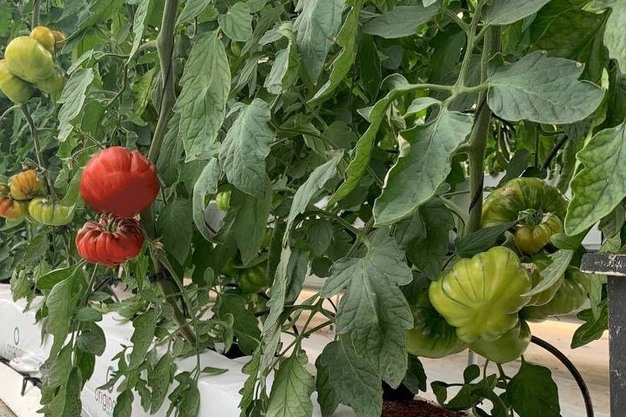 © JH Hydroponic Systems S.L.
Root zone health has also become inseparable from the second major challenge facing high-production growers: pest resistance. A decade ago, a targeted insecticide application was often sufficient. Today, pressure from thrips, mites, whiteflies, and fungal pathogens has reached levels that conventional approaches struggle to address, with resistant pest populations linked to 15 percent production losses in berries and vegetables and rising input costs across the board. Increasingly, growers are responding by combining sound hydroponic infrastructure with integrated pest management strategies, biological controls, low-impact applications, and stable climate and humidity management, that reduce the environmental conditions in which pests gain a foothold in the first place.
The connection between these two problems is not incidental. A well-oxygenated root zone, free of stagnant water and pathogen pressure, creates a plant that is inherently more resilient. Healthy roots produce more. They also resist more. In a production environment where every variable seems to be working against the grower, that is a foundation worth protecting.
Hydroponic Systems will be available to meet with attendees at Greentech Americas (Querétaro) at Stand 726 on the ground floor. They will demonstrate how to prevent losses from root diseases, show growers how to increase production with a professional drainage system, and how to reduce pest pressure at its source.
For more information:
Hydroponic Systems
https://hydroponicsystems.eu/