Demand for locally produced leafy greens continues to grow worldwide. At the same time, growers are looking for systems that are robust, scalable, and financially feasible in regions where investment budgets are often carefully evaluated. In that context, the hydroponic floating system developed by Light4Food offers a highly attractive solution: technically reliable, flexible in use, and well suited to the climate conditions of Central Mexico.
At GreenTech Americas, Light4Food will show how this system supports both new greenhouse projects and expansions focused on leafy greens production, offering a practical and efficient path forward.
Growing on water: simple, robust, and efficient
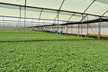
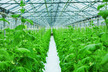
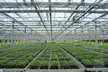
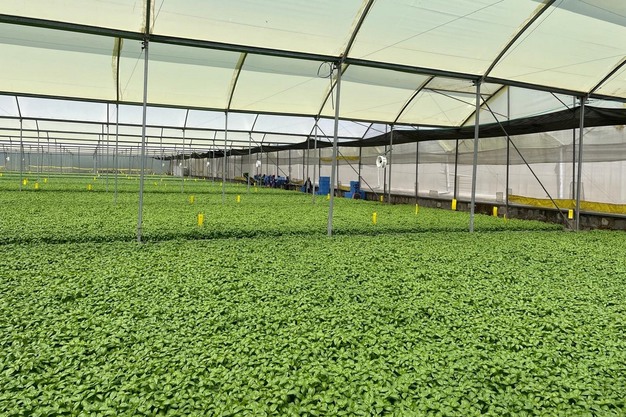
Hydroponic floating is a method where crops grow on floating trays, known as floaters, placed on basins filled with nutrient-rich water. These basins are usually about 30 centimeters deep and can be constructed relatively easily by pouring concrete compartments between greenhouse columns.
This straightforward setup is one of the system's main strengths. It removes the need for complex gutter systems, while the large volume of water creates a stable root environment. This stability brings clear agronomic benefits. The water mass helps buffer temperature swings, making crops less sensitive to sudden changes inside the greenhouse. It also smooths out nutrient fluctuations more effectively than systems with smaller water volumes.
As a result, growers get a reliable system that performs consistently, even in greenhouses with limited climate control.
For many growers, the balance between investment and output is critical. Floating systems offer relatively low upfront costs while delivering high yields per square meter. In leafy greens production, this translates into a competitive cost per kilogram.
 © Light4Food BV
More than 20 different floaters for maximum crop flexibility
A key component of the system is the floater, the tray that holds the crop. Light4Food offers more than twenty floater designs, each tailored to specific crops, plant spacing, and growing strategies.
These floaters support different substrate types and plug systems, giving growers the freedom to choose how they produce within a single setup. Some options allow direct seeding at final spacing, while others support nursery stages followed by transplanting during growth.
This flexibility makes it easy to switch crops without changing the entire system. By simply selecting a different floater, growers can move between baby leaf, teen leaf, head lettuce, and herbs.
That adaptability reduces commercial risk and helps growers respond quickly to shifts in market demand.
Mechanization: investing where it matters most
Floating systems can be mechanized to different degrees. While full automation is possible, it is not always necessary or cost-effective in every market.
In Central Mexico, Light4Food sees the most value in focusing mechanization on the steps that directly affect precision, consistency, and hygiene, which in turn impact yield and quality. These include substrate and peat handling, seeding, germination in controlled chambers, harvesting, and cleaning floaters with washing machines.
Mechanizing these stages improves uniformity and operational reliability right away.
Other tasks can remain manual, depending on local labor costs, availability, and skill levels. This creates a balanced approach where investment stays aligned with operating costs.
For many projects in Mexico, this hybrid model works best: automation where accuracy is essential, and manual labor where flexibility adds value.
Central Mexico's climate is well suited to floating cultivation
Central Mexico offers natural conditions that work well with hydroponic floating systems.
Thanks to the region's altitude, nights are relatively cool, while days provide warmth and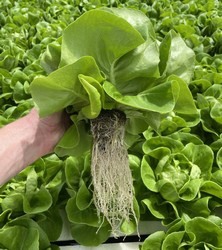 © Light4Food BV strong light intensity. This combination suits leafy greens perfectly. High light levels support photosynthesis, warm days encourage growth, and cooler nights help produce compact crops with good color.
Even simple poly greenhouses can take advantage of these conditions.
When additional climate control is needed, excess heat can be managed through ventilation and humidification. During hotter periods, adiabatic cooling provides an efficient way to lower temperatures without high energy costs.
This creates an environment where growers can achieve strong yields without the heavy energy demands seen in other regions.
In practice, this means relatively simple greenhouse structures can already deliver excellent results when paired with floating systems.
International experience translated into local solutions
Over the past few years, Light4Food has delivered more than 40 hectares of hydroponic floating systems worldwide.
These projects range from highly automated installations in Europe and the United States to lower-tech systems in countries like Mexico and Ethiopia.
This range of experience matters because no two projects start from the same conditions. Each one begins with a careful assessment of the greenhouse design, local climate, labor costs and quality, and the availability of energy and inputs. The target crop also plays a key role, whether it is baby leaf, teen leaf, head crops, or herbs.
Based on these factors, the outcome is never a standard package. Instead, the system is adapted to fit local economic realities and market demand.
That tailored approach is what turns a technically sound system into a commercially successful project.
Meet Light4Food at GreenTech Americas
Visitors to GreenTech Americas can find Light4Food at booth 2013, where the team will explain how hydroponic floating systems can be developed into profitable projects for Latin America.
They will also host a presentation at the Commercial Stage on 25 March from 2:50 PM to 3:20 PM, covering system choices, investment strategies, and lessons from projects across different climate zones.
For growers, investors, and project developers interested in scaling leafy greens production with manageable investment levels, this is a good opportunity to explore practical options and discuss project design in detail.
For more information: Light4Food
Wattstraat 18
5993 SH Maasbree
Netherlands
+31 77 207 0008
[email protected]
www.light4food.com