The 2026 French cucumber season got off to a generally favorable start. After a winter marked by high prices for imported origins, the French production has been able to gradually establish itself on the market. With volumes on the rise, dynamic consumption and a few points of vigilance linked to European competition and international context, the sector is moving forward cautiously but confidently.
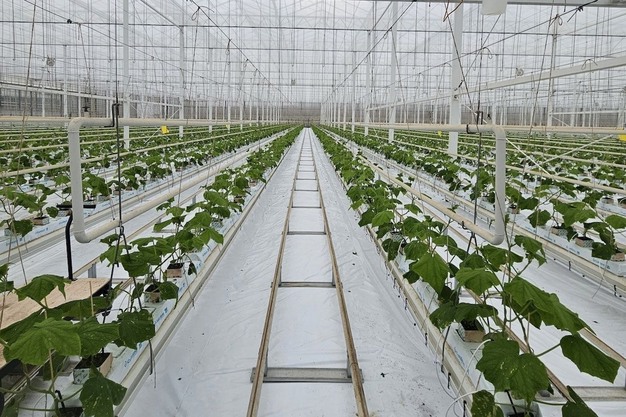 © Kultive
Production conditions generally favorable at the start of the season
The first French cucumbers arrived on the market this year in the second week of February, slightly earlier than last year. "This year, some growers chose to plant ahead of schedule, particularly in the Orléans region," explains Alexandre Picault, managing director of Kultive. "We therefore started the campaign with rather modest volumes, but at the end of February, the good weather brought production levels back in line with expectations. Over the last two weeks, the momentum has even increased, with volumes exceeding expectations."
However, weather conditions varied from one production basin to another. In the south of France, the weather has been less favorable, putting the brakes on volume growth, while the northern part of the country has benefited from more favorable conditions.
Controlled areas to support market growth
In terms of planting areas for this campaign, the strategy remains measured. At Kultive, plantings for 2026 are broadly similar to those for 2025. At the national level, there will be a slight increase of around 5%. "Our objective is not to increase the surface area significantly. We prefer to follow the market rather than try to anticipate it. It is important not to be too greedy if we want to ensure the best possible return for producers," explains Alexandre Picault.
This cautious approach comes against a backdrop of strong growth in consumption. "The market has increased by around 16% compared to the 2022-2024 average. Cucumbers are a trendy product: healthy, easy to prepare, accessible and perfectly suited to new consumption patterns and current household sizes."
Correct prices and a dynamic market
The introduction of French cucumbers has also benefited from the winter climate. "Spanish cucumbers were sold at high prices for several months, which made it easier for the French origin to establish itself on the market. Prices are still decent for the time being, thanks in particular to the high import prices throughout the winter. This has enabled us to start the campaign with satisfactory prices, even if we have not reached the highest levels seen in the last five years," explains Alexandre Picault.
The promotions introduced over the last fortnight have helped to bolster sales and gradually establish the French origin on the shelves. "The majority of retailers have now switched over to French products, even if some of them are still using both origins."
But to maintain this consumer momentum, the issue of shelf price remains crucial. "We need to find the right price point to make consumers want to buy our products. It is important to avoid going over the symbolic €2 [2.3 USD] mark in order to maintain dynamic consumption. Last year saw double-digit growth in consumption. For this momentum to continue, the entire sector needs to remain consistent in its pricing strategy."
Some points to watch out for as the campaign continues
Despite this favorable context, there are a number of factors that call for caution over the coming weeks. "Over the past two weeks, the Spanish have started to lower their prices in an attempt to extend their trading season. The Benelux countries have also started their season with prices that do not reflect those usually charged at the start of the season. This remains a point of vigilance for the rest of the campaign," explains Alexandre Picault, who is calling on distributors to continue to promote the French origin. "It is important that retailers play the game and are not systematically tempted by the cheapest offer, especially at a time when consumption is at an all-time high."
Another factor of uncertainty is the international geopolitical context. "This is a variable that we have no control over. We saw how the war in Ukraine has impacted production costs and consumption. Unfortunately, given the current geopolitical situation, chances are high that history will repeat itself and that the entire sector, from production to consumption, will be affected."
For more information:
Alexandre Picault
Kultive S.A.S.
190 allée du bois vert
45640 Sandillon, France
Phone: +33(0)2 38 49 33 49
[email protected]
www.kultive.fr