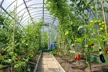
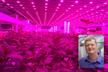
Supplemental lighting is essential for overcoming low-light stress and enabling overwintering tomato production in greenhouses. This study investigated the effects of LED supplemental lighting with different spectral qualities in the upper and lower canopy on the fruit weight and quality of tomatoes. Six treatments were established: upper-red/lower-blue (RUBL), full red (R), full blue (B), upper-blue/lower-red (BURL), red–blue mixture (RB), and a non-lit control (CK).
The results demonstrated that: (1) All supplemental lighting treatments increased tomato fruit weight. During the early overwintering stage (October–December), the highest fruit weight was observed under the RB treatment, representing an increase of 22.62–24.02% compared to CK at the same truss positions. The light gain coefficient (LGC) under RB treatment reached up to 4.41 times that of other treatments. During the later phase (January–February), the BURL treatment achieved the highest LGC, reaching 1.28 to 5.30 times that of other treatments, and it increased the fruit weight by 48.2–72.88% compared to CK. (2) Regarding fruit quality, R and BURL promoted lycopene accumulation the most, followed by RB treatment.
Additionally, lycopene was found positively correlated with key color parameters (a, a*/b*, CCI, and C). (3) Compared to CK, all supplemental lighting treatments increased the soluble sugar content in tomato fruits (ranging 5.36~95.35%), with the highest sugar–acid ratios typically observed under R or BURL treatments. The RB treatment yielded the highest VC levels during the later overwintering stage, exceeding the control by 29.97–39.65%.
In summary, for overwintering greenhouse tomato production, application of the RB treatment during the early phase (October to December) and transition to the BURL treatment in the late phase (January to February) could be considered. This phased strategy may help achieve synergistic improvements in yield, fruit coloration, and quality.
Read the full study here.