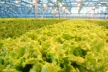
Quality grading of greenhouse lettuce requires rapid external appearance screening and nondestructive internal quality assessment. However, existing detection methods struggle to simultaneously evaluate both external and internal quality while maintaining efficiency, resulting in a lack of scientific and comprehensive integrated evaluation standards for current crop grading.
To address this issue, this study leveraged the technical strengths of different sensors to construct separate models: an RGB image-based monitoring model for external quality and a hyperspectral-based estimation model for internal quality. Using a combined objective–subjective weighting method, this approach scientifically integrated external and internal quality monitoring indicators to establish a comprehensive evaluation method for greenhouse lettuce quality.
The results demonstrate that features such as canopy projection area, compactness, and color components can be extracted from RGB images. Combined with Ridge regression, this approach achieves high-accuracy estimation of lettuce fresh weight and leaf area (R2 ≥ 0.880). For intrinsic quality, by combining hyperspectral data with the CARS and SPA band selection algorithms, a Random Forest (RF)-based inversion model for chlorophyll, soluble sugar, protein, and vitamin C content was developed. The AHP-CRITIC method effectively resolved the weight imbalance caused by an excessive coefficient of variation in appearance indicators, thereby achieving the scientific integration of appearance and internal quality data.
The grading outcomes of this integrated evaluation method were highly consistent with industry standards (kappa coefficient: 0.788). This approach establishes an effective link between the rapid monitoring of external and internal quality for comprehensive evaluation, providing a novel technical pathway and scientific basis for nondestructive post-harvest detection and automated grading of greenhouse vegetables.
Read the full study here.