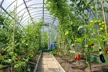
An experiment in the United States tested AI's ability to independently manage the growth of a tomato plant in a greenhouse. The project used the Claude AI model, developed by Anthropic, to adjust environmental conditions in real time for the plant's development.
The project was led by developer Martin DeVido in Boise, Idaho. In the experiment, a tomato plant named Sol was entirely managed by the artificial intelligence system, with no direct human involvement in the crop's daily care.
For over two months, the system consistently tracked various greenhouse parameters, including temperature, humidity, soil conditions, and carbon dioxide levels, at 15- to 30-minute intervals. Using this data, the AI automatically fine-tuned the system's equipment, such as lighting, ventilation, irrigation, humidifiers, and heaters.
To monitor the experiment, the developer built a web page for real-time observation of the system's decisions. A camera was also set up to record the plant's growth throughout the process.
One of the project's highlights occurred when the system's hardware failed, disrupting the greenhouse's lighting, heating, and airflow. Artificial intelligence detected the issue, evaluated the risks, and quickly restored the equipment to full operation, preventing damage to the plant.
The experiment's leaders reported that the system not only carried out programmed tasks but also made decisions to address an incident in a real physical setting. After over 100 days of operation, the crop continued to grow.
Although the test was limited in scope, its promoters highlight that such experiments enable the exploration of new AI applications in managing agricultural systems, going beyond its typical role as a consultation or analysis tool.
Source: bichosdecampo.com and .mdzol.com