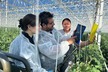
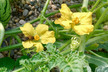
Recent research in tomato production highlights practical approaches for improving seedling growth and maximizing yields in high tunnel systems. Healthy transplants are critical for organic vegetable production, but tomato seedling performance varies among certified organic growing media, largely due to differences in nitrogen supply. While general recommendations advise incorporating nutrients into media or applying supplemental fertilizers as needed, more precise guidance on nutrient sources and application rates is lacking. Because organic media differ in nutrient content and availability, growers need clearer information on when and how much supplemental fertilization is required for specific media.
A study on organic growing media found that tomato seedling performance varies across commercially available substrates, and that supplemental organic fertilizer can further enhance growth. The fertilizer was essential for growing media that did not contain compost or other nutrient sources. In media that contained compost, the fertilizer improved seedling nutrition, but did not consistently improve seedling size or field performance. Sometimes the fertilizer resulted in excess salts in the growing media. Identifying the right combination of media and fertility helps growers produce strong, healthy seedlings that establish well and support vigorous plants throughout the season. Growers can use standard laboratory tests for growing media to help identify the need for supplemental fertilizer and potential for excess salts. Still, more research is needed to understand how quickly nutrients become available in order to more closely match supplemental fertilizer applications to the media.
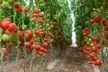
In parallel, research on trellising systems in high tunnels shows that the stake-and-weave method used without pruning tomato plants can produce higher tomato yields compared to traditional double- or multiple-leader vertical-string supports used in conjunction with pruning. This result occurred with a plant spacing that provided 8 square feet per plant and with harvest over an 8 to 10 week period. At a closer plant spacing, or over a longer harvest period different results might be observed.
Together, these studies provide actionable insights for growers seeking to optimize tomato production from seedling stage to harvest. Implementing effective substrate management and selecting high-performing trellis systems can lead to stronger plants, higher yields, and more efficient use of resources.
According to Dr. Maynard, "I started the trellising research because various practices are used by growers and it seemed useful to know how they might influence yield. Growers choose tomato trellising systems with numerous considerations in mind. This comparison between systems shows potential effects on tomato yield, size, and marketing grade. I hope it will help tomato growers identify the system that best fits their operation."
Author Dr. Petrus Langenhoven added "We aim for this research to foster collaboration between scientists, media producers, and farmers to develop nutrient release models that can be incorporated into product specifications, ultimately enabling growers to optimize transplant production practices for their specific operations."
Dr. Elizabeth (Liz) Maynard is Clinical Engagement Professor of Horticulture at Purdue University. She serves as an extension specialist for vegetable production, integrating education and applied research to improve vegetable farming. She collaborates with other Extension specialists, educators and agriculture professionals to create and deliver programs and resources for vegetable farmers.
Dr. Wenjing Guan is Clinical Engagement Associate Professor of Horticulture at Purdue University. She serves as an Extension specialist developing and delivering sustainable vegetable and fruit production practices to Indiana growers.