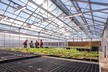
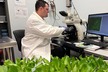
The NSW Government has unveiled the new $9M state-of-the-art Centre for Australian Horticultural Market Access (CAHMA) at Ourimbah, designed to strengthen the government's primary industries research capabilities. The new centre is an essential hub for research and development and will help develop major projects designed to strengthen the state's $3.5B horticulture sector which includes exports valued at $432M in 2024/2025.
It includes state-of-the-art DNA-based tools to quickly identify food-borne germs, increased laboratory capacity to support food safety research and development programs and sorting technology to detect quarantine pests and diseases and improve fruit quality.
The Centre will help protect and grow NSW regional industries and markets across key horticultural industries including citrus, berries, avocados, melons and vegetables. It will also enhance capacity to support supply chain efficiencies, fruit quality and food safety.
The installation of new state-of-the-art research facilities and equipment includes: technology to detect quarantine pests and diseases and improve fruit quality and to reduce chemical use and improve sustainability of NSW horticultural exports; high pressure washing facility to remove surface pests and contaminants; advanced controlled-atmosphere technologies and fumigation equipment to improve market access outcomes; upgraded and new cool rooms and fumigation facilities to scale-up research to semi-commercial equivalence; and a new biosafety level 2 laboratory for containment of human pathogens with automated diagnostic workflows enhancing food safety surveillance.
Read more at Community Coast News