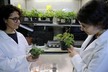
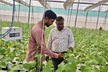
In the sprawling tomato greenhouses of Cuijiaji town on the outskirts of Qingdao, a coastal city in east China's Shandong Province, farmers start working at daybreak. Some of them had by then already dropped off their toddlers at a vibrant, colorful daycare facility just a few steps away.
The wages of these rural workers, averaging 18 yuan (about 2.6 U.S. dollars) an hour, are more than sufficient to cover the basic monthly daycare fee at the Kangbei Childcare Center, which is the only nursery in the region that provides a 24/7 babysitting service. The daycare service costs 400 yuan a month, while full board is 10 times as much.
This facility provides a glimpse of a transformative model emerging in rural China that provides affordable, accessible and flexible childcare, which is adapted to the working hours of farmers, as opposed to the nine-to-five schedule more prevalent in urban areas.
The model also serves as an example of how Chinese society is working all-out to improve early childhood education by removing major obstacles such as high costs and scarcity of services, particularly for children under three years old. These children are considered too young for both kindergarten and preschool. Dubbed "tomato town," Cuijiaji has more than 4,500 greenhouses that produce roughly 65 million kilograms of tomatoes a year. The industry has resulted in economic prosperity that draws many young people to work in these tomato fields.
Read more at Xinhua