With the aim of optimizing crosses and strengthening blueberry breeding programs, a research team from the INTA, the Instituto de Botánica del Nordeste, and the Facultad de Ciencias Agrarias de la UNNE has analyzed floral anatomy and pollen development in two blueberry cultivars. Published in the international scientific journal Horticulturae, the study seeks to identify key phenological stages that can help improve crop productivity.
 © INTA
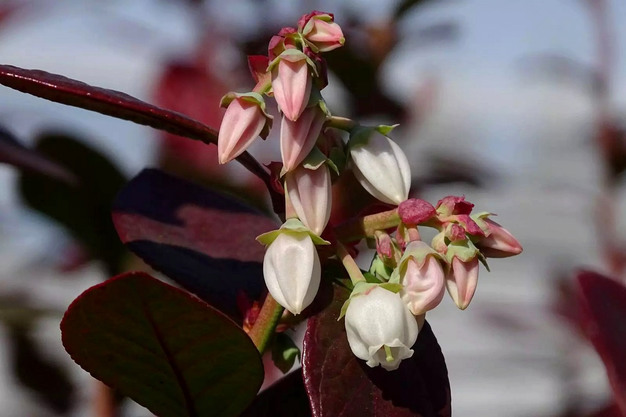
The research, carried out as part of a doctoral thesis, focused on the reproductive biology of blueberry (Vaccinium corymbosum L.) and examined anther and pollen development in the Emerald and Snowchaser cultivars. The work was conducted in plantations located in Bella Vista, Corrientes, and Concordia, Entre Ríos, two regions representative of blueberry production in northeastern Argentina.
The main objective of the study was to generate knowledge that would allow more efficient crosses and strengthen genetic improvement programs for the crop. In this context, José Recalde, a CONICET CTM doctoral fellow working at INTA Concordia, highlighted that "understanding how blueberry reproductive organs develop is key to optimizing crosses and advancing breeding programs adapted to our production conditions".
One of the study's main contributions was the identification and description of seven floral stages, defined on the basis of macroscopic traits and validated through analysis of the internal anatomy of the flowers. "This classification makes it possible to determine more precisely the degree of development of the reproductive organs throughout the crop's phenology, which is a key aspect for decision making in breeding work", Recalde underlined.
In this regard, the researcher noted that these anatomical descriptions provide concrete tools to identify the most appropriate moment for intervention in breeding and reproductive management work. "In addition, the study linked these floral stages to international reference phenological scales, such as the one developed by Michigan State University and the BBCH scale, which facilitates the comparison of results with research carried out in other producing regions worldwide", he added.
Another relevant outcome was the proposal of a new anther formation pattern, based on specific characteristics of the layers that make up the anther wall in species of the Ericaceae family, to which blueberry belongs. "This finding provides novel information on the reproductive biology of the crop and expands the knowledge available at an international level", the researcher stated.
In this sense, he also emphasized that "this type of basic contribution, although not always visible in the short term, is fundamental to sustaining innovation processes in strategic regional crops such as blueberry".
Research continues within the framework of the doctoral thesis and is now focused on evaluating whether the environmental conditions of Bella Vista and Concordia influence key reproductive parameters, such as pollen production and viability, as well as the efficiency of intra and inter varietal crosses, measured through fruit set and the formation of viable seeds.
The results obtained are expected to provide a solid basis for the design of blueberry breeding programs in northeastern Argentina, one of the country's main producing regions, and to contribute to improving crop productivity and adaptation to different production environments.
Source: intainforma.inta.gob.ar