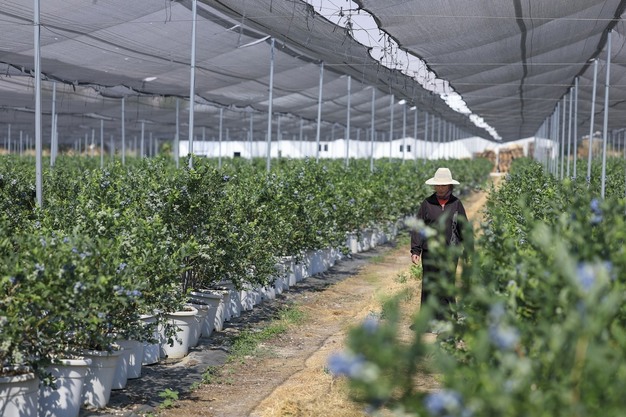
Turkish blueberry growers are getting a higher yield in their blueberry fields these days, as growing practices improve, says Ismihan Aren Memet, commercial manager for Turkish fresh produce exporter MBA Tarim: "Compared to previous years, we're observing a clear increase in productivity across our blueberry cultivation areas. The expansion of our fields, higher plant density, and the maturation of our plantations are supporting this growth. With improved pruning, nutrition, and regular crop monitoring, we expect this positive trend to continue in the coming years. For the 2026 season, provided that no extreme weather events occur, we are projecting a yield increase of around 25 to 30 per cent compared to last year."
 © MBA Tarim
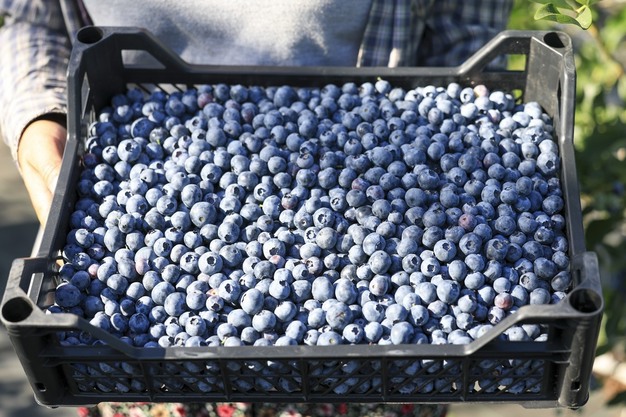
For the Turkish growers and exporters, the spring frosts that decimated the harvest of several fruits remain the most scary aspect of the operation, Memet explains. "Climatic conditions remain the most critical risk factor in blueberry cultivation. Late spring frosts experienced in April in Türkiye caused partial damage in blueberries, as in many other crops, with losses reaching up to 30% in certain regions. In addition, dry summer conditions and insufficient rainfall have put pressure on groundwater resources used for irrigation. For the 2026 season, late spring frosts remain a potential risk. However, regional microclimates and winter conditions will play a decisive role in determining the level of impact, particularly during sensitive stages such as flowering."
 © MBA Tarim
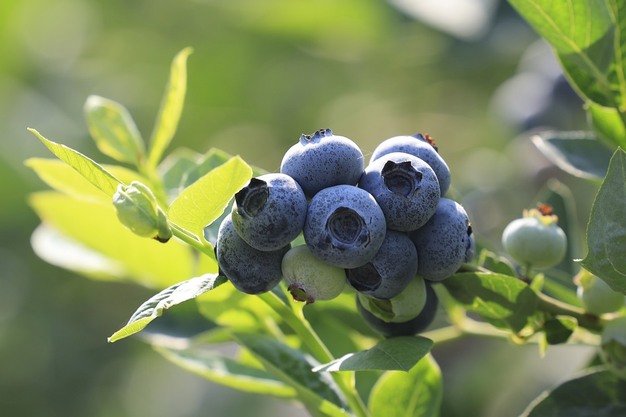
According to Memet, extreme weather events, particularly late spring frosts and excessive rainfall, have been the main challenges for them: "To mitigate these risks, we apply an integrated crop management strategy. Frost protection includes cultural practices to delay plant awakening, greenhouse heating systems, and air circulation solutions. In periods of heavy rainfall, we improve drainage capacity and open discharge channels to remove excess surface water in a controlled way. In addition, regular maintenance, proper fertilization, and continuous field monitoring remain key to ensuring sustainable production and yield stability."
 © MBA Tarim
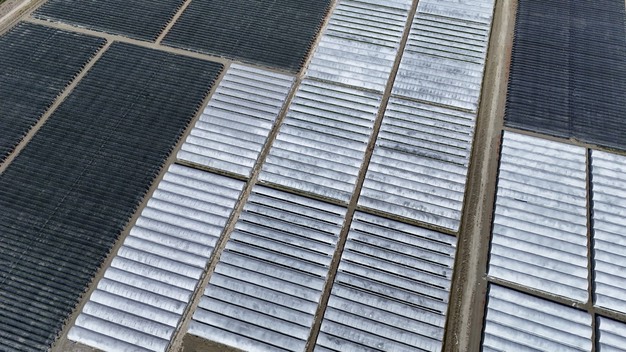
Despite the fact that the yield for Turkish blueberries is increasing every year, consumer demand also grows every year, Memet explains. "Demand for blueberries remains strong both in the domestic and export markets. In Türkiye, although supply has increased significantly in recent years, consumer demand continues to grow in parallel. We maintain ongoing supply programs with major retail chains, ensuring stability and continuity in the local market. On the export side, we continue to see stable and growing demand across Asian markets, supported by long-term buyer relationships and new trade connections established through international fairs. Overall, we are observing a healthy balance between increasing supply and market demand."
 © MBA Tarim
Memet continues: "We continue to receive long-standing demand from Asian markets, particularly Singapore, Malaysia, and Thailand, as well as from Russia. We've also actively exported to these markets in previous seasons. The Gulf region, especially Dubai, together with the Far East and Russia, has been among our main export destinations, while we've maintained regular shipment flows to European markets. The Far East remains a strategically important market for us, both in terms of volume and premium segment demand."
"Currently, we are seeing growing commercial interest from Gulf countries such as Bahrain and Kuwait, as well as from Egypt in North Africa. Through international trade fairs, B2B meetings, and post-fair engagements, we continue to expand our buyer network across multiple regions," Memet concludes.
For more information:
Ismihan Aren Memet
MBA Tarim
Tel: +90 537 217 4894
[email protected]
www.mbatarim.com