Plants don't just respond to light and water, they also run on an internal daily timekeeper known as the circadian clock. Researchers have now discovered that the plant circadian clock can regulate electrochemical signals in specific cells that help determine whether growth is invested above ground or below ground.
In a study led by Paloma Mas, CSIC Research Professor at the Centre for Research in Agricultural Genomics (CRAG), and published in the scientific journal Cell, researchers show that a key clock component functions as an electric flow controller, fine-tuning small changes in electrical charge across different tissues. These signals influence how young stems grow and how strongly roots develop, helping plants direct growth where it is needed most.
"Plants are constantly balancing priorities," said Mas. "We found that the circadian clock does more than keep time, it also coordinates growth by controlling an electrochemical 'language' that different tissues use to communicate."
A daily "push–pull" signal inside the plant
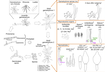
To grow, plants must move energy produced by photosynthesis from source tissues, such as leaves, to sink tissues, such as roots. The team tracked acidity changes in living plants using fluorescent sensors and uncovered a clear pattern: acidity rhythms in epidermal cells run almost opposite to rhythms in the vasculature.
This matters because electrical gradients are not just side effects, they help drive growth and transport. In the young stem, increased acidity loosens cell walls, allowing cells to expand and the stem to lengthen. In transport tissues, electrical charge powers the loading of sugars into the plant's long-distance distribution network, the phloem. If that electrochemical "battery" is weakened, less sugar is loaded and transported, and roots receive less fuel for growth.
One clock factor, two opposite outcomes
The researchers identified a clock factor called CCA1 as a central regulator of this system. When CCA1 activity increases, it promotes stem elongation while restricting root growth. It does this in two coordinated ways. In the shoot, it enhances growth-promoting hormone signaling and shifts electrochemical conditions toward stem expansion. In the vasculature, it reduces the activity of a proton pump that generates the electrical and pH force needed to export sugars efficiently.
"At certain times of day, the plant prioritizes shoot growth over root growth," explained first author Lu Xiong. "CCA1 helps fine-tune this trade-off by controlling where sugars are delivered."
Why this matters for agriculture
The discovery offers a new way to think about plant productivity, not only as a response to the environment, but as a clock-driven management system that matches energy availability with growth demand throughout the day.
Understanding, and eventually adjusting, these electrochemical signals could help researchers develop crops that allocate resources more efficiently under challenging conditions such as shade, drought, or nutrient-poor soils, where the balance between shoot and root growth can determine survival and yield.
View the full study at the link here.
For more information:
Center for Research in Agricultural Genomics
cragenomica.es/