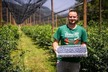
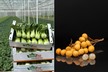
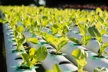
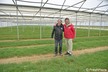
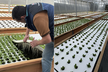
Benard Koech's greenhouses sit on a small plot in Keberesit village, south-western Kenya. Inside, rows of tomato plants climb neatly toward the light. The setup looks relatively modern with plastic sheeting, drip irrigation lines, careful spacing. But the core innovation is less visible: each plant is built from two Chinese varieties joined by hand.
Koech, 28, tells Dialogue Earth he began growing tomatoes outdoors in 2020 as a pastime, after graduating in agribusiness management from Kenya's Machakos University. About 95% of Kenya's tomatoes are grown in open fields.
He has benefitted from a pilot programme to support rural youth to grow grafted tomatoes around Nakuru county, about 160 km north-west of Nairobi. The programme, a collaboration between China's Nanjing Agricultural University and Kenya's Egerton University, is about improving responses to disease and climate stress.
Stories like Koech's are often presented as evidence that "South-South" cooperation between Global South nations can deliver practical solutions where traditional aid models have struggled. In Kenya's case, the claim is that farmers are not only receiving inputs, but also learning techniques to manage climate shocks more effectively.
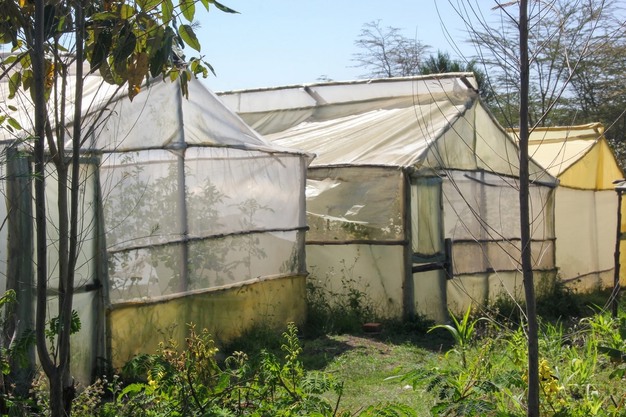 © Duncan MboyahAs part of the grafted tomatoes project, Benard Koech was encouraged to build his own greenhouses for better results. He plans to put up a more modern greenhouse soon
In this instance the technique involves joining the shoot, or scion, of a high-yielding but disease-prone tomato variety with the rootstock of a more resilient one. The aim is to keep producing desirable fruit while strengthening resistance to pathogens and water stress.
Joshua Ogweno, an associate professor of horticulture at Egerton University, says the tomato-grafting project emerged after bacterial wilt devastated tomato production in parts of the Rift Valley.
The wilt "spread like bush fire in the region as a result of climate change", he says, adding that the grafted tomatoes have reduced crop losses by 80%.
The grafting is done at Egerton University and seedlings are then sold in agricultural supply shops. The plants can be harvested continuously for up to eight months, Ogweno says, compared to a roughly two-month harvesting window for ordinary plants grown in open fields.
Source: Dialogue Earth