Some believe that physicist Albert Einstein once said, "If bees disappeared from the planet, humanity would only survive for four more years." Whether he actually said it or not remains debated, but the quote highlights the crucial role of the bee species Apis mellifera in global food supply. Raúl Molina, manager of Colmenas Indapol, notes that "70% of the world's food production depends on bees, with 40% directly influenced and the rest relying on bee pollination indirectly."
 © INDAPOL
In the coming weeks, two key horticultural products in southeastern Spain, melon and watermelon, will require bees for pollination. Growers have already stockpiled hives to place in their greenhouses within a few days. However, recent heavy rains have also impacted the insect population.
Beekeepers work closely with nature, but this year has been difficult in Andalusia. "In the mountainous areas of Malaga and Granada, we've lost 50% of the hives planned for spring watermelon and melon crops," said the president of the Spanish Beekeeping Association. "After more than 20 years in the industry, this is an unprecedented loss. We believe that the extensive rain may have caused bees to venture out for food, only to be prevented from returning by wind, rain, or pesticides applied on nearby farms after the rains," he added.
"It's unfortunate because we were ready to install the hives in the earliest watermelon greenhouses in Nijar by the end of February. We're currently seeking a solution to ensure our affected clients continue to receive service," he stated.
 © INDAPOL
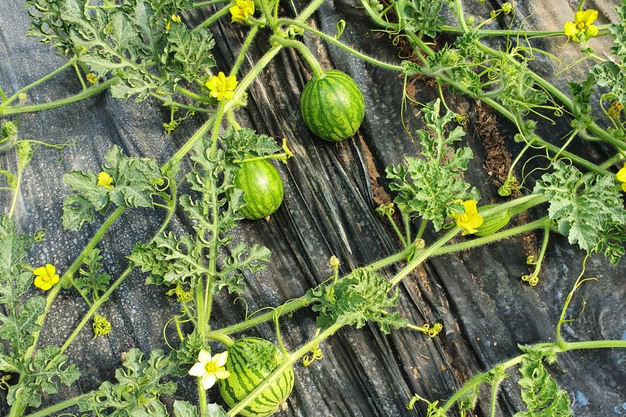
Melon and watermelon crops are highly dependent on pollination
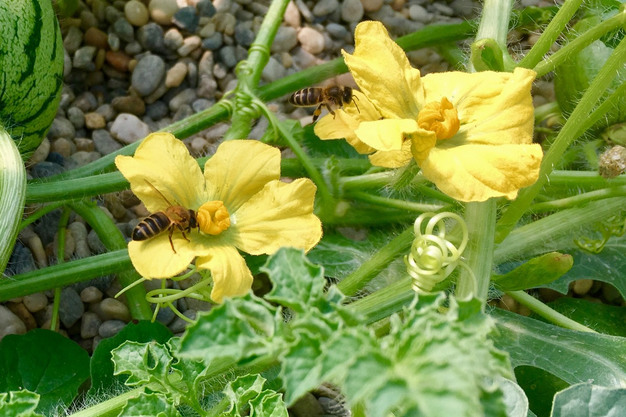
In cucurbits like watermelon and melon, pollination directly influences fruit set, shape, and quality because pollen transfer between male and female flowers relies entirely on insects such as Apis mellifera.
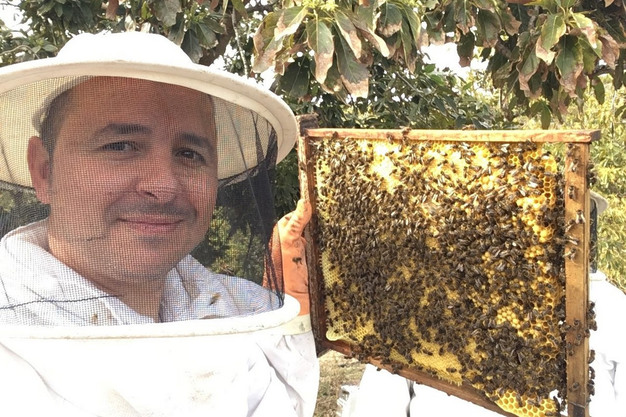
The bee performs this process through a natural mechanism driven by static electricity created when its wings beat against its leg hairs. This allows it to attract pollen with a distinctive rounded shape and transfer it to female flowers. "When this process fails, deformed, hollow, or underweight fruits appear," Raul said. "And, since the flowering period of melon and watermelon is very short, around 10-12 days, growers prefer to use bee hives rather than other pollinators available in the market, such as Bombus terrestris. In the case of the bumblebee, commercial single-use hives usually contain 350-450 individuals (including non-flying brood and adults), while the bee hives that we rent or sell hold between 25,000 and 35,000 individuals and can be used for up to 4 years."
 © INDAPOL
"This difference is crucial during short flowering periods, where the number of insects available influences the success of fruit set, considering that it is also estimated that only 30% of the bees fly at the same time."
"We don't put our hives under plastic that is less than 8 months old"
Unlike Bombus terrestris, which is bred in controlled, closed facilities, bees are wild animals that must be raised in their natural environment. In the wild, they encounter not only weather challenges but also threats like parasites such as Varroa destructor mites and predators like hornets (Vespa crabro or Vespa orientalis). Additionally, phytosanitary products pose significant risks to their survival. Raúl Molina notes that a new concern is emerging from within greenhouses: additives found in agricultural plastics, which may impact bee health.
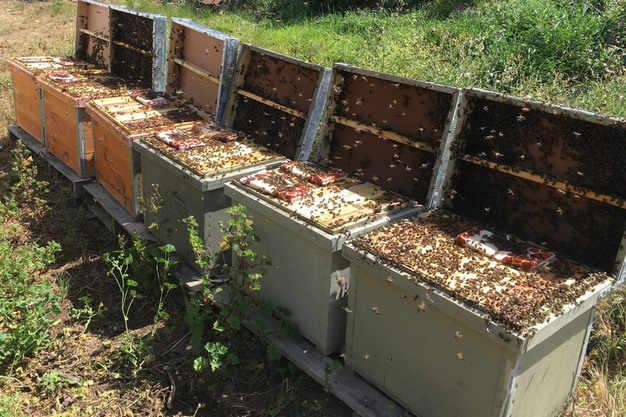 © INDAPOL
Bees do not perceive visual information the way humans do. "Their vision relies on UV light, and research shows that many modern plastics and anti-strip nets diminish the transmission of these UV wavelengths. This reduction can be caused by additives that stabilize or absorb UV light, or by oils used during plastic processing. When UV light exposure decreases, bees' flight behavior changes, which can impact their efficiency as pollinators."
"That's why at Indapol, we avoid placing our hives under plastics that are less than 8 months old to prevent shock to the animals and prevent losing individuals."
Pollination is key for the sector's economic viability
Pollination is a critical and delicate part of the agricultural process. "In one hectare of intensive watermelon farming in Almeria, there can be approximately 10,000 meters of crop. With yields of 6-7 kilograms per linear meter, millions of euros are at risk, all relying on bees. The same importance applies to most other agricultural crops."
"You can be the best grower in the world, but if pollination fails, the entire process will fail."
 For more information:
Indapol
Tel: +34 617 773 800 / 950 406 274
Email: [email protected]
https://colmenasindapol.com