Cucumber is a crop of major economic importance worldwide, ranking third among the most produced vegetables after tomato and onion. However, improving new varieties, plants that are more resilient, with better shaped fruit or less prone to developing internal cavities, remains a major challenge.
Until recently, scientists had focused primarily on small, single letter changes in the genetic code, known as SNPs. However, a new study published in Nature Genetics reveals that larger scale genetic variations, which until now have been largely unexplored, have played a fundamental role in cucumber history and are key to its future improvement.
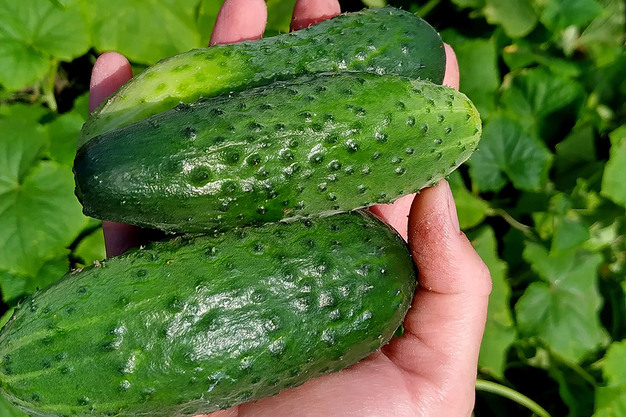 © Yuliya Koneva | Dreamstime
A research team led by Professor Zhangjun Fei of the Boyce Thompson Institute (BTI) built a graph based pangenome, the most comprehensive genetic map of cucumber created to date. Unlike traditional approaches that rely on a single reference genome, a pangenome integrates genetic information from multiple varieties. This powerful resource, developed from thirty nine reference level cucumber genomes, enabled the identification of nearly 172,000 "structural variants" (SVs), that is, DNA rearrangements that have shaped the evolution of this important horticultural crop and can have significant effects on agronomic traits.
"It is the first time we have been able to capture the full scope of genetic variation in cucumber at this level of detail," Fei explained. "The pangenome allows us to visualise these SVs, large insertions, deletions and DNA rearrangements, and to understand the profound impact they have on cucumber biology and evolution."
The analysis revealed a striking genetic history. During cucumber domestication, the genetic code underwent substantial purging. While mild single letter mutations (SNPs) were often tolerated and retained, more damaging structural variants were systematically eliminated, suggesting that these larger alterations pose a greater risk to plant health.
The study also traced cucumber's global expansion from its origin in India to its spread across Asia, Europe and the Americas. During this geographic expansion, slightly deleterious SNPs accumulated, a phenomenon known as "expansion load". Structural variants, however, followed the opposite pattern, continuing to be purged over time, with the remaining SVs generally being more recent than SNPs. Taken together, these patterns point to a stronger and more sustained selective pressure against large scale genetic changes.
The research further identified gene flow from wild cucumber populations into European varieties. While this introgression may have introduced beneficial traits, it also carried harmful structural variants that "travelled" alongside favourable genes.
"This is a crucial finding for modern breeding," Fei states. "It shows that when breeders incorporate valuable traits from wild relatives, such as drought tolerance, they may inadvertently introduce a hidden genetic burden. Our work provides a resource that will help breeders identify and remove that baggage."
These findings have immediate practical implications for cucumber improvement. The team demonstrated that incorporating information on the load of potentially harmful structural variants present in each accession into genomic prediction models improves the ability to anticipate key traits such as fruit shape or the occurrence of internal cavities. This could enable more efficient development of new varieties.
The implications extend beyond cucumber. The techniques developed in this study could be applied to other species, helping to better understand genetic diversity and accelerating the development of crops with higher yields, improved quality and greater stress tolerance.
The research was funded by the USDA National Institute of Food and Agriculture through the Specialty Crop Research Initiative, within the CucCAP project.
Source: btiscience.org