 © Vertify
An increasing number of crops are being evaluated for cultivation in vertical farms. Within the framework of Fieldlab Vertical Farming 2.0, Vertify in the Netherlands has, for the first time, conducted trials on propagating tomato plants in a vertical farm, in collaboration with students from Inholland University of Applied Sciences in Delft.
Tomatoes are not the first crop tested in this cultivation system. Previous trials in vertical farming included radish and sweet pepper plants (links in Dutch). "We incorporated our experience from earlier vertical farming trials with different crops, as well as tomato propagation, into this study," says researcher Sjoerd van Marrewijk of Vertify.
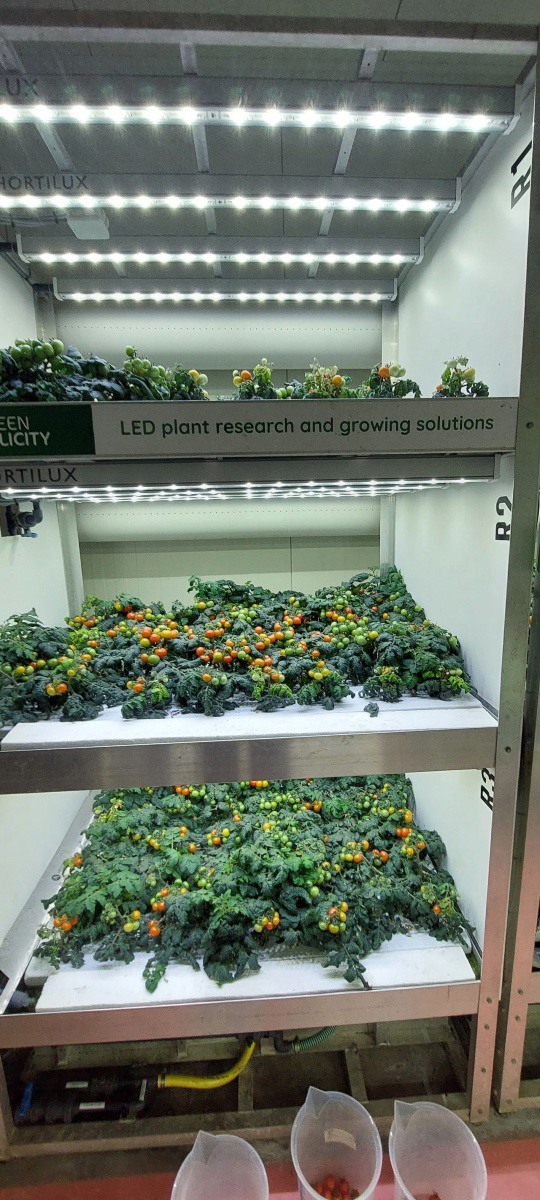
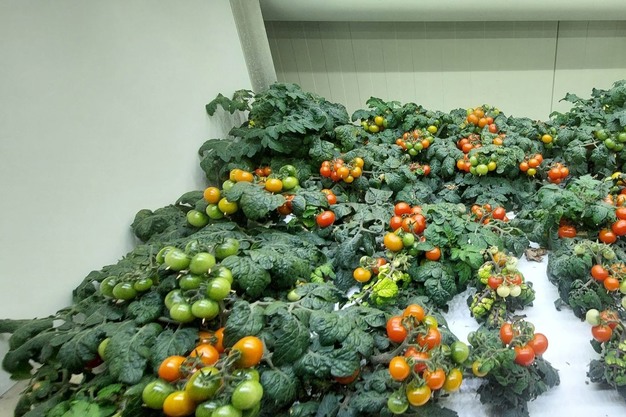
Following the propagation phase, four production cycles were carried out with pot-type tomatoes grown in plugs, allowing the researchers to complete a full cycle from sowing to harvest entirely within a vertical farm environment. The trials focus on how cultivation strategy, lighting, and growth conditions interact in a fully controlled system. "The initial results are promising and show that this method offers interesting prospects," Van Marrewijk says, referring to the trials with self-topping dwarf tomatoes.
Lighting
The research has also generated insights into lighting strategies. According to the researcher, lighting is not only crucial for plant development but also for energy consumption. "Blue light, in particular, is energy-intensive. This knowledge is applied in dynamic lighting strategies to meet the plant's requirements while reducing energy demand." The researchers also observed that adding UV-B light to the spectrum resulted in thinner fruit walls in the tomatoes and increased the fruits' susceptibility to cracking.
The research will be further refined and expanded in the next phase. Other organisations are also conducting studies on propagating tomato plants in vertical farms. A key advantage of vertical farming is the ability to fully control growing conditions. As there is no reliance on daylight, the light spectrum can be completely tailored to the needs of the crop.
 © Vertify
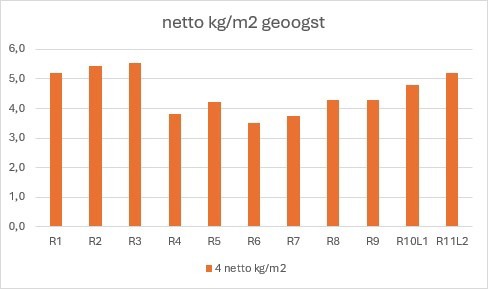
As part of the study, several light spectra were evaluated. After the third production cycle, adjustments were made to the floater system and the irrigation strategy. The following light treatments were tested:
R1 to R3 purple light 80% red 20% blue: Increased yield through better truss formation.
R4 to R6 pink light 95% red 5% blue: Standard least energy consumption.
R7 to R9 white light 90% red 5% blue 5% white.
R10 white light 90% red 5% blue 5% white plus UV-B.
R11 pink light 95% red 5% blue and far-red: Far-red seems more productive compared to standard R4 to R6.
These treatments were used to assess the effects of light spectrum on crop performance, yield, and energy use under fully controlled vertical farming conditions.
 © Vertify
For more information:
Vertify
[email protected]
https://www.vertify.nl/