A consortium of industry and research partners has secured almost £3m in government funding to develop miniature tomato varieties which could dramatically improve the long-term prospects of the UK's tomato-growing industry.
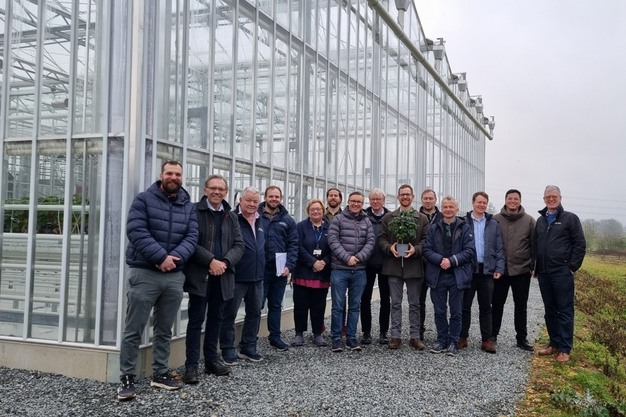
Over the next three years, CambridgeHOK will collaborate with the University of Lincoln, APS Group, the UK's largest tomato grower, and Phytoform Labs to integrate their advanced CRISPR-Cas plant breeding technology with automated greenhouse systems in a bid to create a commercially-viable alternative to conventional tomato production.
Since 2000, UK tomato production has fallen sharply with domestic output almost cut in half, driven by rising energy and labour costs and persistent workforce shortages. As a result, around 80 per cent of tomatoes consumed in the UK are now imported, increasing exposure to supply chain risks and adding to the carbon footprint associated with long-distance transport.
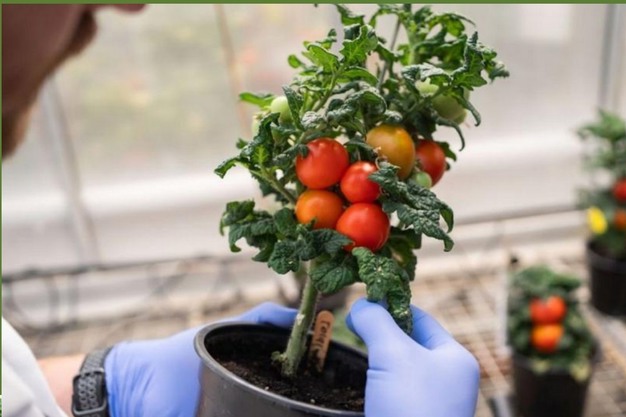
The AutoTom project will seek to reverse this trend by fundamentally redesigning how tomatoes are grown by bringing together the knowledge of plant scientists, commercial growers and engineers. It will use precision breeding to develop smaller tomato plants which can be grown at a higher density, offering the potential to double yields whilst maintaining quality.
Led by CambridgeHOK and drawing on our expertise in automation, the project will combine precision breeding with the latest Agri-tech to make tomato farming more productive, less labour intensive and better suited to future economic and environmental pressures, offering a more sustainable model for UK horticulture.
Investment is being provided by The Farming Innovation Programme, funded by the Department for Environment, Food and Rural Affairs (Defra) and delivered in conjunction with Innovate UK, which aims to support innovative projects that improve the sustainability and productivity of the agricultural sector.
 © Cambridge Glasshouse Co Ltd t/a CambridgeHOKs
Engineering a new breed of compact tomato plants
Together, the partners aim to build on Phytoform's initial success to implement a new tomato plant architecture which will accelerate traditional breeding cycles to create compact tomato plants that produce a single crop at a time. These smaller, uniform plants are specifically designed to be compatible with automated handling and harvesting, reducing the need for manual labour throughout the growing cycle.
CambridgeHOK will adapt its automated cultivation technology to move the plants through the greenhouse on conveyor belts. Rather than requiring workers to walk long rows to tend and harvest crops, the system brings plants to a central location where harvesting can be carried out automatically. This approach is expected to reduce labour costs by more than 70 per cent while increasing productivity.
The University of Lincoln will play a key role in testing and refining the system. Trials will be conducted in the university's new geothermal glasshouse research facility, which was built by CambridgeHOK. They will use digital tools and data-driven techniques to optimise plant performance, system efficiency and overall output.
APS Group, the UK's largest tomato producer, will bring extensive commercial production expertise, ensuring the technology is practical at scale and aligned with the requirements of growers, retailers and supermarket supply chains.
The British Tomato Growers' Association has over 30 years of agronomic expertise and will provide access to a 210-hectare network of potential growers.
 © Cambridge Glasshouse Co Ltd t/a CambridgeHOK
Leading the way with cutting-edge research
This cutting-edge research and development project is the one of the first in the UK to be funded by Defra following a 2025 change to the law, allowing plants to be precision bred for the benefit of farmers, the environment and society as a whole.
It is hoped this project will lead the drive to adopt new technologies and practices to enhance the sustainability, productivity and resilience of English horticulture.
Project Chair Patrick Harte believes the research could eventually represent a step-change in how British tomatoes are grown at scale.
He explained: "AutoTom is a highly-ambitious and innovative project which, if successful, could support a significant shift toward more localised tomato production in the UK, and improve the resilience of domestic food supply chains by reducing the reliance on imports.
"The system also has the potential to lower transport-related emissions and initial early estimates suggest yields could double, in what would be a major boost to the industry.
"With tomatoes representing a £1.8 billion market in the UK, we hope the AutoTom project can help restore competitiveness to British growers and we're excited by its potential to reshape how tomatoes are grown in the UK."
For more information:
CambridgeHOK
Tel: +44(0)1430 449440
[email protected]
www.cambridgehok.co.uk