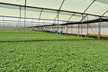
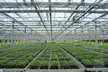
In greenhouses and sterile laboratories west of Basra, Iraqi technicians wearing gloves and masks lift tiny date palm shoots from jars, hoping one day to restore orchards laid waste by decades of war, land loss and creeping water salinity. Date palms, once central to Iraq's agricultural economy, have been ravaged by the upstream damming of the Tigris and Euphrates, declining rainfall, seawater intrusion and decades of conflict.
In a private-sector push, scientists and officials are now scaling up tissue-culture propagation to produce disease-free date palm saplings and preserve rare Iraqi varieties.
"Tissue-culture agriculture is distinguished mainly by its high production," said Mohammed Abdulrazzaq, director of Nakheel Al Basra. "In previous methods, a palm tree could give you three to four offshoots, but with tissue culture, we can produce thousands of offshoots from a single palm."
Nakheel Al Basra, one of the province's largest tissue-culture laboratories, began operations in 2023 and can produce up to 250,000 palm seedlings a year, said Abdulrazzaq, adding that tissue-culture palms have a success rate of up to 99%. Inside the laboratory, workers use masks and gloves when handling palm samples to limit contamination. Tiny shoots are kept in jars on racks and moved through stages designed to produce uniform, disease-free planting material.
Read more at Reuters