Greenhouse vegetable production increasingly depends on aligning crop genetics, climate control, and plant physiology with regional conditions. Mohit Roop Rai, Senior Research Associate at Eeki Foods, India, highlights how climate-responsive strategies can significantly improve yield stability and quality under challenging environments.
Genetics and climate adaptation drive yield in cucumbers
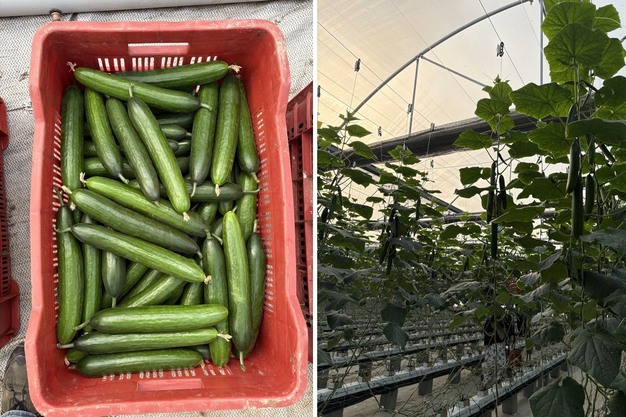
Mohit shares that although cucumbers originated in India, the highest global yields (65–75 kg/m² annually) are recorded in Dutch greenhouse systems. "This gap is primarily due to long-term genetic development and climate-specific technology optimization. They already did a lot of work on genetic potential and technology building according to their region and requirements."
In contrast, Indian greenhouse operations face extreme seasonal variability. "Producing a single variety for all weather conditions is not possible," he explains, adding that selecting the right genotype remains one of the biggest challenges under changing climate conditions. "Through multi-year varietal trials aligned with seasonal conditions, Eeki Foods has been able to improve consistency and performance."
After continuous trials and expert guidance, the team achieved cucumber yields exceeding 50 kg/m² annually in Rajasthan despite summer temperatures above 45°C and winter lows below 5°C. Mohit emphasizes that more than 90–95% of this output meets A+ grade standards, showing the impact of targeted variety selection and climate management.
However, he mentions that winter conditions still present physiological limitations. Low radiation (1000–1200 J/cm²), foggy weather, and night temperatures around 9°C slow node development and growth rates. "Whenever we get our desired value of RTR (radiation temperature ratio), the plants will start working again quickly and utilize all the stored sugars," he explains, underlining the importance of radiation-temperature balance for productivity recovery.
 © Eeki Foods
Temperature thresholds define productivity in tomatoes
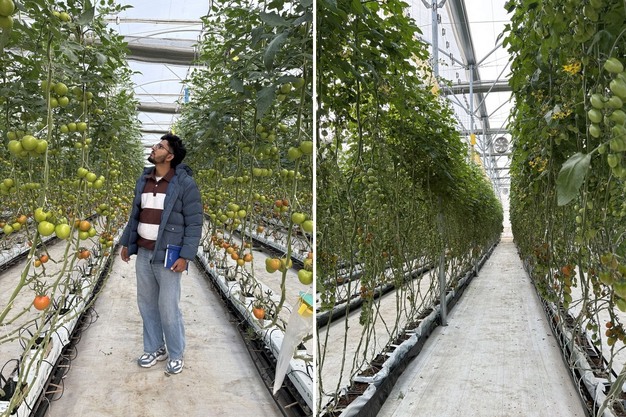
Tomato crops currently benefit from favorable light intensity levels of 1400–1500 J/cm², supporting strong photosynthesis. Yet low night temperatures (around 10°C) remain a major limiting factor. Mohit explains that temperatures below 13°C disrupt normal physiological processes in non-grafted tomato plants.
"Low night temperature slows respiration," he notes, leading to carbohydrate accumulation in leaves while enzymes function inefficiently. This creates a photosynthesis–respiration imbalance: high sugar production during the day, followed by limited translocation at night.
As a result, less assimilate reaches growing points, flowers, and fruits, weakening sink activity. He points out that reproductive development is particularly sensitive. "Tomato needs more than 13 degrees Celsius night temperature for normal reproduction," he says, adding that low temperatures reduce pollen viability, increase flower drop, and compromise fruit set. Chilling stress symptoms, such as leaf purpling, further indicate physiological strain.
He expects a marked improvement once 24-hour average temperatures approach 19°C and night temperatures exceed 13°C, restoring balance, accelerating assimilate utilization, and increasing yield per square meter.
 © Eeki Foods
Quality-focused production and handling of bell peppers
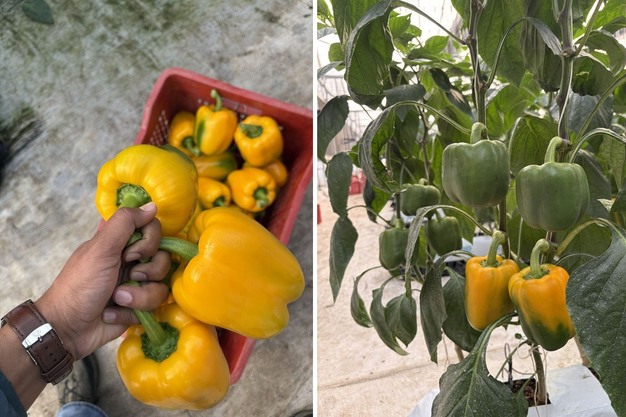
In bell pepper production, Eeki Foods is targeting exclusively A+ grade output from the first harvest flush. Light levels of 1500–1700 J/cm² support active growth, but optimal performance still depends on warmer nights. "Night temperatures need to increase to 16 degrees," he says, noting that this will accelerate plant growth and help achieve production targets.
Strong head development and faster fruit color change indicate improving crop momentum. While condensation has been observed on leaves and fruits, adequate leaf area and healthy coloration support transpiration and photosynthesis under these conditions.
Market requirements add another layer of complexity. "Matching the sales team requirements with proper length, width and weight is sometimes difficult." He emphasizes that variety selection, climate control, and pruning strategy play critical roles in achieving uniformity.
Given the crop's sensitivity, post-harvest handling is equally critical. "As bell pepper is a very soft fruit, even a small scratch during transportation and harvesting will negatively affect the grade," he cautions."
 © Eeki Foods
For more information:
Eeki Foods
Mohit Roop Rai
+91 79735 78798
[email protected]
www.linkedin.com/mohit-roop-rai-
https://eeki.com/